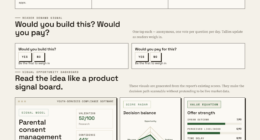

📊 Full opportunity report: Fable and Mythos: How Anthropic Shipped Its Most Powerful Model to Everyone on ThorstenMeyerAI.com — validation score, market gap, and execution plan.

Get hardware and tech essentials delivered free — and shop member deals
- Fast, free delivery on millions of items
- Access to Prime Big Deal Days deals on October 6–7
- Prime Video, Amazon Music and more included
TL;DR
Anthropic has made Fable 5, its most capable AI model, publicly available with safety safeguards. Mythos 5 remains restricted to trusted partners, showcasing a new safety architecture that separates capability from safety.
Anthropic has officially released Fable 5, its most capable AI model to date, for public use, while Mythos 5 remains restricted to select partners due to safety considerations. This marks a significant shift in how powerful models are deployed at scale, balancing capability with safety.
Fable 5 is a single underlying model offered in two versions: the publicly available Fable, which incorporates safety safeguards, and Mythos 5, a more unrestricted variant kept behind closed doors. The key difference lies in safety layers: Fable 5 uses classifiers that route risky queries to a weaker fallback model, Opus 4.8, instead of refusing them outright. This approach allows most users to access near-Mythos-level performance while maintaining safety controls. Anthropic reports that fewer than 5% of sessions trigger the fallback, and over 95% of interactions are handled directly by Fable 5. The company emphasizes that its safeguards are conservative and designed to evolve, with ongoing testing showing no universal jailbreaks in over 1,000 hours. A new 30-day data policy for Mythos traffic further supports safety and compliance. The release signals a shift toward decoupling capability from safety, deploying high-power models with layered safeguards rather than outright restrictions.Fable & Mythos
Anthropic just shipped its most capable public model — and the story is how. One “Mythos-class” model, two names, and a safety net that hands risky queries to a weaker model instead of refusing them.
- The best coding model in the world they’ve tested — 91/100, near human-engineer range.
- Paradigm-shifting for power users on their hardest, long-horizon tasks.
- One-shots entire apps; owns a whole job end-to-end over multi-hour runs.
- Overpowered for everyone else — lower-adoption users struggled to find a use.
- Slow & token-hungry; ~2× Opus 4.8 cost, >3× Sonnet 4.6. Mixed for writing.
- Rewards a sharp brief, punishes a loose one — precision in, precision out.
Independent commentary, produced with AI assistance under human editorial oversight. The views are the author’s own and may change. This is analysis, not investment, financial, legal, or technical advice. Details of Claude Fable 5 and Mythos 5 — capabilities, safeguards, pricing, rollout, and figures — are drawn from Anthropic’s launch announcement and Every’s independent “Vibe Check,” both June 2026, and may change as the models and access terms evolve. Benchmarks and testimonials are as reported by their sources. Company and product names are referenced for analysis and imply no affiliation or endorsement.
Implications of Decoupling Capability and Safety in AI Deployment
Anthropic’s approach demonstrates a new way to deploy advanced AI models at scale without sacrificing safety. By separating capability from safeguards, the company aims to unlock broader access while managing risks, setting a precedent for future AI releases. This could influence industry standards, encouraging other developers to adopt layered safety architectures for high-performance models.
AI safety guardrails for developers
As an affiliate, we earn on qualifying purchases.
As an affiliate, we earn on qualifying purchases.
Evolution of Anthropic’s Mythos-Class Models and Safety Measures
Mythos-class models, introduced in April, represented a leap in capability, especially in cybersecurity and scientific domains. Previously restricted to select partners, these models showcased strong performance in complex tasks like drug design and scientific hypothesis generation. The release of Fable 5 to the public is the first time a Mythos-level model is broadly available, reflecting advancements in safety technology and confidence in the safeguards. This development builds on prior efforts to balance AI power with responsible deployment, marking a new phase in the industry’s approach to high-capability models.
“Fable 5 represents our most capable model, with safeguards that allow broad access while managing risks effectively.”
— Anthropic spokesperson
As an affiliate, we earn on qualifying purchases.
Unanswered Questions About Long-Term Safety and Adoption
It remains unclear how effectively the layered safeguards will perform over time as models are used in diverse real-world scenarios. The long-term robustness against emerging misuse tactics and the potential for unforeseen vulnerabilities are still under observation. Additionally, the impact on industry standards and regulatory frameworks is yet to be determined, as broader adoption could raise new safety and ethical considerations.
As an affiliate, we earn on qualifying purchases.
Next Steps for Broader Adoption and Safety Refinement
Anthropic is expected to continue refining its safety classifiers and monitoring real-world usage of Fable 5. The company may expand access gradually, possibly opening Mythos 5 to more trusted partners as safety measures improve. Industry observers will watch for how this layered approach influences AI deployment standards and whether other developers adopt similar architectures to balance power and safety.
As an affiliate, we earn on qualifying purchases.
Key Questions
What is the difference between Fable 5 and Mythos 5?
Fable 5 is the publicly available version with safety safeguards that route risky queries to a weaker fallback model. Mythos 5 is the same underlying model but with fewer safety restrictions, kept behind closed doors for trusted partners.
Why did Anthropic choose to release Fable 5 publicly but keep Mythos 5 restricted?
Anthropic aims to balance broad access to powerful AI with safety concerns. Fable 5’s safeguards allow safe public use, while Mythos 5’s unrestricted version remains limited to prevent misuse while testing safety robustness.
How does the safety fallback system work?
When a query triggers safety classifiers, Fable 5 routes the request to a weaker model, Opus 4.8, instead of refusing it outright. This provides a more capable response while maintaining safety controls.
What are the potential risks of deploying high-capability models broadly?
Risks include misuse for malicious purposes, generating harmful content, or enabling cyberattacks. Layered safeguards aim to mitigate these risks, but their long-term effectiveness remains under review.
What does this release mean for the AI industry?
It signals a move toward more nuanced safety architectures that allow high-performance models to be used responsibly at scale, potentially setting new standards for AI deployment.
Source: ThorstenMeyerAI.com
Fall Picks
fall essentials
As an affiliate, we earn on qualifying purchases.