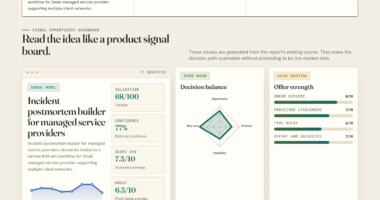
📊 Full opportunity report: The CFO’s new operating system. Anthropic, OpenAI, and the consulting margin that just got compressed. on ThorstenMeyerAI.com — validation score, market gap, and execution plan.

Get hardware and tech essentials delivered free — and shop member deals
- Fast, free delivery on millions of items
- Access to Prime Big Deal Days deals on October 6–7
- Prime Video, Amazon Music and more included
TL;DR
Anthropic has announced a $1.5 billion joint venture to embed Claude AI into private equity-backed enterprise workflows. OpenAI is pursuing a similar strategy with a $4 billion raise. Both are moving from model sales to integrated operating systems for finance functions, disrupting traditional consulting and software margins.
Anthropic announced a $1.5 billion joint venture with major financial institutions to embed Claude AI directly into private equity and enterprise finance operations, marking a strategic shift from model sales to integrated operating systems. Simultaneously, OpenAI is pursuing a parallel $4 billion raise aimed at expanding its enterprise deployment, signaling a broader industry move toward vertically integrated AI solutions for CFO functions.
Over the past 18 months, enterprise AI providers like Anthropic and OpenAI have transitioned from selling standalone models to offering comprehensive operating systems tailored for finance functions. Anthropic’s joint venture involves backing by Blackstone, Goldman Sachs, and other PE firms, deploying Claude-powered agents within private equity portfolio companies, with a focus on embedding AI into workflows via Microsoft 365 integrations. On May 4, Anthropic launched ten financial agents—ranging from KYC screening to earnings review—paired with Office add-ins, achieving a benchmark score of 64.37% on the Vals AI Finance Agent test. The next day, PwC announced a strategic alliance with Anthropic, creating a standalone Office of the CFO unit built on Claude technology, with 30,000 certified professionals. Meanwhile, OpenAI is raising $4 billion in a separate venture, backed by private equity, with a focus on deploying its tools through similar vertical integration models. Market share data indicates Anthropic’s enterprise AI adoption has risen to approximately 40% in early 2026, surpassing OpenAI’s 27%, with Ramp’s corporate card data showing Anthropic leading in paid business adoption for the first time. This shift signifies a move away from traditional consulting models, replacing multi-year, high-margin implementation projects with rapid deployment of AI agents embedded directly into enterprise workflows, reducing costs and timeframes from years to weeks.The CFO’s new
operating system.
Anthropic, OpenAI,
and the consulting
margin that just
got compressed.
+ Goldman + Apollo + others JV
Finance Agent benchmark
+ MS365 add-ins shipped May 5
structurally exposed to compression
The AI labs stopped selling models. They are selling operating systems for the Office of the CFO — and the layer that historically sat between the software vendor and the enterprise, the consulting tier, is what gets vertically captured.Thorsten Meyer · The CFO’s New Operating System · Enterprise Reorg 01
Disruption of Traditional Enterprise AI Models
This development signals a fundamental transformation in enterprise AI deployment, where integrated operating systems replace traditional licensing and consulting models. The shift reduces costs, accelerates implementation, and consolidates vendor relationships, which could reshape industry margins, valuation dynamics, and the competitive landscape for enterprise software and consulting firms. The move also indicates that AI-driven workflow automation is becoming core to CFO functions, elevating the strategic importance of AI vendors in financial operations.As an affiliate, we earn on qualifying purchases.
Evolution of Enterprise AI Deployment Strategies
Historically, enterprise AI adoption involved software licensing followed by lengthy, expensive consulting projects for implementation, often taking 1.5 to 3 years and costing 5-10 times the software license. Recent developments, exemplified by Anthropic’s joint venture and OpenAI’s funding efforts, show a shift toward vertically integrated models where AI labs handle both model provision and implementation, backed by private equity capital. Learn more about the industry shift in enterprise AI deployment strategies. This approach embeds AI agents into enterprise workflows via tools like Microsoft 365, enabling rapid deployment and operational integration. The strategic alliances, including PwC’s Office of the CFO built on Claude, exemplify how traditional consulting roles are being reconfigured into partnership or disruption models, compressing implementation timelines and margins.“The structural shift from selling models to delivering operating systems wrapped around deployment architectures is already underway, with private equity backing accelerating the transition.”
— Thorsten Meyer
enterprise AI integration tools for finance
As an affiliate, we earn on qualifying purchases.
As an affiliate, we earn on qualifying purchases.
Unclear Aspects of Deployment and Market Impact
While the strategic moves and funding rounds are confirmed, the full impact on traditional consulting margins and the pace of adoption across all enterprise sectors remain uncertain. It is also unclear how quickly other vendors and consulting firms will adapt to this new model and whether regulatory or organizational barriers will slow adoption of integrated AI operating systems.
AI financial agents for Microsoft 365
As an affiliate, we earn on qualifying purchases.
As an affiliate, we earn on qualifying purchases.
Upcoming Developments in Enterprise AI Deployment
Expect further announcements from Anthropic and OpenAI regarding additional partnerships and product launches. Monitoring how traditional consulting firms respond—whether through partnership, disruption, or new service models—will be critical. Additionally, observing enterprise adoption rates and impacts on vendor margins will clarify how deeply this structural shift is taking hold.
AI-driven financial analysis tools
As an affiliate, we earn on qualifying purchases.
As an affiliate, we earn on qualifying purchases.
Key Questions
How does this shift affect traditional AI licensing models?
It reduces reliance on standalone licenses, favoring integrated operating systems embedded directly into enterprise workflows, which can lower costs and deployment times.
What role do private equity firms play in this new AI deployment model?
Private equity firms back the deployment by financing and supporting forward-deployed engineering teams that embed AI agents into enterprise operations, enabling rapid, scalable implementation.
How might this impact consulting firms like PwC?
Consulting firms are shifting from traditional implementation roles toward partnership models or direct disruption, developing their own AI-powered solutions to stay relevant.
Will AI agents fully replace human analysts in finance?
While AI agents are approaching analyst-grade performance, human oversight remains essential, especially for complex decision-making and sign-off processes.
Source: ThorstenMeyerAI.com
Fall Picks
fall essentials
As an affiliate, we earn on qualifying purchases.