
TL;DR

Get hardware and tech essentials delivered free with Prime
- Fast, free delivery on millions of items
- Prime Video, Amazon Music and more included
- Member-only deals all year
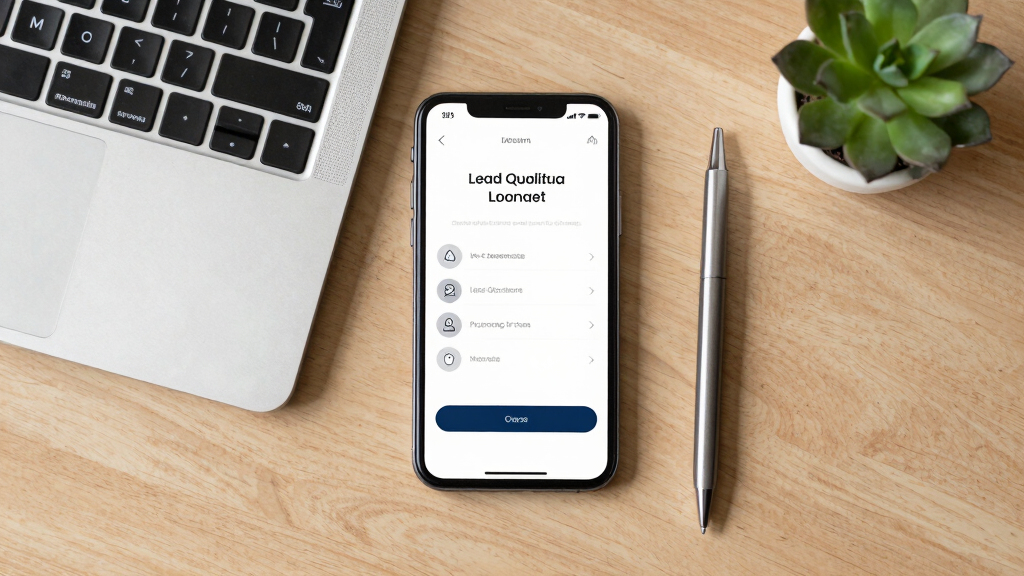
An automated lead qualification system uses structured forms, scoring, and routing to filter prospects before they reach your inbox. This saves hours, improves quality, and helps you focus on the most promising leads. Data-driven tweaks make it even smarter over time.
Imagine waking up to a clean, organized list of hot leads. No more sifting through unqualified inquiries or wasting hours on tire kickers. Building a lead qualification system that works while you sleep isn’t just a dream — it’s a game changer. You’ll spend less time on low-value prospects and more on closing deals with the right clients. This article shows you how to set up an automated, data-driven system that filters prospects, scores their fit, and routes them based on their potential. Ready to turn your lead flow into a 24/7 powerhouse?
Key Takeaways
- Automate your lead qualification with structured forms, scoring, and routing to save hours and focus on high-value prospects.
- Design questions that mirror your sales process; use scoring to prioritize leads automatically.
- Use analytics and AI signals to continually refine your system, boosting accuracy and conversion rates.
- Don’t set and forget — regularly review performance data and adjust your criteria for better results.
- Focus your team’s time on closing deals, not chasing unqualified inquiries.
lead qualification form software
As an affiliate, we earn on qualifying purchases.
As an affiliate, we earn on qualifying purchases.
What Exactly Is Lead Qualification — and Why It Matters
Lead qualification is the process of sorting prospects based on how well they match your ideal customer profile. Think of it as your gatekeeper, filtering out tire kickers and unfit clients. A good system weeds out those with no budget, no decision authority, or no real need, so your sales team spends time only on high-potential leads. According to sales experts, 80% of your revenue comes from just 20% of your leads — so focusing on the right ones makes all the difference.
For example, a SaaS company might qualify leads based on company size, industry, and budget. If a prospect doesn’t meet those criteria, they’re probably not worth your sales team’s time. That’s the core of lead qualification — it’s about working smarter, not harder.
Deeply understanding why lead qualification matters means recognizing its strategic role in maximizing sales efficiency. Proper qualification minimizes wasted effort, allowing your team to focus on prospects with the highest likelihood of converting. It also provides insight into customer segments, helping refine marketing strategies. The tradeoff is that overly rigid qualification criteria might exclude some potentially valuable leads—so balance and continuous refinement are key to maintaining an effective system.
As an affiliate, we earn on qualifying purchases.
Why Manual Qualification Is Killing Your Growth
Manual qualification feels personal but is painfully slow. Imagine a busy sales team trying to juggle dozens of inquiries. A lead submits a form at midnight, but the team only reviews it days later. Meanwhile, that lead has already talked to your competitors or lost interest.
Inconsistency is another killer. One rep might qualify a lead differently than another, leading to missed opportunities or wasted time. Plus, manual processes eat into your most valuable resources — your senior team members and closing experts — who should be closing deals, not chasing low-value prospects.
And let’s not forget the data blind spots. Manual qualification doesn’t reveal patterns. Maybe 70% of unqualified leads come from a specific ad campaign, but without systematized data, you never know. That’s a missed chance to optimize your marketing spend.
Moreover, manual processes often lead to subjective judgments that can vary significantly between team members, resulting in inconsistent lead quality assessments. This inconsistency hampers strategic decision-making and can cause valuable leads to fall through the cracks or be misclassified. The implications are clear: manual qualification limits scalability and hampers the ability to analyze data trends, ultimately stunting growth. Automating this process reduces these risks and creates a more reliable, scalable, and insightful approach to lead management.
As an affiliate, we earn on qualifying purchases.
How Automated Qualification Turns Leads Into Gold
An automated system uses a structured form or quiz to gather the right info — and then scores and routes leads based on their responses. Think of it as having a virtual sales assistant working 24/7, sorting prospects with precision. For example, instead of a generic contact form, you ask targeted questions like:
- What’s your monthly budget?
- When are you planning to buy?
- Who is the decision-maker?
Each answer gets a score, and the total score determines if a lead is hot, warm, or cold. High scorers get booked directly into your calendar, warm ones receive nurturing, and low scores are politely redirected elsewhere.
This setup ensures your sales team focuses only on the best prospects, saving hours of manual review. Plus, with analytics, you can tweak questions and scoring rules based on real data, making your system smarter over time.
The deep impact of automation lies in its ability to eliminate guesswork and subjectivity from lead assessment. By standardizing the qualification process, it ensures consistency and fairness, which in turn improves the quality of your sales pipeline. Additionally, it allows for rapid scaling—your team can handle more leads without sacrificing quality—while providing valuable data insights that inform ongoing strategy adjustments.
sales pipeline automation software
As an affiliate, we earn on qualifying purchases.
As an affiliate, we earn on qualifying purchases.
Step-by-Step: Building Your Automated Qualification Funnel
- Design your questions: Pick the criteria that define your ideal client. For a marketing agency, this might be budget, industry, and timeline.
- Create a multi-step form: Break questions into digestible steps that guide prospects and keep engagement high. Add a contact info step at the end.
- Assign scores to answers: Develop a scoring matrix that ranks responses based on fit. For example, a $10,000/month budget scores higher than $500.
- Set routing rules: Decide what happens after scoring. High scores get immediate booking links; low scores get friendly redirect pages.
- Integrate with your CRM: Automate lead routing, tagging, and follow-up sequences based on scores.
- Track and optimize: Use analytics to identify drop-off points and improve questions or scoring thresholds.
Imagine turning a 15-minute form into a lead filter that weeds out 70% of unqualified inquiries before they hit your inbox. That’s the power of a well-crafted funnel.
Real-World Win: How a Web Design Agency Saves 17 Hours Monthly
Before, a web design firm spent 20 minutes per lead manually qualifying — reviewing websites, emailing back and forth, and scheduling calls. Out of 50 leads, only 5 were ideal prospects. That’s 17 hours of effort each month, with just a handful of real opportunities.
After switching to a scored funnel, 15 leads self-qualify out at the budget or need questions. The agency now automatically routes only high-score prospects for quick booking, freeing up hours for actual design work and closing deals faster. This shift boosted their conversion rate by 25% and cut qualification time by 70%.
How to Keep Your System Sharp and Growing
Automation isn’t set-it-and-forget-it. Use analytics to monitor where prospects drop off and which answers correlate with conversions. Adjust questions, scoring, or routing based on these insights. If most high-quality leads come from a specific source, double down on that channel.
Regularly review your ICP and signals. As your business grows, your ideal customer profile might shift, and your qualification questions should evolve too. Integrate AI tools that track buyer intent and engagement signals in real-time for an extra edge.
For instance, if AI detects a prospect visiting several pricing pages or repeatedly downloading case studies, your system can flag them as hot leads automatically.
Deepening your understanding of these signals and continuously refining your criteria ensures your system remains effective and aligned with your evolving business goals. The tradeoff is that neglecting ongoing updates can lead to outdated filters, missing new opportunities or misclassifying prospects, which ultimately hampers growth. Regularly investing in system maintenance and leveraging AI insights enhances accuracy, making your qualification process both scalable and adaptable.
Frequently Asked Questions
How do I choose the right questions for my qualification funnel?
Start with your ideal customer profile. Ask about budget, decision authority, and specific needs. Keep questions simple and relevant to filter out unfit prospects early.
What scoring system works best for my business?
Focus on high-impact criteria like budget and urgency. Assign points based on fit and readiness. Adjust scores over time based on data and conversion patterns.
Can AI really improve lead qualification?
Absolutely. AI can track behavioral signals like website visits, content downloads, and engagement in real-time, helping you identify hot prospects faster and more accurately.
How often should I review and update my qualification system?
Regularly! Every quarter or after a major campaign. Use analytics to spot drop-offs or low scores, then tweak questions or scoring to improve results.
Conclusion
A well-built, automated lead qualification system turns your sleepy, manual process into a 24/7 pipeline filter. The best part? It frees your team to close high-value deals while prospects self-qualify and engage on their schedule. Think of it as your secret weapon for scalable growth — operating smoothly, even while you sleep.
Fall Picks
fall essentials
As an affiliate, we earn on qualifying purchases.