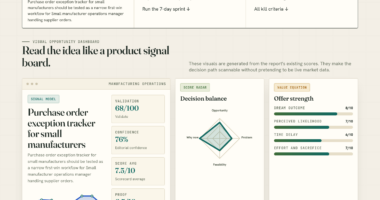
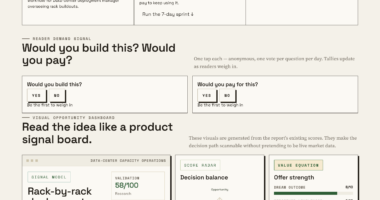
📊 Full opportunity report: The Significance Of Lahori Zeera In Global Food Trend Monitoring on IdeaNavigator AI — validation score, market gap, and execution plan.

Get hardware and tech essentials delivered free with Prime
- Fast, free delivery on millions of items
- Prime Video, Amazon Music and more included
- Member-only deals all year
TL;DR

Global media monitoring service GDELT registered a surge in worldwide coverage of Lahori Zeera, a Pakistani cumin-based beverage, scoring the signal 88 out of 100. According to IdeaNavigator AI, the spike illustrates why product and marketing leads at food and beverage brands need role-filtered, same-day trend monitoring rather than generic weekly roundups.
A surge in global media coverage of Lahori Zeera — the spiced cumin-based drink originating from Lahore, Pakistan — has been detected by the global news monitoring database GDELT, which scored the signal at 88 out of 100, placing it among the higher-intensity food-related coverage events the system tracks. According to IdeaNavigator AI, an idea-validation platform that surfaced the signal, the spike is a concrete example of a broader problem: food and beverage brands routinely learn about emerging trends, launches, and recalls too late to act on them.
The signal was picked up through GDELT’s continuous scanning of worldwide news coverage, which assigns intensity scores to topics based on the volume and spread of mentions across outlets. An 88/100 score indicates that coverage of Lahori Zeera rose sharply relative to its typical baseline in the GDELT feed. The score itself reflects media attention, not sales data or consumer demand — a distinction that matters when interpreting what the signal actually means commercially.
IdeaNavigator AI has proposed using this specific signal as a validation test for a narrow monitoring workflow. The proposed tool would watch GDELT and similar feeds for food trends, product launches, and recalls, then filter each item down to what is relevant for a single type of user: a product or marketing lead at a food or beverage brand. Each relevant item would be converted into a short brief covering what changed, why it matters, and what to do about it.
The business rationale, as laid out by IdeaNavigator AI, is that food trends, launches, and recalls are currently scattered across news sites, forums, and regulatory filings, with no filtering layer that connects raw signals to specific commercial roles. A same-day, role-filtered read, the argument goes, beats waiting for a generic weekly roundup when category developments move quickly.
Why One Cumin Drink Matters to Brand Teams
The significance of the Lahori Zeera signal lies less in the drink itself and more in what the coverage pattern reveals about how food trends now propagate globally. A regional South Asian beverage generating an 88/100 coverage signal in a global monitoring system suggests that niche, culturally specific products can move from local visibility to international media attention within short windows — faster than traditional monthly or weekly trend reports can capture.
For product and marketing leads, the practical stakes are concrete. A coverage surge can precede retail interest, menu placements, ingredient sourcing decisions, or competitor launches in a category like functional or ethnic beverages. Missing the early window means reacting after the trend has already been priced into supplier contracts or claimed by a first mover. Conversely, acting on a media signal alone — without confirming whether it reflects consumer demand rather than journalistic curiosity — carries its own risk.
The episode also illustrates a structural gap in how the industry consumes information. As IdeaNavigator AI frames it, the problem is not a shortage of data but the absence of a filter connecting raw signals to decisions. A GDELT score tells you attention is rising; it does not tell a brand manager whether that rise affects their roadmap.
Products Worth Considering

LG 34GX90SA-W 34-inch Ultragear WQHD OLED Curved Gaming Monitor

LG UltraGear 32GX850A-B 32-Inch 4K UHD Glossy OLED Gaming Monitor

LG UltraGear 27-Inch QHD OLED Gaming Monitor, 240Hz, 0.03ms, G-SYNC Compatible, FreeSync Premium Pro, HDMI 2.1
As an affiliate, we earn on qualifying purchases.
The Validation Plan Behind the Signal
GDELT is a large-scale open platform that indexes global news coverage in near real time and is widely used by researchers, analysts, and commercial monitoring tools to detect emerging patterns in media attention. Signals such as the Lahori Zeera surge emerge from that indexing process rather than from any single named outlet or announcement, which is why the underlying cause of the coverage spike is difficult to pin to one event.
Lahori Zeera is a traditional chilled drink made with cumin, black salt, and other seasonings, popular in Pakistan and parts of South Asia, particularly in hot weather. In recent years, South Asian flavors and functional beverages have drawn growing international attention from food media and product developers.
IdeaNavigator AI has outlined a specific validation path for the proposed monitoring service: hand-deliver the Lahori Zeera brief, along with two additional food trend, launch, or recall items, to five people who match the target persona — product or marketing leads at food and beverage brands — and measure whether any recipient changes a decision or forwards the brief to a colleague. The commercial model under consideration is a subscription aimed at that single role. No quotes from named industry figures accompanied the signal, and the analysis rests on the monitoring data itself.
What Remains Unclear
Several things remain unclear. First, the cause of the coverage surge has not been identified: the GDELT signal measures media attention, but whether the spike stems from a specific product launch, a viral social moment, export news, or routine seasonal coverage is not established. Second, an 88/100 media signal does not confirm consumer demand, retail sales, or export volumes — those would require separate data from market research firms or trade statistics. Third, the proposed monitoring workflow is unvalidated: IdeaNavigator AI itself frames it as a hypothesis to be tested with five target users, and no brand has publicly adopted the approach. Fourth, the comparison baseline for the score — the time window and typical coverage level against which the surge was measured — has not been disclosed in detail. Whether Lahori Zeera sustains international attention or reverts to its normal coverage level is unknown.
Testing Whether the Brief Changes Decisions
The immediate next step, according to IdeaNavigator AI’s published plan, is the validation exercise: delivering three food-signal briefs — including the Lahori Zeera item — to five matching product or marketing leads within the week and tracking whether any of them alters a decision or shares the material internally. That outcome, rather than the signal score itself, will determine whether the monitoring workflow is worth building further.
Observers of the trend should also watch whether Lahori Zeera’s coverage level holds, fades, or translates into measurable commercial activity — such as international distribution deals, restaurant menu appearances, or packaged product launches outside South Asia. For food and beverage professionals, the episode is a reminder that media-monitoring signals are inputs to judgment, not substitutes for it, and that verifying demand requires data beyond news volume. As with any fast-moving food trend, investment or product decisions carry risk, and coverage spikes can reverse as quickly as they form.
Source: IdeaNavigator AI
Key Questions
What is Lahori Zeera?
Lahori Zeera is a traditional chilled beverage from Lahore, Pakistan, made with cumin, black salt, and other seasonings. It is popular in South Asia, especially in hot weather, and has recently drawn wider international media attention.
What does the 88/100 GDELT score actually mean?
It is a media-attention intensity score from the GDELT global news monitoring database, indicating that coverage of Lahori Zeera rose sharply relative to its usual level. It measures news volume, not sales, demand, or export data.
Does the coverage surge mean Lahori Zeera is a proven commercial opportunity?
No. The signal is unverified as a demand indicator. It shows rising media attention only. Whether it reflects consumer interest, a specific event, or short-lived journalistic curiosity is not yet clear, and brands would need separate market data before acting.
What monitoring workflow is being proposed around this signal?
According to IdeaNavigator AI, a subscription-based monitor would scan GDELT and similar feeds for food trends, launches, and recalls, filter items by relevance to a product or marketing lead at a food or beverage brand, and deliver short what-changed, why-it-matters, what-to-do briefs.
How will anyone know if the idea works?
The stated validation plan is to hand-deliver the Lahori Zeera brief plus two other food-signal items to five people matching the target role, then measure whether any of them changes a decision or forwards the brief to a colleague. The concept is unvalidated until that test runs.
Source: IdeaNavigator AI