TL;DR
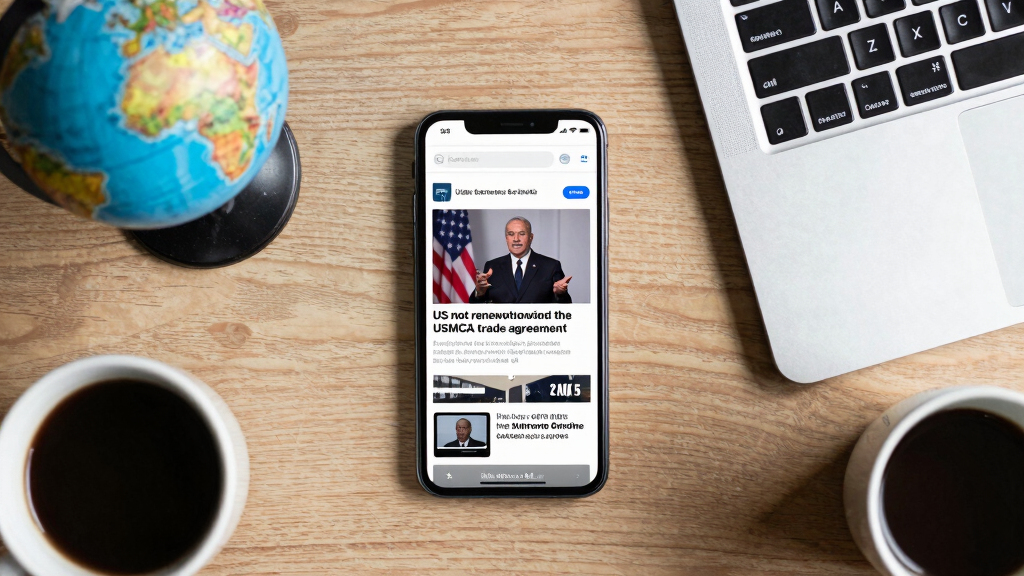
The United States has officially announced it will not renew the USMCA trade agreement with Mexico and Canada. This decision marks a major change in North American trade relations and raises questions about future economic policies.
The United States has officially announced it will not renew the USMCA trade agreement with Mexico and Canada, a move that could reshape regional economic relations. The decision was made public by U.S. officials on March 15, 2024, and marks a significant departure from previous trade policy commitments. This development is expected to impact supply chains, tariffs, and economic cooperation within North America.
According to a statement from the U.S. Trade Representative’s Office, the Biden administration has decided not to pursue renewal of the USMCA, which was originally negotiated in 2018 to replace NAFTA. The decision was confirmed by senior officials who cited changing economic priorities and a desire to pursue new trade strategies.
While the USMCA was set to remain in effect until its formal expiration or renewal, the U.S. government’s stance indicates it will not seek to extend or renegotiate the agreement in its current form. This move comes amid broader discussions about reshaping trade policies and addressing domestic economic concerns.
Mexico and Canada have yet to respond publicly, but analysts suggest this could lead to increased trade uncertainty in the region. Experts note that USMCA included provisions for automatic renewal unless explicitly terminated, which the U.S. now appears to be bypassing.
Implications for North American Trade Relations
This decision could significantly alter trade dynamics between the U.S., Mexico, and Canada. The USMCA was designed to facilitate trade, reduce tariffs, and establish labor and environmental standards. Its non-renewal may lead to increased tariffs, trade disruptions, and renegotiations of bilateral agreements. For businesses, this introduces uncertainty that could impact investment and supply chains across North America.
Politically, the move signals a shift towards more protectionist or independent trade policies by the U.S., which may influence future negotiations and regional cooperation. The decision also raises questions about the U.S. government’s long-term approach to trade and economic diplomacy.

The Four Agreements: A Practical Guide to Personal Freedom (A Toltec Wisdom Book) – Paperback by Don Miguel Ruiz
As an affiliate, we earn on qualifying purchases.
As an affiliate, we earn on qualifying purchases.
Background on USMCA and Recent Trade Policy Shifts
The USMCA, signed in 2018, replaced NAFTA and was hailed as a modernized trade deal emphasizing labor rights, environmental standards, and digital trade. It was ratified by all three countries in 2020 and was expected to be renewed or extended periodically.
In recent years, the U.S. has adopted a more protectionist stance, with policies emphasizing tariffs and renegotiations on trade agreements. The Biden administration initially signaled support for USMCA but has also expressed interest in revisiting trade policies to better serve domestic industries. The current decision to not renew marks a notable shift from previous commitments to uphold the agreement.
There has been ongoing debate within U.S. political circles about the effectiveness of USMCA and whether a new approach is needed. The announcement comes amid broader discussions about reshaping economic policies post-pandemic and amid global trade tensions.
“The United States will not seek to renew the USMCA agreement as currently structured. We are exploring new trade strategies aligned with our economic priorities.”
— U.S. Trade Representative’s Office

America in the World: A History of U.S. Diplomacy and Foreign Policy
As an affiliate, we earn on qualifying purchases.
As an affiliate, we earn on qualifying purchases.
Unanswered Questions About Future Trade Policies
It is not yet clear whether the U.S. will pursue a new trade agreement with Mexico and Canada, or if this decision signals a broader shift away from regional trade commitments altogether. The specifics of how this will affect existing trade relations and tariffs remain uncertain, and negotiations are expected to follow in the coming months.

Canon P23-DHV-3 Printing Calculator with Double Check Function, Tax Calculation and Currency Conversion – Paper Roll Included in Box
- Built-in Serial Impact Roller Printer: Monitors inputs with dual-color printing
- 12-Digit LCD Display: Provides clear, easy-to-read results
- Four-Key Memory: Stores frequently used figures
As an affiliate, we earn on qualifying purchases.
As an affiliate, we earn on qualifying purchases.
Next Steps in U.S.-North America Trade Relations
The U.S. government is expected to outline its future trade strategy in the coming weeks, including whether it plans to negotiate new agreements or pursue bilateral deals with Mexico and Canada. Both countries are likely to respond diplomatically, but the move could lead to increased trade negotiations, potential tariffs, or new regional agreements. Monitoring statements from Mexican and Canadian officials will be key to understanding the evolving landscape.

The Logistics and Supply Chain Toolkit: Over 100 Tools for Transport, Warehousing and Inventory Management
As an affiliate, we earn on qualifying purchases.
As an affiliate, we earn on qualifying purchases.
Key Questions
Why is the U.S. not renewing USMCA?
The U.S. government cited changing economic priorities and a desire to pursue new trade strategies as reasons for not renewing the agreement. Specific policy details have not been fully disclosed.
Could this lead to tariffs or trade disruptions?
Yes, the move could increase uncertainty and potentially lead to tariffs or renegotiations that disrupt supply chains and trade flows within North America.
What does this mean for Mexico and Canada?
Both countries may face increased trade uncertainty and could seek to negotiate new agreements or protections to safeguard their economic interests.
Will the USMCA be replaced with a new deal?
It is not yet clear whether the U.S. intends to negotiate a new trade agreement with Mexico and Canada or pursue a different approach altogether.
Source: google-trends