
🔍 Read the full analysis: How To Find A Mini PC For Local AI: 10 Best Picks For 2026 on ThorstenMeyerAI.com

Get hardware and tech essentials delivered free with Prime
- Fast, free delivery on millions of items
- Prime Video, Amazon Music and more included
- Member-only deals all year
TL;DR
A ThorstenMeyerAI.com roundup names seven mini PC models or configurations and recommends the GEEKOM A9 Max as its best overall package. The supplied source does not identify three more picks or provide benchmark results, so the full promised top 10 cannot be verified from the material available.
ThorstenMeyerAI.com’s 2026 mini PC roundup names the GEEKOM A9 Max as its best overall choice for local AI, citing its Ryzen AI 9 HX 470 processor, 32GB of DDR5 memory and 2TB SSD. The source also points to the GMKtec EVO-X3 for buyers who need 128GB of memory and the GMKtec K15 with Oculink for those considering external graphics, while the supplied material identifies only seven models or configurations despite the headline promising 10.
The original mini PC analysis compares processor class, installed memory and memory type, storage capacity, and expansion options. Its central buying point is that processor branding alone does not establish how well a mini PC will suit a local AI workload. Available memory can limit which models or datasets fit, while storage and expansion determine how much room a buyer has to adapt the system.
The source names the A9 Max, EVO-X3, two K15 configurations, GEEKOM GT15 Max, GEEKOM IT15 and MINISFORUM AI X1 Pro. It does not supply prices, independent performance tests, cooling measurements, or software compatibility results. The recommendation is therefore a configuration-based assessment, not a verified comparison of AI speed.
The 10 picks
- 1
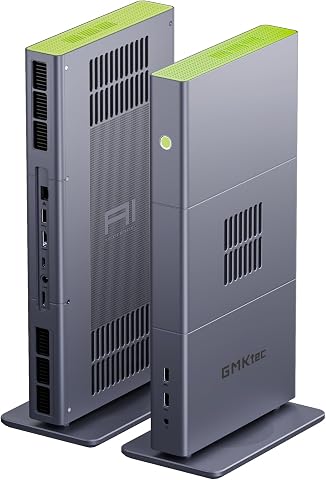 GMKtec EVO-X3 Mini PC with AMD Ryzen AI Max+ 395, 128GB LPDDR5X, and 2TB PCIe…View on Amazon →
- 2
 GMKtec EVO-X2 AI Mini PC AMD Ryzen AI Max+ 395, Up to 5.1GHz, 16C/32TView on Amazon →
- 3
 GEEKOM A9 Max Top AI Mini PC, AMD Ryzen AI9 HX470, 32GB DDR5, 2TB SSDView on Amazon →
- 4
 GEEKOM IT15 Mini PC with Intel Ultra 9 285H, 32GB DDR5, 1TB SSD, Arc 140T GPU…View on Amazon →
- 5
 MINISFORUM AI X1 Pro-370 Mini PC with AMD Ryzen AI 9 HX370, 32GB DDR5, 1TB SS…View on Amazon →
- 6
 GEEKOM GT15 Max Business & Professional Mini PC with Intel Core Ultra 9, 32GB…View on Amazon →
- 7
 GEEKOM IT13 MAX AI Mini PC with Intel Ultra 9 185H, 24GB LPDDR5, 500GB SSDView on Amazon →
- 8
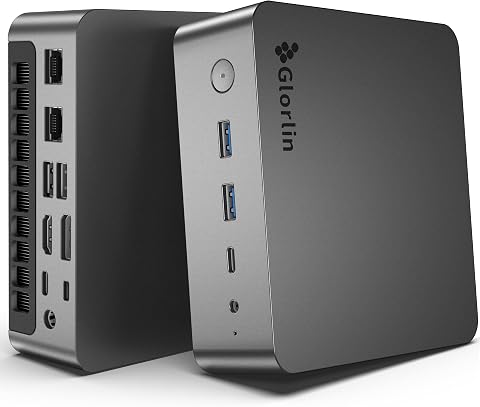 Glorlin Mini PC with AMD Ryzen 7 Pro 8845HS, 16GB DDR5 RAM, and 1TB SSDView on Amazon →
- 9
 GMKtec K15 AI Mini PC Oculink Intel Ultra 5 125U 32GB DDR5 512GB SSD, Desktop…View on Amazon →
- 10
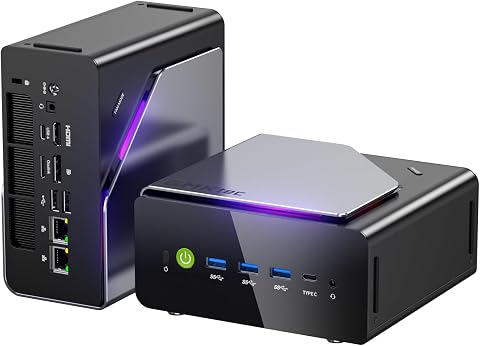 GMKtec K15 Mini PC AI Ultra 5 125U, 12-Core, 32GB DDR5, 1TB PCIe 4.0 SSDView on Amazon →
1. GEEKOM A9 Max
The A9 Max is the source’s best overall pick, pairing a Ryzen AI 9 HX 470 with 32GB DDR5 and a 2TB SSD. The roundup favors that combination as a ready-to-use balance of memory and storage. It does not give benchmark figures or establish which models it can run, so buyers should compare the configuration with the requirements of their intended software.
Products Worth Considering

Logitech MX Mechanical Mini for Mac Wireless Keyboard, Space Gray

LG 27G810A-B 27-inch UltraGear 4K UHD IPS Gaming Monitor

Logitech MX Master 4 Ergonomic Wireless Mouse with Haptics – Graphite
As an affiliate, we earn on qualifying purchases.
2. GMKtec EVO-X3
The EVO-X3 is the roundup’s memory-focused choice, with 128GB of LPDDR5X. The source says that capacity may suit tasks involving larger models or datasets held in memory. It provides no workload tests or detail about memory upgradeability, bandwidth, or software support; the capacity alone cannot guarantee that a particular model will run well.
3. GMKtec NucBox K15
This K15 configuration lists an Intel Core Ultra 5 125U and a 1TB SSD. The source presents it alongside an Oculink version with less included storage, giving buyers a choice between the listed drive capacity and that expansion connection. It does not specify memory capacity for this configuration in the supplied material.
4. GMKtec K15 with Oculink
The Oculink version pairs the Intel Core Ultra 5 125U with a 512GB SSD and an Oculink connection. The source identifies that connection as a possible route to external graphics. A buyer would need to check the enclosure, graphics card, power and setup requirements for their planned arrangement; the port does not mean external graphics are included.
5. GEEKOM GT15 Max
The GT15 Max is listed among premium processor options with 32GB of RAM. The source does not give a processor model, memory type, storage capacity or test results for this configuration in the supplied material. Its name and placement do not establish its suitability for a specific AI application.
6. GEEKOM IT15
The IT15 is also described as a premium processor option with 32GB of RAM. The roundup advises matching that capacity to the planned workload rather than assuming a higher processor tier settles the choice. More detailed specifications and independent results are not included in the source material provided here.
7. MINISFORUM AI X1 Pro
The AI X1 Pro appears among the roundup’s premium processor options with 32GB of RAM. The supplied source gives no further configuration details or measured results for it. Readers comparing it with the other named systems would need those details, plus software-specific evidence, to judge relative capability.
8. Pick not identified in source
The material supplied for this report does not name an eighth mini PC. No model, configuration, or supporting claim can be attributed for this slot. Readers should treat the roundup’s promised count as unverified from the available source, rather than infer a product or specification that is not present.
9. Pick not identified in source
A ninth system is likewise absent from the supplied material. There is no evidence here about its processor, memory, storage, price or intended workload. Filling this section with a guessed model would turn an incomplete source into an unsupported recommendation.
10. Pick not identified in source
The tenth promised pick is not identified either. The source excerpt contains seven named configurations, counting the two K15 versions separately. It does not say whether other picks were omitted from the excerpt or whether the headline reflects a complete list. That gap limits what this report can confirm.
Memory and Expansion Shape the Choice
The roundup’s practical message is that local AI workloads can be constrained by memory and storage as well as processing hardware. A system with more memory may leave room for larger workloads, while a larger SSD can accommodate more locally stored models and datasets. Neither capacity alone proves speed or compatibility.
Oculink represents a different tradeoff: the K15 version includes a way to connect external graphics, but its listed 512GB SSD is smaller than the 1TB drive in the other K15 configuration. Buyers considering that route need to account for the additional graphics hardware, space and setup. The source does not state the cost of those additions or measure the resulting performance.
These distinctions matter because a compact PC purchase can be difficult to adapt if memory is fixed or storage proves insufficient. The source advises checking whether memory can be replaced and what storage expansion the chassis supports, but it does not provide those answers for every named model.
How the Roundup Compares Systems
The source says it ranked the systems by processor class, installed memory and memory type, storage, and expansion options. It gives priority to balanced capability and practical fit, while recognizing specialist configurations for high memory or Oculink. The A9 Max leads as the balanced listed package; the EVO-X3 is singled out for its 128GB memory capacity.
The article also cautions that product names and specifications do not establish benchmark performance, cooling behavior or software compatibility. Its supplied excerpt offers no prices, testing methodology details beyond the comparison factors, publication date, or current stock information. Those omissions make the recommendations a starting point for comparison rather than a complete purchasing assessment.
“The GEEKOM A9 Max is my best overall pick.”
— ThorstenMeyerAI.com roundup
Three Promised Picks Are Missing
The supplied source names seven configurations, not 10, and does not explain whether three entries were omitted from the material or whether the headline overstates the list. The publication date, prices, availability, independent benchmarks, cooling performance, exact software support and upgradeability are also not established here. The source gives no evidence that any named mini PC will run a particular model at a particular speed.
Memory requirements vary with the model, software, context and other applications running at the same time. The roundup offers capacity comparisons but not tests showing the limits of these systems. Its Oculink discussion describes an expansion path, not a tested graphics setup or a guaranteed performance outcome.
Verify Specs Before Buying
Readers comparing these systems should check each manufacturer’s current configuration, price, memory upgrade options, storage expansion and supported ports. They should also look for independent tests using the AI software and workload they expect to run. For the K15 with Oculink, that includes confirming compatibility and power requirements for the intended external graphics equipment.
A complete 10-pick comparison would need to identify the remaining three systems and give comparable specifications for all entries. Until that information is available, the roundup supports discussion of the seven named configurations only; it does not substantiate the full list promised by its headline.
Key Questions
Which mini PC does the roundup rank first?
It names the GEEKOM A9 Max as its best overall pick, citing a Ryzen AI 9 HX 470, 32GB DDR5 and 2TB SSD configuration.
Which listed system has the most memory?
The source identifies the GMKtec EVO-X3 with 128GB LPDDR5X. It does not provide benchmark results showing which models or datasets that capacity can handle.
What is the difference between the two K15 configurations?
Both list an Intel Core Ultra 5 125U. The NucBox K15 lists a 1TB SSD, while the K15 with Oculink lists a 512GB SSD and adds the Oculink connection for a possible external graphics setup.
Does the source confirm all 10 picks?
No. The supplied material names seven configurations when the two K15 versions are counted separately. It does not identify the other three or explain the gap.
Are the recommendations backed by AI performance tests?
No benchmark results are included in the supplied source. It says specifications alone do not establish performance, cooling behavior or compatibility, so buyers should seek tests for their intended workload.
Source: ThorstenMeyerAI.com