
TL;DR
Listen free for 30 days with Audible
Thousands of audiobooks and originals — cancel anytime.
Start your free trialAs an affiliate, we earn on qualifying purchases.
A new AI-generated website recreates a Swiss transit station, demonstrating advanced coding, design discipline, and real-time features. This project highlights AI’s role in precise digital craftsmanship.
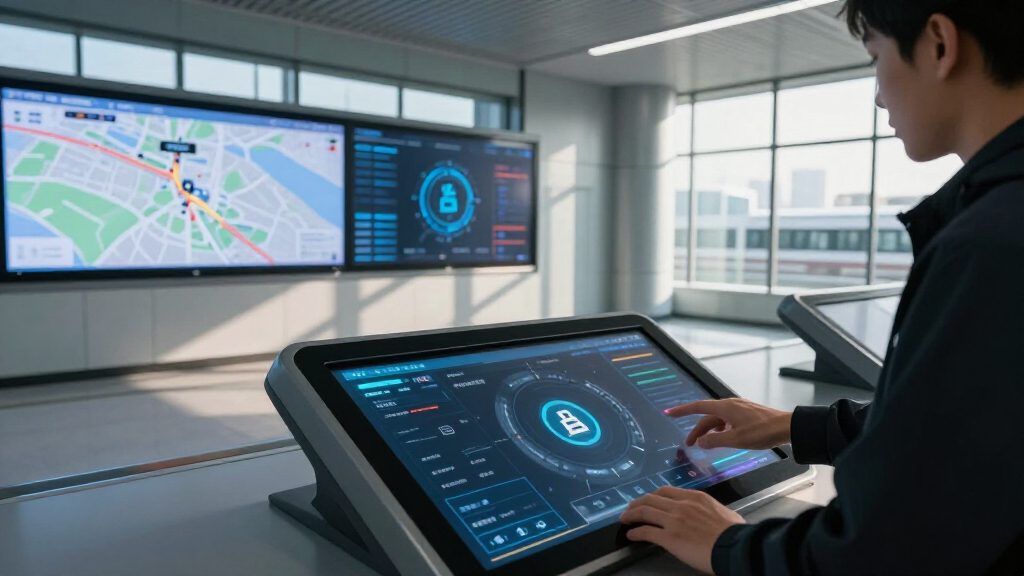
AI has been used to meticulously craft a digital replica of a Swiss alpine railway station, called ‘Kanton Alpin Verkehrsbetriebe,’ emphasizing precision, discipline, and Swiss design principles. The project is a showcase of how artificial intelligence, combined with coding, can produce highly detailed, real-time, and visually disciplined websites that mimic real-world systems, as detailed in the original analysis.
The website, part of a larger AI-driven exhibition, features a minimalist Swiss International Style aesthetic, built entirely with HTML, CSS, and JavaScript without external assets or frameworks. It includes a live SVG clock modeled after Swiss railway station clocks, which accurately reflects real-time, with a second hand that sweeps and pauses as in actual Swiss stations.
The site also features a split-flap departure board with animated flipping characters, displaying destinations and delays, updating every 20 seconds. All visual elements, including pictograms, maps, and schematics, are generated via code, ensuring high precision and consistency. The project’s development involved three phases: initial construction based on strict design principles, rigorous critique and refinement, and final approval by an art director to meet Swiss style standards.
According to Thorsten Meyer, the process exemplifies how AI can facilitate detailed, disciplined design and coding, creating digital environments that feel authentic and mechanically precise.
Implications of AI-Driven Swiss-Style Digital Design
This project demonstrates AI’s potential to produce highly disciplined, precise digital environments that mimic real-world systems with exacting detail. It highlights how AI can assist in creating interfaces rooted in specific aesthetic and functional standards, such as Swiss International Style, with applications beyond artistic expression into practical digital infrastructure. For readers, this signals a future where AI tools could significantly influence design, coding, and the creation of digital replicas of physical systems, raising questions about automation, authenticity, and craftsmanship in digital art and engineering.As an affiliate, we earn on qualifying purchases.
The Evolution of AI in Digital Design and Simulation
This project follows a growing trend of AI-assisted design and coding, where artificial intelligence helps generate complex, precise digital environments. Previously, AI has been used in areas like architectural modeling, virtual environments, and data visualization. The ‘Kanton Alpin’ website exemplifies a new level of detail and discipline, inspired by Swiss transit aesthetics, achieved through code-driven processes. The approach aligns with recent developments in AI that emphasize automation, accuracy, and stylistic fidelity, pushing the boundaries of digital craftsmanship.“This project showcases how AI can elevate digital design to a level of precision and discipline traditionally reserved for manual craftsmanship, especially in contexts like Swiss transit systems.”
— Thorsten Meyer
split-flap departure board display
As an affiliate, we earn on qualifying purchases.
As an affiliate, we earn on qualifying purchases.
Unanswered Questions About AI-Generated Digital Transit
It is not yet clear how scalable or adaptable this AI-driven approach is for more complex or dynamic environments. The extent to which AI can replicate the nuanced craftsmanship of human designers in different styles remains to be seen. Additionally, the long-term implications for digital authenticity and automation in design are still developing.real-time digital clock for websites
As an affiliate, we earn on qualifying purchases.
As an affiliate, we earn on qualifying purchases.
Future Developments in AI-Driven Digital Replication
Further projects are expected to explore the application of AI in creating more complex, interactive, and adaptive digital environments. Developers and designers may experiment with integrating real-time data feeds, expanding beyond static style replication, and automating entire workflows for digital infrastructure. The ongoing evolution will likely influence how digital spaces are conceived, built, and experienced, with an emphasis on precision and stylistic fidelity.As an affiliate, we earn on qualifying purchases.
Key Questions
How was the ‘Kanton Alpin Verkehrsbetriebe’ website created?
The website was built entirely with HTML, CSS, and JavaScript, relying solely on code to generate all visual elements, including the clock, departure board, and pictograms, with no external assets or frameworks.
What makes this project stand out from typical websites?
Its strict adherence to Swiss International Style, real-time features like the SVG clock, and the use of code to generate all visual components demonstrate a high level of precision and discipline uncommon in standard web projects.
Can this AI-driven approach be applied to other styles or environments?
While technically feasible, scalability and stylistic fidelity depend on the complexity of the environment and the AI’s ability to replicate nuanced craftsmanship. Future projects may explore diverse styles and more dynamic systems.
What are the limitations of this project?
It remains uncertain how well this approach can adapt to more complex or interactive environments, and questions about long-term authenticity and automation in digital design are still open.
Source: ThorstenMeyerAI.com
Flea & tick season Picks
flea and tick prevention
As an affiliate, we earn on qualifying purchases.