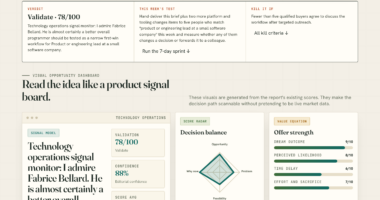
📊 Full opportunity report: One-click Employee Offboarding For Startups Without IT on IdeaNavigator AI — validation score, market gap, and execution plan.
TL;DR

A startup is testing a one-click offboarding tool designed for small companies without dedicated IT teams. The solution automates revoking access across SaaS tools, improving security and compliance. Its success could reshape security practices for SMBs.
A startup is developing and testing a one-click employee offboarding tool aimed at small companies with no dedicated IT staff. The tool is designed to streamline the process of revoking employee access across multiple SaaS platforms immediately upon departure, addressing a common security vulnerability. This development is significant because it offers a practical solution for startups to improve security and compliance without the complexity of traditional offboarding procedures.
The proposed offboarding system connects popular SaaS platforms such as Google Workspace through OAuth, enabling a single click to execute a comprehensive checklist. This checklist revokes active sessions, transfers ownership of files, reassigns licenses, rotates shared secrets, and produces an audit-ready report. The initiative targets startups with teams ranging from 10 to 100 employees, where manual offboarding often leads to lingering access for former employees, creating security risks.
According to sources familiar with the project, the workflow is designed to be intuitive and require no technical expertise, making it accessible for operational leads or founders who handle security tasks without dedicated IT personnel. The startup plans to monetize the service through a per-employee-per-month pricing model, with an initial tier for individual offboarding events. The goal is to validate the approach by conducting audits at twenty startups, revealing how often access is left active after employee departure, and demonstrating the value of automated offboarding in real-world settings.
Implications for SMB Security and Compliance
This development addresses a critical security gap for small businesses that lack dedicated IT teams. Manual offboarding often results in residual access, which can lead to data breaches, unauthorized information access, or compliance violations. Automating and simplifying this process reduces human error, ensures timely revocation of access, and helps startups meet security standards such as SOC 2 and other audits. If successful, this tool could become a standard practice among SMBs, significantly improving their security posture and operational efficiency.
employee offboarding SaaS automation tool
As an affiliate, we earn on qualifying purchases.
As an affiliate, we earn on qualifying purchases.
Growing SaaS Sprawl and Regulatory Demands
Over the past few years, SaaS usage per employee has increased steadily, leading to complex and fragmented access management. Small startups, often without dedicated IT staff, struggle to keep track of who has access to what, especially when employees leave. Meanwhile, security questionnaires and compliance audits now increasingly demand documented offboarding procedures, putting pressure on startups to formalize their processes. This environment creates a clear market need for simple, automated solutions tailored to the SMB segment, which traditionally lacks the resources for complex identity and access management systems.
Previous efforts to automate offboarding have targeted larger enterprises with sophisticated identity solutions. The new approach aims to fill the gap for smaller companies, offering a lightweight, easy-to-deploy workflow that can be tested quickly and scaled as needed.
one-click employee access revocation software
As an affiliate, we earn on qualifying purchases.
As an affiliate, we earn on qualifying purchases.
Unclear Scope and Adoption Challenges
It is not yet clear how widely this tool will be adopted or how effective it will be in real-world settings. The success depends on integration ease, user interface design, and whether startups find the cost justified by the security benefits. Additionally, it remains to be seen how the tool will handle diverse SaaS platforms beyond Google Workspace and the extent to which it can automate more complex offboarding scenarios.
Google Workspace security management tools
As an affiliate, we earn on qualifying purchases.
As an affiliate, we earn on qualifying purchases.
Next Steps for Pilot Testing and Market Validation
The startup plans to initiate pilot programs at twenty small startups over the coming months, focusing on measuring lingering access issues and user satisfaction. Based on feedback, they will refine the workflow, expand platform integrations, and prepare for broader deployment. Success in these pilots could lead to a wider rollout and potential partnerships with SaaS providers or security vendors, establishing a new standard for SMB offboarding practices.
As an affiliate, we earn on qualifying purchases.
Key Questions
How does the one-click offboarding tool work?
The tool connects to SaaS platforms via OAuth, executing a checklist that revokes sessions, reassigns licenses, transfers file ownership, rotates secrets, and generates an audit report—all with a single click.
Is this solution suitable for all small startups?
It is designed primarily for startups with 10-100 employees and no dedicated IT team. Compatibility with platforms beyond Google Workspace is still under development.
What are the main benefits of automating offboarding?
Automating reduces the risk of residual access, improves security compliance, saves time, and minimizes human error during employee departure processes.
When will the tool be generally available?
The startup plans to complete pilot testing within the next few months, with a potential wider release following successful validation.
What challenges might hinder adoption?
Challenges include integration with diverse SaaS platforms, user interface complexity, and convincing startups of the cost-benefit ratio.
Source: IdeaNavigator AI