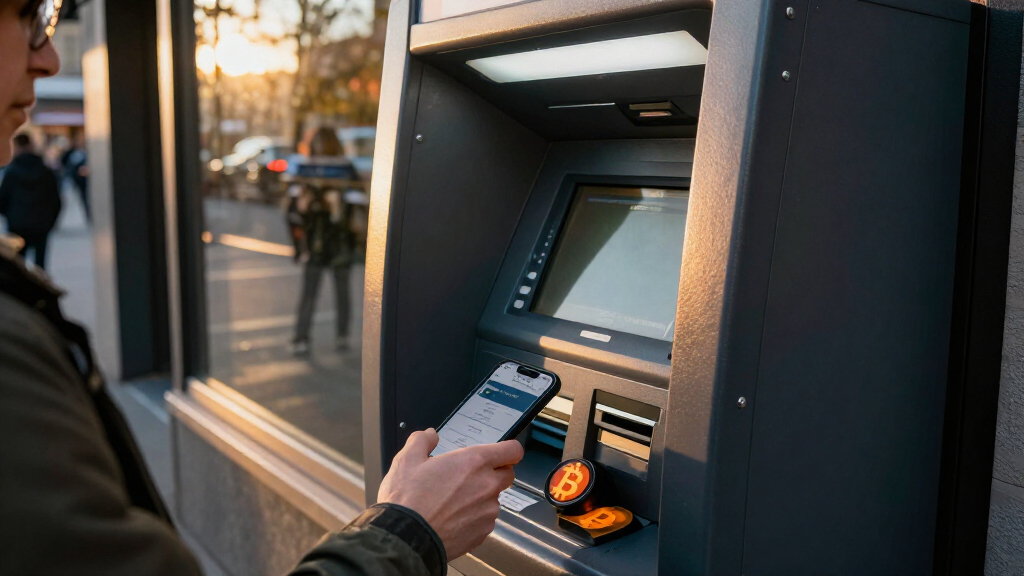
🔍 Read the full analysis: The AI Debate Has An ATM-Sized Paradox on ThorstenMeyerAI.com

Get hardware and tech essentials delivered free with Prime
- Fast, free delivery on millions of items
- Prime Video, Amazon Music and more included
- Member-only deals all year
TL;DR
The ATM automated cash dispensing, but U.S. teller employment did not fall as ATMs spread: banks needed fewer tellers per branch while opening more branches. Later, mobile banking and branch closures accompanied a steep decline in teller jobs, showing how automation’s effects can unfold over time and across different technologies.
A new analysis published November 20 by ThorstenMeyerAI.com revisits the ATM’s effect on bank tellers: although U.S. machines increased roughly fourfold from 1995 to 2010, teller employment did not collapse during that period. The account, drawing on economist James Bessen’s research, argues that ATMs cut staffing needs at individual branches while making branches cheaper to operate, allowing banks to expand; a later shift toward mobile banking coincided with a much sharper decline in teller jobs.
The article traces the first Barclays cash machine to June 27, 1967, outside a branch in Enfield, north London. Actor Reg Varney demonstrated the machine, which dispensed no more than £10 in one-pound notes. Barclays had developed the machines with banknote printer De La Rue. Customers used a specially marked paper cheque and a personal code, rather than a plastic card. Before cash machines, the bank’s archive says, people generally had to visit a bank during office hours to get cash.
The technology spread to other countries: a cash machine opened in Tübingen, Germany, on May 27, 1968, and Chemical Bank installed a Docutel cash dispenser in Rockville Centre, New York, in September 1969, according to the source’s references to the Smithsonian and Computer History Museum. The device automated core parts of a teller’s work, especially dispensing cash, but it did not take over the entire range of counter services.
In the United States, the number of ATMs rose from about 100,000 in 1995 to 400,000 in 2010, based on figures from the Bank for International Settlements used by Bessen. Yet teller employment, as MIT economist David Autor summarized Bessen’s findings, rose modestly from about 500,000 in 1980 to about 550,000 in 2010. Those figures describe different time spans: the machine count covers 1995–2010, while the employment comparison covers 1980–2010.
Infographic 01 · The paradox
Four times the machines, more tellers
ATMs took over the teller's core task. For three decades, banks answered with more branches, not fewer tellers.
US commercial bank offices (head offices + branches) · year-end · FDIC
Teller and ATM figures: Bessen’s analysis of Census and American Community Survey microdata, as summarised by Autor (2015); ATM counts from the Bank for International Settlements. Branch growth in cities: Bessen (2015), urban markets. FDIC series: FDIC-insured commercial banks in the US states and DC; savings institutions are not included.
Sources: D. Autor, Journal of Economic Perspectives 29(3), 2015; J. Bessen, Toil and Technology, IMF Finance & Development (March 2015); FDIC, Historical Bank Data (commercial banks, year-end).
Powered by Thorsten Meyer AI
Why Branch Economics Mattered
The ATM story matters because it separates a technology’s effect on a task from its effect on a whole occupation. Machines took over routine cash handling, but that lowered the cost of running a branch. According to Bessen’s analysis, U.S. urban branches needed about 13 tellers in 2004, down from about 20 in 1988, while the number of branches in U.S. cities grew 43% over that same period. A smaller staffing requirement at each location did not automatically mean fewer teller jobs overall when banks were opening more locations.
The pattern offers a useful qualification to current forecasts about automation, including AI. The ATM did not preserve every teller task or guarantee that every worker benefited. Instead, the job shifted toward customer interaction and sales, while the overall employment effect depended on how banks and customers responded to cheaper service. The source’s historical account does not establish that AI will follow the same path; it shows why claims about a technology eliminating a job need evidence about both tasks and demand.
The later numbers show that the occupation can still shrink as services and customer behavior change. In 2023, 48.3% of U.S. households with a bank account mainly used mobile banking, compared with 15.1% who mainly used a teller, according to the article. Bureau of Labor Statistics figures cited there put U.S. teller employment at about 600,500 in 2008 and 339,200 in 2025. That decline spans a period in which mobile banking, branch closures and other changes—not simply the initial spread of ATMs—need to be considered.
Products Worth Considering

Trezor Safe 5 Crypto Hardware Wallet

Logitech MX Brio Ultra HD 4K Webcam

Apple MacBook Pro 2026 14.2 Laptop with M5 Pro chip, 15‑core CPU, 16‑core GPU, 24 GB Unified Memory, 1 TB SSD, Wi‑Fi 7 – Silver
As an affiliate, we earn on qualifying purchases.
From Cash Machines to Mobile Banking
The article’s central historical comparison is between ATMs and the work done at bank counters. A teller may hand out cash and take deposits, but also cash cheques and answer customer questions. The ATM was named for the occupation whose work it partly automated; it was not a machine capable of taking over every service associated with the job. The account says banks increasingly shifted tellers toward relationship banking, including customer advice and offers of loans, credit cards and investment products.
Bessen’s explanation emphasizes two forces moving in opposite directions. Banks needed fewer tellers at each branch, but cheaper operations helped support more branches. The source also points to deregulation that allowed banks to open branches more freely. FDIC figures it cites show U.S. commercial bank offices rising from 58,937 at the end of 1988 to 77,302 at the end of 2004, and reaching a peak of 88,522 in 2012. That nationwide office count includes both head offices and branches; it is distinct from the article’s 43% figure for branch growth in U.S. cities.
The next phase involved digital banking rather than the ATM alone. The article says German bank branches declined from 45,467 at the end of 2004 to 16,799 at the end of 2025, and reports that cash machines are now retreating in Germany, China and Japan. These figures suggest a broader move away from physical banking, but the source does not provide enough detail to assign the changes in each country to a single cause.
“Actually rose modestly from 500,000 to approximately 550,000 over the 30-year period from 1980 to 2010.”
— David Autor, summarizing Bessen’s findings
What the Employment Figures Leave Open
The figures in the article do not isolate how much of the later fall in teller employment came from mobile banking, branch closures, ATMs, online services, bank consolidation or other economic changes. The comparison between 600,500 teller jobs in 2008 and 339,200 in 2025 documents a decline over that span, but does not by itself establish the cause. Nor does the earlier increase in employment prove that ATMs created teller jobs: the article describes branch growth and lower operating costs as part of Bessen’s explanation.
The source also offers only a brief account of the current retreat in cash machines in Germany, China and Japan. It gives no comparable machine counts, dates for the start of those declines, or country-by-country explanation. Its historical evidence concerns ATMs and banking work; it cannot establish how AI will affect employment across other industries. The size and timing of any AI-driven job changes remain uncertain.
The Next Test for Automation
The article’s next step is to continue its history-of-automation series, following the previous episode on telephone operators with a case about bank tellers. For readers weighing claims about AI and jobs, the immediate test is whether analysis distinguishes tasks from occupations and tracks changes over time: staffing at individual workplaces, the number of workplaces, customer demand and the work employees take on after automation.
Further evidence would be needed to explain the recent teller decline, including comparable data on branch numbers, digital banking use and employment across the same years. The source provides historical reference points through 2025 but does not set out a new forecast or a specific next data release. Any broader conclusion about AI’s effects should remain provisional until those effects are measured across particular jobs and industries.
Key Questions
Did ATMs cause U.S. teller employment to fall?
The figures cited in the article show that U.S. teller employment rose modestly from about 500,000 in 1980 to about 550,000 in 2010, even as ATMs spread. Bessen’s explanation is that fewer tellers were needed per branch, while lower operating costs and branch growth helped offset that change. The figures do not mean ATMs had no effect on teller work.
How much did the number of U.S. ATMs grow?
The article cites an increase from about 100,000 machines in 1995 to about 400,000 in 2010, using Bank for International Settlements figures referenced by Bessen. That is a raw count comparison over the stated period; it should not be confused with a measure of teller employment.
Why did teller jobs later decline?
The article points to mobile banking and fewer physical branches as part of the later shift. It cites Bureau of Labor Statistics employment figures falling from about 600,500 in 2008 to 339,200 in 2025, but does not separate the effect of mobile banking from other causes.
Does the ATM example predict what AI will do to jobs?
No. The case shows that automating a task does not always produce an immediate drop in employment for the whole occupation. It does not prove that AI will have the same effects; outcomes depend on the technology, the tasks involved, customer demand and how employers reorganize work.
Source: ThorstenMeyerAI.com