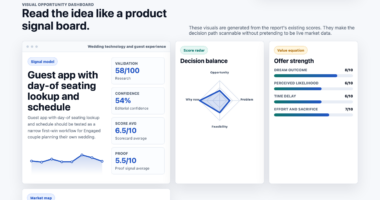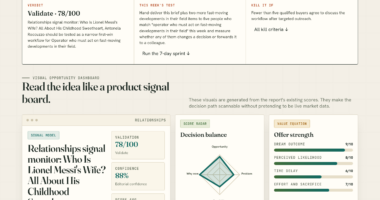

📊 Full opportunity report: Why AI Planning Coordinators Are Essential For Modern Weddings on IdeaNavigator AI — validation score, market gap, and execution plan.

Get hardware and tech essentials delivered free with Prime
- Fast, free delivery on millions of items
- Prime Video, Amazon Music and more included
- Member-only deals all year
TL;DR
AI planning coordinators are being tested to help engaged couples manage wedding planning tasks without professional planners. They automate vendor comparisons, budgeting, and timeline creation, offering a potential cost-effective solution. This development could reshape the wedding planning industry.
AI planning coordinators are being tested as a new tool for engaged couples to manage wedding planning without professional planners, offering automation of key decision-making tasks. This development addresses the challenge faced by couples who skip hiring a wedding planner but still need to coordinate multiple vendors and budgets, making wedding planning more accessible and potentially more affordable. Learn more about wedding planning strategies on our homepage.
The concept involves using large language models (LLMs) to generate weekly planning timelines based on the wedding date and venue, draft vendor inquiry emails in the couple’s voice, and compare vendor quotes side-by-side with flags for out-of-range prices, according to IdeaNavigator AI. This approach aims to automate the judgment layer traditionally handled by professional planners, such as assessing quote fairness and managing budgets.
The initial testing phase involves onboarding twenty couples who are already planning their weddings independently. For more tips, see our wedding planning checklist. The AI tool will provide quote comparison alerts, budget tracking linked to bank data, and vendor outreach drafts, with success measured by documented savings and willingness-to-pay surveys at the pilot’s conclusion.
Potential Industry Shift in Wedding Planning
The emergence of AI planning coordinators could significantly reduce the cost and complexity of wedding planning, making it feasible for couples to organize large weddings without hiring professional planners. This innovation may democratize wedding planning, increase competition among vendors, and reshape the traditional industry model, which has relied heavily on high-cost planners. If successful, it could also influence other event planning sectors to adopt AI-driven automation for decision-making and coordination.As an affiliate, we earn on qualifying purchases.
Growing Adoption of AI in Event Planning
Recent advances in large language models have enabled automation of complex tasks such as drafting emails, comparing vendor quotes, and managing budgets. The wedding industry, traditionally reliant on personal expertise and professional planners, is now exploring AI tools to streamline planning processes. Pilot programs like the one from IdeaNavigator AI aim to validate these tools’ effectiveness, with early testing showing promise in reducing planning time and costs. This trend aligns with broader industry shifts toward digital and AI-enabled solutions for personal events.“AI planning coordinators could provide couples with a cost-effective alternative to traditional wedding planners, automating decision-making and vendor management.”
— an anonymous researcher
As an affiliate, we earn on qualifying purchases.
Unconfirmed Effectiveness and Adoption Rates
It is not yet clear how well AI planning coordinators will perform at scale or how couples will adopt these tools outside pilot programs. Effectiveness in real-world scenarios, user satisfaction, and the ability to handle complex or unexpected planning issues remain to be validated through ongoing testing.
As an affiliate, we earn on qualifying purchases.
Next Steps for Validation and Industry Adoption
The next phase involves onboarding more couples, refining AI features based on user feedback, and measuring actual savings and planning efficiency. Broader industry acceptance will depend on pilot results, user trust, and integration with existing wedding vendor networks. If successful, wider rollout could begin within the next 12-18 months, potentially transforming wedding planning practices.
vendor inquiry email templates for weddings
As an affiliate, we earn on qualifying purchases.
As an affiliate, we earn on qualifying purchases.
Key Questions
How does the AI planning coordinator compare to traditional wedding planners?
The AI tool automates tasks like vendor comparison, budgeting, and timeline creation, which are typically handled by human planners. It aims to reduce costs and decision-making complexity, though it does not replace the personal touch of a professional planner.
Is this solution suitable for all types of weddings?
The current pilot targets couples planning large weddings independently. Its suitability for smaller or more complex weddings remains to be tested, and user needs may vary based on wedding size and complexity.
What are the potential risks of relying on AI for wedding planning?
Risks include inaccuracies in vendor quotes, limited ability to handle unexpected issues, and potential lack of personalized service. User trust and AI reliability are critical factors for successful adoption.
When might this technology become widely available?
If pilot testing proves successful, broader availability could occur within 12 to 18 months, pending further validation and industry acceptance.
Will AI planning tools replace professional wedding planners entirely?
Currently, these tools are designed to assist couples and reduce planning costs. They are unlikely to fully replace human planners, especially for highly personalized or complex weddings, but may serve as valuable supplements or alternatives for some couples.
Source: IdeaNavigator AI
Fall Picks
fall essentials
As an affiliate, we earn on qualifying purchases.