
TL;DR
Lockheed Martin’s Skunk Works has successfully integrated Guam’s missile defense systems into a unified command and control network. This development aims to improve regional missile defense coordination and response times. The project is confirmed and now operational, though details on full capabilities remain limited.
Lockheed Martin’s Skunk Works division has successfully integrated Guam’s missile defense systems into a single, unified command and control network. This advancement improves coordination among regional missile defenses and enhances response capabilities, representing a significant step in U.S. military infrastructure in the Pacific.
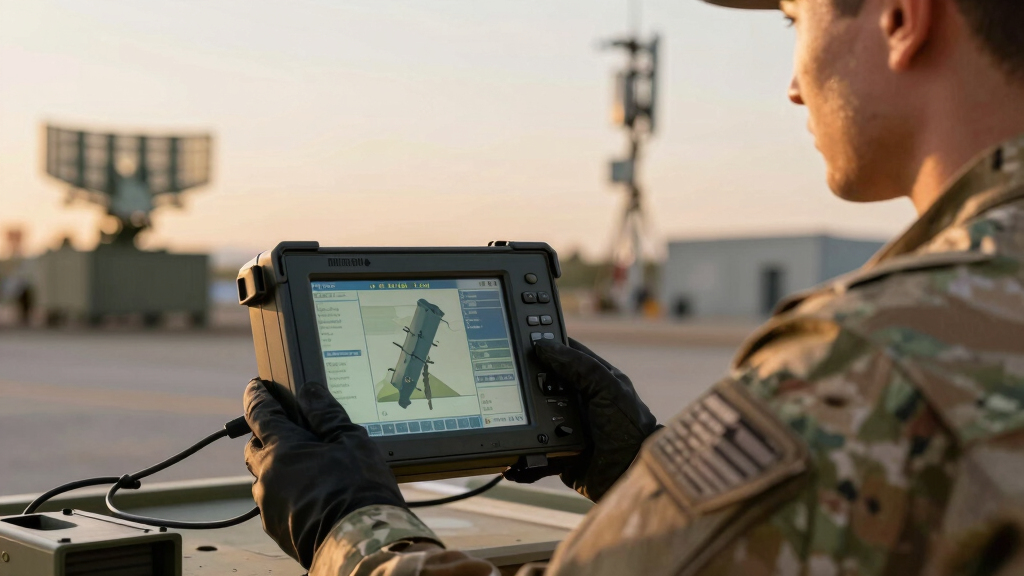
The project, confirmed by Lockheed Martin officials, involved the deployment of advanced C2 (command and control) systems designed to connect multiple missile defense assets across Guam into a cohesive network. The initiative aims to streamline decision-making processes and reduce response times against potential missile threats.
Sources familiar with the project indicate that the new C2 system consolidates data from various radars, interceptors, and command centers, providing a comprehensive picture of missile activity in the region. The system reportedly leverages cutting-edge software and hardware developed by Lockheed’s Skunk Works division, renowned for its advanced aerospace and defense innovations.
Officials emphasized that the system is now operational and has undergone initial testing phases, confirming its ability to improve situational awareness and operational efficiency. The unification process was carried out over the past year, with full operational capability achieved recently.
Why Unified Missile Defense Matters for Regional Security
This development enhances Guam’s missile defense posture by enabling faster, more coordinated responses to potential threats from adversaries such as North Korea or China. The unified C2 system reduces the risk of communication delays or data gaps, which are critical in missile defense scenarios. It also demonstrates the U.S. military’s commitment to modernizing its Pacific infrastructure, potentially influencing regional stability and deterrence strategies.
missile-like day of measurement and control systems engineering and technical series of national defense research and testing materials: measurement and control computer and the monitor display system
As an affiliate, we earn on qualifying purchases.
As an affiliate, we earn on qualifying purchases.
Guam’s Evolving Missile Defense Infrastructure
Guam has long been a strategic U.S. military hub in the Pacific, hosting multiple missile defense assets, including THAAD batteries, Aegis Ashore systems, and radar installations. Over recent years, there has been a focus on improving integration among these systems to better counter evolving missile threats from North Korea and other regional actors.
Previous efforts involved separate command systems and limited data sharing, which could hinder rapid response. Lockheed Martin’s recent unification project represents a significant upgrade, aligning with broader U.S. defense modernization efforts in the Indo-Pacific region.
The project follows ongoing regional security concerns, including North Korea’s missile tests and China’s military activities, prompting increased investment in missile defense infrastructure on Guam.
“The unification of Guam’s missile defense network under a single command and control system marks a major milestone in regional security capabilities.”
— Lockheed Martin spokesperson

Cobra RAD 480i Laser Radar Detector, Long Range Detection, Bluetooth, Black
- Front and Rear Detection: Detects signals from both vehicle ends
- Shared Alerts: Get live alerts via Drive Smarter community
- Bluetooth Compatibility: Supports Apple CarPlay and Android Auto
As an affiliate, we earn on qualifying purchases.
As an affiliate, we earn on qualifying purchases.
Operational Capabilities and Full Integration Status
While the system is confirmed to be operational, it is not yet clear how fully integrated all regional assets are or how it performs under simulated combat conditions. Details on the system’s scalability and potential vulnerabilities remain undisclosed, and ongoing testing phases are not fully documented.

Command, Control, and the Common Defense
As an affiliate, we earn on qualifying purchases.
As an affiliate, we earn on qualifying purchases.
Next Steps for Guam’s Missile Defense System Enhancement
Future efforts will likely focus on expanding the system’s capabilities, including integrating additional sensors and interceptors, and conducting live-fire exercises to validate operational readiness. Monitoring how the system performs during regional security events or drills will be key to assessing its effectiveness.
Defense officials may also prioritize further upgrades to ensure resilience against evolving missile threats and maintain technological superiority in the Indo-Pacific region.

Understanding MIL-STD-1553B: A Practical Guide for Aerospace Engineers
As an affiliate, we earn on qualifying purchases.
As an affiliate, we earn on qualifying purchases.
Key Questions
What specific systems are now integrated under the new C2 network?
While exact details are classified, the system reportedly consolidates data from Guam’s THAAD batteries, Aegis Ashore systems, and radar installations into a unified command platform.
How does this unification improve missile defense response times?
The integrated C2 system reduces data processing and decision-making delays by providing a comprehensive, real-time picture of missile threats, enabling faster interception decisions.
Is this system operational across all of Guam’s missile defense assets?
Yes, officials confirm that the system is now fully operational, though ongoing testing will continue to refine performance and integration.
Will this system be expanded to other regions?
There has been no official announcement about expansion, but the success in Guam could influence similar projects elsewhere in the Indo-Pacific.
What are the potential vulnerabilities of this new system?
Details about vulnerabilities are not publicly available, but as with any complex system, potential risks include cyberattacks, hardware failures, or communication disruptions.
Source: google-trends