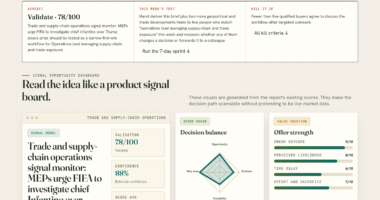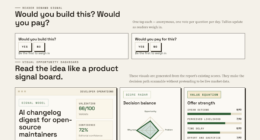

📊 Full opportunity report: The Local-First Agentic Operator on ThorstenMeyerAI.com — validation score, market gap, and execution plan.
TL;DR
A groundbreaking approach enables one person, empowered by agentic AI, to create and run multiple complex software systems across different domains. This shifts the traditional need for organizations to build such portfolios.
In a significant shift for software development and operations, a series of 18 interconnected products has demonstrated that a single operator, working with agentic AI, can now build and manage complex software portfolios that previously required organizational resources. This development challenges traditional notions of company size and team structure, emphasizing individual capability amplified by agentic AI.
The series, spanning domains from content management to satellite ISR platforms, was created by one person rather than a team. The products inherit four core principles: they are local-first, provider-agnostic, built by a non-developer using agentic AI, and edited by subtraction. This approach is discussed in The rails. Why European agentic commerce is co-defined by two converging regimes. This demonstrates that the operational and development floor has shifted, making it feasible for a single individual to build and run what once required an entire organization.
Key features include self-hosted, local compute environments, swappable models to avoid vendor lock-in, and AI-assisted development that requires human judgment. The portfolio’s diversity across domains underscores the versatility of this approach, which is driven by a new stance on software creation—treating it as a personal, amplified act rather than a collective enterprise.
The Local-First Agentic Operator
Eighteen products that looked like a sprawl were never eighteen things. They were one thing, built eighteen times. This is the thesis underneath all of them — named.
- Not “solo beats funded team.” Depth still wins most single contests. The narrower, truer claim: the floor moved — one person can now do what recently took many.
- Breadth is strength and risk. Eighteen products is resilience and a focus problem; several are seeds, not trees.
- The AI part is assisted, not autonomous. Strip away human judgment and subtraction and you get faster mediocrity, not a portfolio.
- A pattern, not a prescription. This fit one operator, one skill set, one moment. The honest version of any manifesto includes “this worked for me.”
A synthesis and a statement of one operator’s working philosophy — independent commentary, produced with AI assistance under human editorial oversight. The views are the author’s own and may change. This is not business, financial, legal, or technical advice, and the four-facet framing is a personal operating pattern, not a prescription or a claim of results. Individual products carry their own terms, disclaimers, and limitations in their respective articles; several are early- or positioning-stage. Product, model, and company names are trademarks of their respective owners; mention does not imply endorsement.
Implications of the Single-Operator, AI-Enabled Software Portfolio
This development matters because it redefines the scale and scope of software creation. It suggests that individual operators can now undertake projects that previously needed large teams, potentially transforming startup dynamics, independent innovation, and operational agility. It also raises questions about the future of organizational structures and the role of AI as an equalizer in technical development.

OpenClaw Under Control: Build a Safe, Reliable AI Agent That Actually Works Without Security Risks, Runaway Costs, or Broken Setups
As an affiliate, we earn on qualifying purchases.
As an affiliate, we earn on qualifying purchases.
Background of the Single-Operator Software Portfolio Approach
Historically, building and maintaining diverse software products at scale has required organizational resources—teams, infrastructure, and coordination. The rise of agentic AI and local-first principles has begun to challenge this paradigm. The series, initiated by Thorsten Meyer, exemplifies a new stance: that a single person, equipped with advanced AI tools, can effectively produce and manage complex systems across domains, from content engines to defense platforms. This approach is rooted in principles of ownership, flexibility, and minimal editing, reflecting a broader shift in software craftsmanship.
“The unit isn’t ‘the startup.’ It’s ‘the person, amplified.'”
— Thorsten Meyer
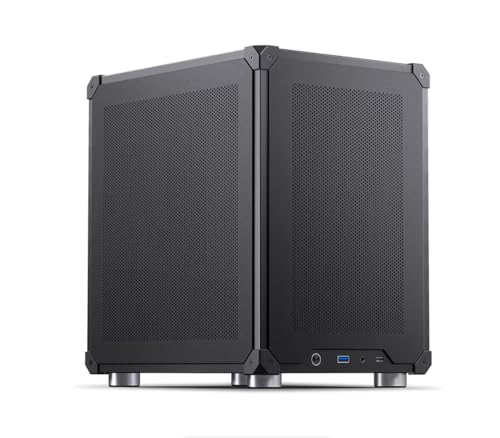
Compact Local AI Server, AI Mini PC,Serve Local LLM Models Right Out of Box, 30+ Tokens/Second, Pre-Installed Ubuntu Linux, Qwen3, LLama3, RAG, OCR, vLLM, TensorRT LLM, NVIDIA RTX 5060 Ti (16GB)
Based on Ubuntu 24.0 Linux, This local AI server is ready to Serve Local LLM Models directly out…
As an affiliate, we earn on qualifying purchases.
As an affiliate, we earn on qualifying purchases.
Unanswered Questions About Single-Operator Scalability and Security
While the portfolio demonstrates feasibility, it remains unclear how scalable this approach is beyond the initial set of products or domains. Questions about long-term security, maintenance, and the limits of individual capacity are still open. Additionally, the impact on organizational roles and the broader industry is yet to be fully understood.

Agentic Artificial Intelligence: Harnessing AI Agents to Reinvent Business, Work and Life
As an affiliate, we earn on qualifying purchases.
As an affiliate, we earn on qualifying purchases.
Next Steps for Validation and Broader Adoption
Further testing and replication across different domains and operators are expected. Observers will watch for scalability, security, and reliability metrics. Industry analysts and practitioners will assess whether this model can be adopted at larger scales or integrated into existing organizational structures, potentially leading to new standards for software development and operations.

3 Piece Anti Static Black Plastic Spudger ESD Safe Pry Opening Tool for Mobile Phone Tablet Laptop Repair Tools Kit
Material: Carbon fiber plastic; Length: approx 150 mm
As an affiliate, we earn on qualifying purchases.
As an affiliate, we earn on qualifying purchases.
Key Questions
Can a single person truly replace a software development team?
While the portfolio demonstrates that one person can build and manage diverse systems using agentic AI, the extent to which this can replace traditional teams depends on project complexity, domain expertise, and long-term maintenance needs. It challenges the assumption that large teams are always necessary.
What are the risks of relying on individual operators with AI tools?
Risks include security vulnerabilities, scalability limits, and potential burnout. Dependence on AI-assisted human judgment also raises concerns about oversight and error management, especially in regulated or high-stakes domains.
Does this approach mean organizational structures will change?
Potentially. If individual operators can handle what used to require teams, organizations might shift towards more decentralized, flexible models. However, broader industry adoption and validation are needed before widespread change occurs.
What role does AI play in the actual development process?
AI acts as a power tool that assists human judgment, enabling non-developers to create and modify software. The process remains human-guided, with AI handling typing and automation, but the operator makes key decisions.
Source: ThorstenMeyerAI.com