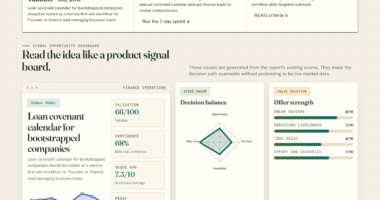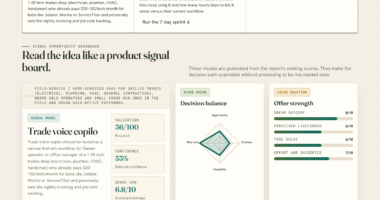
📊 Full opportunity report: Memory Stopped Being a Commodity on ThorstenMeyerAI.com — validation score, market gap, and execution plan.
TL;DR
Micron announced it has secured $100 billion in long-term contracts with major customers, locking in demand through 2030. This marks a shift from memory as a tradable commodity to a strategic, pre-funded input, impacting industry dynamics.
Micron has revealed that it has secured approximately $100 billion in long-term contracts with major customers, locking in demand for its memory products through 2030. This development indicates a significant shift in industry practices, with memory no longer viewed as a tradable commodity but as a strategic, prepaid input, affecting supply, pricing, and market dynamics.
In its strongest quarter ever, Micron disclosed 16 long-term ‘take-or-pay’ contracts that cover about 20% of its DRAM and a third of its NAND output over the period from 2026 to 2030. These contracts include a minimum revenue guarantee of roughly $100 billion, with customers paying upfront deposits totaling around $22 billion, including cash and letters of credit.
Unlike traditional spot-market purchases, these agreements are binding, requiring customers to buy a set volume annually or pay a penalty, effectively locking in demand years in advance. The pricing structure includes a cap near current elevated market prices and a floor that ensures Micron maintains a gross margin above previous cycle peaks, protecting the company from market crashes.
This shift means that memory capacity is being pre-funded by customers, who are now investing billions upfront to secure supply, transforming the industry into a model where demand is contractually guaranteed rather than subject to volatile spot prices. Micron’s record revenue of $41.5 billion, gross margin of 84.9%, and free cash flow of $18.3 billion underscore the strength of this new approach.
Memory stopped being a commodity
Micron just locked up a fifth of its DRAM and a third of its NAND through 2030 with binding take-or-pay contracts — and collected $22 billion in deposits from the customers, up front. The boom-bust cycle that always brought cheap RAM back is being contracted away.
A dream deal for Micron — near-peak prices, margin floors above any past peak, customer-funded fabs. Insurance for the buyers who signed — real protection against a real shortage, bought dear. And for everyone else, a forecast: don’t expect cheap memory back soon. The structure is also a large, leveraged bet on AI demand holding to 2030 — and floors get tested in a genuine downturn. The contracts run to 2030; the test arrives sooner.
Implications of Memory as a Strategic Asset
This shift fundamentally alters the memory industry, moving away from a traditional commodity cycle characterized by boom-and-bust patterns. Buyers pre-funding capacity and locking in prices at near-peak levels could stabilize revenues for manufacturers like Micron but also reduce market volatility.
For buyers, especially hyperscalers and AI infrastructure providers, this represents a strategic move to secure scarce supply and hedge against future price spikes. However, it also exposes them to multi-year obligations at high prices, which could become problematic if demand wanes or the AI boom slows.
Overall, this development could influence global supply chains, pricing strategies, and the balance of power between memory producers and consumers, marking a new era in how critical hardware components are bought and sold.

KingBank Computer Desktop Memory Ram DDR4 16GB(2x8GB) 3200MHZ CL16 1.35V XMP2.0 Overclocking with Heatsink for PC Gaming/Office/PS,Silver
- Memory Upgrade Precautions: Disable overclocking and update BIOS before installation
- XMP 2.0 Support: One-click overclocking to 3200MHz for compatible motherboards
- High-Quality Components: Uses premium chips and multi-layer PCB for stability
As an affiliate, we earn on qualifying purchases.
As an affiliate, we earn on qualifying purchases.
Historical Industry Practices and Recent Changes
For decades, memory chips—such as DRAM and NAND—were treated as commodities, with prices fluctuating based on supply-demand cycles. Manufacturers relied on the boom-and-bust cycle to reset prices and capacity, with supply often exceeding demand leading to sharp price drops, and shortages driving prices up.
Traditionally, memory capacity was financed by manufacturers, with buyers purchasing on spot markets or short-term contracts. The industry’s cyclical nature often left both producers and buyers exposed to unpredictable market swings.
In recent years, however, large customers like hyperscalers and device makers have sought more predictable supply and pricing, especially amid rising AI and data center demands. Micron’s recent contracts represent a departure from this pattern, with capacity pre-funded and demand secured through long-term agreements, effectively transforming memory into a strategic infrastructure input rather than a tradable commodity.
“We are entering a new era where demand is predictable and supply is secured through strategic commitments.”
— Micron CEO

SSK Portable SSD 1TB External Solid State Hard Drive USB C Up to 1050MB/s
- Storage Capacity: 1TB SSD (931GB on Windows)
- Fast Data Transfer: Up to 1050MB/s read speed
- LED Activity Indicator: Shows real-time drive activity
As an affiliate, we earn on qualifying purchases.
As an affiliate, we earn on qualifying purchases.
What Aspects of the Contract Model Remain Unclear?
It is still unclear how widespread this model will become across the entire memory industry, as Micron currently accounts for about 20% of its DRAM and a third of NAND under these agreements. The long-term effects on market prices, capacity expansion, and overall industry competition remain uncertain. Additionally, the risk for buyers if demand slows or AI growth stalls has not yet been fully tested.

Simmtec RAM 32GB (2x16GB) DDR4 2666MHz SODIMM PC4-21300 (PC4-2666V) CL19 1.2V Non-ECC SO-DIMM 260 PinLaptop, Notebook & AIO Computer Memory Upgrade Kit
- Capacity: 32GB (2x16GB modules)
- Speed: DDR4 2666MHz / 2667MHz
- Form Factor: 260-Pin SO-DIMM
As an affiliate, we earn on qualifying purchases.
As an affiliate, we earn on qualifying purchases.
Future Developments and Industry Impact Expectations
Micron plans to expand the proportion of its capacity covered by such contracts, aiming for over half of its revenue. Industry analysts will monitor whether other memory producers adopt similar strategies and how this affects global supply chains and pricing stability. Market participants also await signs of demand shifts in AI and data infrastructure sectors, which could influence contract renewals and new negotiations.
As an affiliate, we earn on qualifying purchases.
Key Questions
How does Micron’s new contract model differ from traditional memory purchasing?
Instead of buying memory on the spot or short-term contracts, customers now sign long-term, take-or-pay agreements that pre-fund capacity and lock in demand years in advance, with pricing bands and minimum revenue guarantees.
What risks do buyers face under these long-term contracts?
Buyers are committed to purchasing a set volume at near-peak prices or paying penalties, which could be problematic if their demand decreases or if AI and data center growth slow unexpectedly.
Will this change the overall memory market dynamics?
If widely adopted, it could reduce volatility, stabilize revenues for manufacturers, and shift industry power toward suppliers, but it may also limit flexibility for buyers and impact pricing competition.
Is this model sustainable long-term?
It remains uncertain whether other companies will follow Micron’s lead or if market conditions will support widespread adoption, especially if demand growth stagnates or new supply sources emerge.
Source: ThorstenMeyerAI.com