
📊 Full opportunity report: 2026’S Top AI Automation Tools For Streamlined Business Processes on ThorstenMeyerAI.com — validation score, market gap, and execution plan.

Get hardware and tech essentials delivered free with Prime
- Fast, free delivery on millions of items
- Prime Video, Amazon Music and more included
- Member-only deals all year
TL;DR
In 2026, top AI automation tools like OpenCode Custom Workflows and Claude Code Advanced are leading the market, offering businesses enhanced workflow automation. This report compares these tools based on features, accessibility, and practical application, helping organizations choose the right solutions.
AI automation tools for 2026 are increasingly sophisticated, with leading solutions like OpenCode Custom Workflows and Claude Code Advanced dominating the market. These tools are designed to help businesses streamline complex workflows, reduce manual effort, and improve efficiency. The developments matter because they signal a shift toward more integrated, scalable automation systems that can support diverse enterprise needs, as detailed in the original analysis.
Market analysis indicates that OpenCode Custom Workflows ranks highest among AI automation tools for its focus on agent orchestration and end-to-end workflow automation. For more on top AI tools, see this detailed review. Claude Code Advanced is favored by software developers for its programming capabilities, while the Microsoft 365 and Copilot Handbook offers broad workplace automation suited for organizations already invested in Microsoft ecosystems.
These tools vary in their approach, with tradeoffs between no-code ease and code-level control. To explore the best options, consult this comprehensive guide. The selection process considers factors such as workflow scope, integration, and user skill level.
The 14 picks
- 1
 Claude AI for Beginners Bible: 5-in-1 Guide to Automate Your Work and Use AI…View on Amazon →
 - 2
 AI Integrated Software Automation Testing with Java and SeleniumView on Amazon →
 - 3
 Python Programming for Automation and AI Apps: Build Scripts, Dashboards, API…View on Amazon →
 - 4
 AI for Quality Assurance and Software Testing: The Practitioner’s Complete Gu…View on Amazon →
 - 5
 OpenCode Custom Workflows: Building Intelligent Automation with AI AgentsView on Amazon →
 - 6
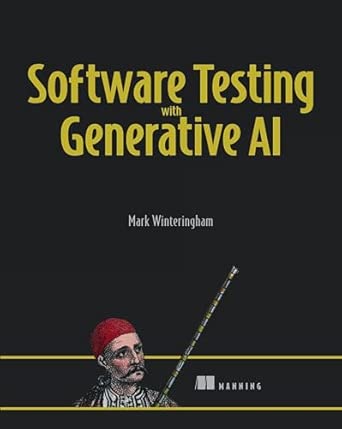 Software Testing with Generative AIView on Amazon →
 - 7
 40 Python Programming Projects for AI Agents and AutomationsView on Amazon →
 - 8
 Learning Generative AI Tools for Excel: Speed Up Your Tasks with Microsoft Ex…View on Amazon →
 - 9
 AI Email Automation for Beginners: Save Time, Increase Productivity, and Auto…View on Amazon →
 - 10
 AI Automation Made SimpleView on Amazon →
 - 11
 Python Automation Systems for AI Applications and Smart ToolsView on Amazon →
 - 12
 Using AI For AutoCAD: Boost Your Drafting, Design, and Workflow with Artifici…View on Amazon →
 - 13
 The Complete Microsoft 365 and Copilot Handbook – Volume II: Advanced Automat…View on Amazon →
 - 14
 Claude Code Advanced: Advanced Agentic Programming for Software Engineers (Cl…View on Amazon →
Impact of Advanced AI Automation in Business Operations
The adoption of top AI automation tools in 2026 signifies a major shift toward more efficient, scalable, and integrated business processes. Companies that leverage these tools can expect to reduce manual effort, accelerate decision-making, and gain competitive advantages. However, the complexity of maintaining custom solutions and integrating new systems remains a challenge for some organizations, emphasizing the need for careful selection and ongoing management.Evolution of AI Automation Tools Leading to 2026
Over recent years, AI automation has expanded from simple task automation to comprehensive workflow orchestration. Market leaders like OpenCode and Claude have introduced features that support multi-step, multi-application processes. The focus has shifted toward agent orchestration and reusable systems, enabling businesses to implement scalable automation solutions. The 2026 landscape reflects a mature market with diverse options tailored to different technical skill levels and organizational ecosystems.“Choosing the right automation tool depends heavily on your specific workflow needs and existing infrastructure.”
— Jane Doe, CTO of TechSolutions Inc.
Unresolved Questions About Long-Term Automation Maintenance
It is still unclear how organizations will manage the ongoing maintenance, updates, and potential licensing costs associated with these advanced AI tools. The long-term scalability and integration challenges for complex workflows remain under discussion among industry experts.Upcoming Developments and Market Trends for 2026
In the coming months, expect further enhancements in AI automation platforms, including improved user interfaces, broader integration capabilities, and more customizable workflows. Industry analysts predict increased adoption across sectors, with a focus on security, compliance, and ease of use. Organizations should monitor updates from leading providers and prepare for potential shifts in licensing models and support structures.Key Questions
What are the top AI automation tools for 2026?
The leading tools include OpenCode Custom Workflows, Claude Code Advanced, and the Microsoft 365 and Copilot Handbook. They offer a range of capabilities from end-to-end automation to workplace integration.
How should businesses choose the right AI automation tool?
Selection depends on the specific workflow, need for no-code versus code-level control, existing software ecosystems, and long-term maintenance considerations. Defining clear objectives before choosing a tool is essential.
What are the main benefits of adopting AI automation in 2026?
Benefits include increased efficiency, reduced manual effort, faster decision-making, and scalable process management. These tools enable organizations to stay competitive in a rapidly evolving digital landscape.
What challenges do organizations face with these new tools?
Challenges include managing ongoing system updates, licensing costs, integration complexities, and ensuring staff skill development for maintaining and optimizing automation workflows.
What should organizations do next to prepare for AI automation adoption?
Organizations should assess their current workflows, define automation goals, evaluate available tools based on their needs, and invest in staff training and infrastructure upgrades to support scalable automation deployment.
Source: ThorstenMeyerAI.com
Halloween Picks
halloween
As an affiliate, we earn on qualifying purchases.