
📊 Full opportunity report: The Unblinking Power Of AI’s Radar For Modern Institutions on ThorstenMeyerAI.com — validation score, market gap, and execution plan.
TL;DR
Synthetic aperture radar (SAR) satellites now offer persistent, weather-independent imaging, transforming surveillance for governments, businesses, and humanitarian groups. This shift is driven by rapid technological advances and expanding commercial constellations, with significant implications for sovereignty, security, and industry analytics.
Commercial SAR satellite constellations have expanded significantly in 2026, offering persistent, weather-independent imaging that is transforming surveillance for governments, industries, and humanitarian organizations. This shift is driven by technological advances and a surge in satellite deployments, making SAR data a critical asset for security, disaster response, and infrastructure monitoring.
Over the past year, the commercial space industry has seen a dramatic increase in the number of Synthetic Aperture Radar (SAR) satellites, with companies like ICEYE, Umbra, and Capella Space leading the charge. These satellites transmit microwave pulses that can image the ground day or night, regardless of weather conditions, providing a persistent and reliable source of imagery. ICEYE, for instance, now operates more than two dozen satellites with revisit times under an hour, serving both military and civilian clients across Europe and beyond.
European nations are increasingly investing in their own SAR constellations, viewing them as a sovereignty and security tool. Germany’s Bundeswehr has contracted €1.76 billion worth of SAR data, while Poland, Portugal, and Greece are deploying their own satellite fleets. These national programs reflect a strategic shift, emphasizing independence in surveillance capabilities.
For enterprises, SAR’s value lies in early detection and risk management. Insurance companies use SAR data to map flood extents within hours of an event, enabling rapid payouts. Infrastructure operators monitor ground subsidence and structural integrity without deploying ground sensors. Maritime and agricultural sectors also leverage SAR to track vessel movements, soil moisture, and crop conditions, even through clouds or darkness.
For civil and humanitarian agencies, SAR offers ground truth independent of weather and daylight, crucial for disaster response. It helps assess earthquake damage, flood extent, and landslides, providing reliable data for emergency planning and relief efforts without the need for ground access or clear skies.
Radar That Never Blinks
What SAR Does — for Companies, Institutions, Governments
Active microwave imaging: its own illumination, any weather, any hour. The sensor is solved — the reading of it isn’t.
Three consequences of the physics
Active sensor: transmits its own microwave pulses. Same image quality at 3 a.m. in a North Sea storm as at noon in the Sahara.
Phase-coherent imaging enables InSAR: ground deformation at millimeter scale — subsiding dams, sagging bridges, hidden excavation.
Metal reflects radar strongly. A ship that switches off its transponder vanishes from tracking sites — not from a radar image.
Who buys it, and why — three different answers
- Insurance: flood-extent maps within hours, through the storm — parametric payouts before adjusters arrive
- Infrastructure & energy: InSAR subsidence alerts on pipelines, rail, dams — no ground sensors
- Maritime & commodities: dark-vessel detection, port congestion, storage monitoring
- Caveat: buy analytics, not raw phase histories — the value is in the interpretation layer
- Disaster response: damage proxies and flood maps while optical is blind
- Climate science: ice velocity, deforestation under perpetual cloud (Sentinel-1, free & open)
- OSINT & journalism: verifiable all-weather evidence — normalized by Ukraine, institutionalized since
- Caveat: radar literacy is scarce — misread speckle becomes a confident, wrong “convoy”
- Deterrence: continuous all-weather watch closes the cloud-cover exploit window
- Verification: arms-control and sanctions evidence that doesn’t blink
- Autonomy: a subscription can be throttled by a foreign provider; a nationally-tasked constellation can’t
- Caveat: collection has outrun exploitation — the analyst corps can’t screen sub-hourly revisit manually
Europe is buying constellations, not just imagery
THE EXPLOITATION GAP
The scarce resource is no longer the satellite — it’s the software that turns phase histories into detections and decisions, in the jurisdiction the mission requires. Whoever owns the software that reads the radar owns the value of the constellation above it. Buying satellites while importing the exploitation stack just moves the dependency one layer up.
Impacts of Commercial SAR on Global Security and Industry
This technological shift significantly enhances the capabilities of governments and industries to monitor and respond to ground changes in real time, regardless of weather or lighting. It strengthens national sovereignty by enabling independent surveillance and strategic monitoring. For industries like insurance, infrastructure, and maritime, SAR data improves risk assessment and operational efficiency. Civil agencies benefit from reliable, timely disaster assessment, potentially saving lives and resources.
However, the rapid proliferation of SAR constellations raises questions about data sovereignty, privacy, and the geopolitical implications of space-based surveillance dominance. The increasing commercialization also challenges traditional military and intelligence paradigms, blurring lines between civilian and defense uses.

Advances in Object and Activity Detection in Remote Sensing Imagery
As an affiliate, we earn on qualifying purchases.
As an affiliate, we earn on qualifying purchases.
Rapid Growth of Commercial SAR Satellite Constellations in 2026
Historically, spaceborne radar technology was confined to national defense programs. Over the past decade, private companies like ICEYE, Umbra, and Capella Space have commercialized SAR, creating a burgeoning market projected to reach $18.8 billion by 2034. In 2026, this market has expanded rapidly, with European nations investing heavily in their own constellations, signaling a shift toward strategic independence and sovereignty in space-based surveillance. The technology’s ability to deliver high-resolution images regardless of weather or time of day has made it a vital tool across multiple sectors.
Major contracts, such as the €1.76 billion agreement between ICEYE and the German Bundeswehr, exemplify the growing reliance on commercial SAR data for national security. Meanwhile, civil and commercial users are increasingly integrating SAR into their operations, driving demand and technological innovation.
“Our constellation provides near real-time imaging capabilities that are crucial for disaster response, infrastructure monitoring, and security applications.”
— ICEYE spokesperson
commercial SAR satellite data services
As an affiliate, we earn on qualifying purchases.
As an affiliate, we earn on qualifying purchases.
Unanswered Questions About Data Privacy and Geopolitical Risks
While the technical and strategic benefits of commercial SAR are clear, questions remain about how data sovereignty will be managed as more nations deploy their own constellations. The implications for privacy, international security, and space governance are still evolving, with some experts warning of potential geopolitical tensions and regulatory gaps.
Additionally, the full extent of how commercial SAR data will be integrated into military and intelligence operations remains unclear, as does the regulatory environment governing data sharing and usage across borders.
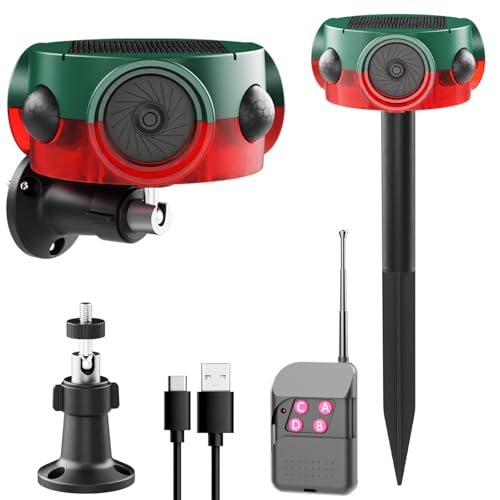
Solar Outdoor Motion Sensor Alarm – 360° Detection & 3x120dB Speakers, 3 Sensors, Universal Mount & Ground Stake, IP65 Waterproof Security Alarm for Yard, Farm, Warehouse (1pack)
- 360° Full Coverage: Includes 3 sensors and speakers for full protection
- Powerful 120dB Speakers: Omnidirectional sound for alerting threats
- Reliable Performance: Enhanced stability and long-distance clarity
As an affiliate, we earn on qualifying purchases.
As an affiliate, we earn on qualifying purchases.
Expected Developments in Commercial SAR Deployment and Policy
In the coming months, expect further expansion of satellite constellations, especially in Europe and Asia, as nations seek strategic independence. Governments and private companies will likely negotiate new frameworks for data sharing, privacy, and security. Technological improvements may also enhance resolution and revisit times, increasing SAR’s utility. Monitoring these developments will be critical for understanding the future landscape of satellite-based ground surveillance.
disaster response satellite imaging
As an affiliate, we earn on qualifying purchases.
As an affiliate, we earn on qualifying purchases.
Key Questions
How does SAR differ from optical satellite imaging?
SAR uses microwave pulses to image the ground regardless of weather or daylight, unlike optical satellites that require clear skies and sunlight for visible images.
Who are the main commercial providers of SAR satellites in 2026?
Leading providers include ICEYE, Umbra, Capella Space, and several national programs in Europe and Asia.
What are the main uses of SAR data today?
Uses include disaster response, infrastructure monitoring, maritime surveillance, agriculture, and military security.
Are there privacy concerns with commercial SAR satellites?
Yes, as with any surveillance technology, questions around privacy, data sovereignty, and international regulation are ongoing and evolving.
What are the limitations of SAR technology?
While highly effective regardless of weather and lighting, SAR imagery can be complex to interpret and requires specialized processing, which can limit its immediate usability for untrained users.
Source: ThorstenMeyerAI.com