

A dead cat bounce in crypto appears as a quick, sharp upward spike after a major decline, made to look like a reversal. You might notice low trading volume during this rally, with prices sharply rising then quickly falling again. Indicators like overbought RSI levels and long upper wicks on candles suggest exhaustion. Be cautious, as emotional reactions often cause these false signals. To better spot these tricks, keep exploring the signs that signal real strength versus fleeting moves.

Get hardware and tech essentials delivered free with Prime
- Fast, free delivery on millions of items
- Prime Video, Amazon Music and more included
- Member-only deals all year
Key Takeaways
- Sudden, brief upward price spike after a significant decline, followed by a quick continuation of the downtrend.
- Low trading volume during the bounce indicates lack of genuine buying interest.
- Technical signs like RSI overbought and long upper wicks suggest market exhaustion.
- Sharp reversal occurs shortly after the bounce, with no fundamental change supporting higher prices.
- Market sentiment appears overly optimistic temporarily, but prices revert quickly, trapping traders.
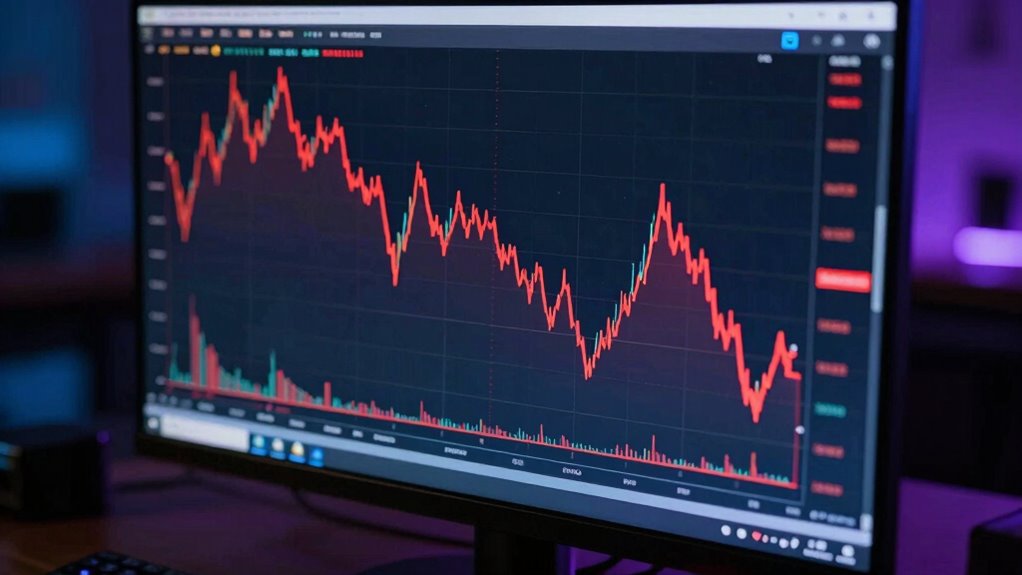
A dead cat bounce in crypto refers to a temporary recovery in the price of a cryptocurrency after a significant decline, giving traders false hope that the downtrend is over. When you see this pattern, it can be tempting to think that the worst is behind the market, but understanding market psychology is vital. Often, traders believe the bounce signifies a genuine reversal, but the reality is that many investors are simply reacting emotionally, driven by hope rather than fundamentals. This collective mindset fuels short-term buying, which temporarily pushes prices higher, creating the illusion of a breakout. However, this optimism is often misplaced, as the underlying momentum hasn’t shifted.
A dead cat bounce is a brief, false recovery that traps traders before prices fall again.
To spot a dead cat bounce, technical analysis becomes your best tool. Look for sharp, brief upward movements that are immediately followed by a resumption of the downtrend. These recoveries typically lack the volume and momentum characteristic of genuine reversals. For example, if you notice a sudden spike in price on low trading volume, it’s likely a dead cat bounce rather than a sustainable rally. Indicators like RSI (Relative Strength Index) can also help; if the RSI briefly enters overbought territory and then quickly drops back, it’s a sign that the rally is weak and likely to reverse again. Candlestick patterns may also reveal signs of exhaustion, such as long upper wicks, indicating that buyers tried to push prices higher but faced strong resistance.
Understanding the psychology behind these moves helps you avoid getting caught in false signals. Traders often buy into the bounce, driven by fear of missing out or hope that the downtrend is ending. This mass behavior creates a temporary surge in buying pressure, but without a solid change in fundamentals or strong technical confirmation, the rally is usually short-lived. Recognizing that market psychology can be overextended during these bounces helps traders remain cautious and avoid premature entries. Additionally, analyzing market sentiment can provide insights into whether traders are genuinely confident or merely reacting emotionally, which can be crucial in avoiding false signals. It’s also important to remember that volume analysis can often reveal whether a recovery is supported by genuine buying interest or just a fleeting surge.
The key is recognizing that market sentiment can be overextended during these bounces, and the subsequent reversal often catches traders off guard, leading to further losses. In essence, a dead cat bounce looks like a quick, sharp uptick in price that quickly fades, leaving the price back where it started or even lower. Your job is to stay vigilant, use technical analysis to gauge the strength of any recovery, and keep market psychology in mind. The bounce is often just a fleeting illusion—one that can trap unwary traders who mistake it for a real reversal. By reading the signals carefully, you can better position yourself to avoid falling into the trap of a dead cat bounce and instead wait for genuine trend changes.
cryptocurrency technical analysis books
As an affiliate, we earn on qualifying purchases.
As an affiliate, we earn on qualifying purchases.
Frequently Asked Questions
How Long Does a Typical Dead Cat Bounce Last in Crypto Markets?
A dead cat bounce in crypto typically lasts from a few days to several weeks, depending on market psychology and trading volume. During this period, you’ll notice a short-lived recovery after a sharp decline, often driven by emotional trading and panic buying. Keep an eye on trading volume—if it spikes, it might signal a temporary rebound rather than a genuine reversal. Stay cautious, as the bounce can quickly reverse again.
Can a Dead Cat Bounce Signal a Trend Reversal or Just a Temporary Rally?
Imagine a gust of wind that temporarily lifts a falling leaf—this dead cat bounce isn’t a sign of a new wind in the market’s sails. It’s just a fleeting rally, often driven by market psychology and a spike in trading volume. Usually, it doesn’t signal a trend reversal, but rather a brief pause before the downtrend resumes. Stay cautious, as this rally could be just a false hope.
What Technical Indicators Best Identify a Dead Cat Bounce?
You can spot a dead cat bounce using technical indicators like RSI and MACD, which reveal overbought conditions and momentum shifts. Watch for a brief price rebound accompanied by declining trading volume, signaling weak market psychology and a lack of strong buying interest. If the bounce occurs on low volume and fails to break key resistance levels, it suggests a temporary rally rather than a trend reversal.
Does a Dead Cat Bounce Happen More Often in Specific Cryptocurrencies?
You’ll find dead cat bounces happen more often in volatile cryptocurrencies like Bitcoin and altcoins with lower market caps. Interestingly, during these rebounds, market sentiment shifts quickly, causing traders to get excited prematurely. Trading volume often spikes, signaling a false recovery. These patterns are common in assets with unpredictable swings, making it vital to watch volume and sentiment indicators closely to avoid falling for a dead cat bounce trap.
How Can Traders Differentiate Between a Dead Cat Bounce and a Genuine Recovery?
You can differentiate between a dead cat bounce and a genuine recovery by analyzing market sentiment and trading psychology. Look for sustained volume and consistent upward momentum, signaling real buying interest. If the bounce happens on low volume or quickly reverses, it’s likely a dead cat bounce. A genuine recovery usually involves increased confidence, positive news, and strong support levels, reflecting healthier market sentiment and more stable trading psychology.
As an affiliate, we earn on qualifying purchases.
Conclusion
Remember, in crypto, a dead cat bounce might look promising, but it’s often just a temporary reprieve. Don’t get caught up in the illusion that the worst is over—markets can surprise you. As the saying goes, “what goes up must come down.” Stay cautious, keep your eyes open, and don’t chase after fleeting rallies. Patience and thorough analysis will serve you better than chasing every quick bounce.
candlestick pattern analysis guide
As an affiliate, we earn on qualifying purchases.
As an affiliate, we earn on qualifying purchases.
As an affiliate, we earn on qualifying purchases.
Halloween Picks
halloween
As an affiliate, we earn on qualifying purchases.