Bitcoin’s fixed supply of 21 million coins creates a sense of scarcity that appeals to your desire for stability and long-term value. This limited availability makes it less vulnerable to inflation, attracting investors looking for a reliable store of wealth. As demand increases, driven by its digital gold status, prices tend to rise over time. If you want to understand how this scarcity drives sustained interest and growth, keep exploring the details behind Bitcoin’s unique appeal.
Key Takeaways
- Bitcoin’s fixed supply creates a sense of scarcity, driving long-term demand as investors seek a limited, valuable asset.
- Scarcity positions Bitcoin as a digital alternative to precious metals, attracting demand as a store of value.
- The predictable issuance schedule reinforces scarcity, encouraging investors to hold long-term anticipating limited future supply.
- Digital scarcity, combined with global accessibility and security, enhances Bitcoin’s appeal for sustained demand over time.
- Scarcity helps preserve Bitcoin’s value against inflation, motivating long-term investment and demand growth.
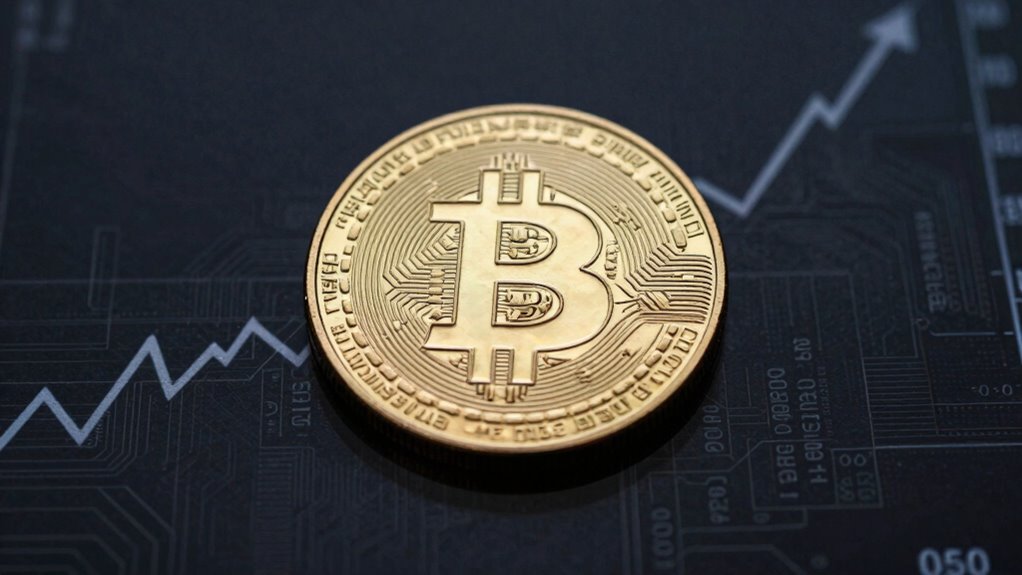
Bitcoin’s scarcity is at the core of its long-term appeal, making it a unique asset in a world of increasing monetary inflation. Unlike traditional currencies, which governments can print endlessly, Bitcoin is designed with a fixed supply, creating a natural supply constraint that gives it the qualities of digital gold. This limited supply means that over time, fewer new bitcoins will enter circulation, intensifying demand among investors who see it as a hedge against inflation. As fiat currencies depreciate, Bitcoin’s scarcity helps preserve its value, encouraging long-term holding and increasing its appeal as a store of value.
You’ll find that this scarcity fundamentally influences how people perceive Bitcoin. Because the supply is capped at 21 million coins, it cannot be devalued through inflation like traditional money. This supply constraint fosters a sense of security among holders, knowing that their assets aren’t susceptible to the same inflationary pressures. Instead of relying on physical assets like gold, many see Bitcoin as the digital gold—an accessible, portable, and infinitely divisible form of scarce wealth stored securely on the blockchain. This comparison emphasizes Bitcoin’s role as a safe haven in uncertain economic times. The predictable issuance schedule further reinforces the scarcity that supports its long-term value proposition.
The limited supply not only sustains demand but also fuels its long-term growth prospects. As more people become aware of Bitcoin’s scarcity and its potential to serve as a hedge, demand tends to rise steadily. This increase is further supported by the predictable issuance schedule, which gradually reduces the rate at which new bitcoins are created. These supply constraints create a scarcity effect similar to precious metals, but with the advantages of digital technology—fast transactions, global accessibility, and transparent scarcity rules encoded in the protocol. Because of these factors, Bitcoin’s supply constraints are a powerful driver of long-term demand, attracting investors looking for stability and preservation of wealth.
Your understanding of Bitcoin’s scarcity sheds light on its potential to act as a reliable store of value over time. With inflationary pressures mounting worldwide, many see Bitcoin as a way to protect their assets from erosion. Its inherent supply constraints and digital gold status make it a compelling alternative to traditional investments, especially when confidence in fiat currencies wanes. As demand for scarce assets continues to grow, so does Bitcoin’s position as a resilient, long-term store of value that isn’t subject to the whims of governments or central banks. This scarcity-driven appeal is what keeps investors coming back, fueling its long-term demand and cementing its role in the future of finance. Additionally, understanding the fixed supply aspect of Bitcoin can help investors recognize its potential to maintain value over time. The concept of digital scarcity further enhances its appeal as a truly unique asset class.

Bitkey Bitcoin Hardware Wallet – The Most Secure Way to Buy, Store and Manage Bitcoin
BITCOIN EXCLUSIVE: Bitkey is designed from the ground up exclusively for Bitcoin, offering a dedicated hardware wallet solution…
As an affiliate, we earn on qualifying purchases.
As an affiliate, we earn on qualifying purchases.
Frequently Asked Questions
How Does Bitcoin Scarcity Compare to Gold’s Scarcity?
You see, Bitcoin’s digital scarcity is programmed, capping its supply at 21 million coins, unlike gold’s natural scarcity which can increase with new discoveries. This creates a strong scarcity perception for Bitcoin, making it more predictable and finite. While gold has historically been scarce, Bitcoin’s digital scarcity offers a clearer, more transparent model, influencing your long-term demand by emphasizing its limited supply and unique scarcity perception in the digital age.
Can Bitcoin’s Fixed Supply Lead to Deflation?
Yes, Bitcoin’s fixed supply can lead to deflation, especially if demand keeps rising. As more people hold onto their coins, prices may fall less frequently, making spending less attractive. This can affect monetary policy, as central banks struggle to control inflation without flexible supply options. Over time, this scarcity-driven deflation might hinder economic growth, emphasizing the importance of balancing Bitcoin’s limited supply with effective inflation control measures.
What Role Does Bitcoin Scarcity Play in Market Volatility?
Bitcoin’s scarcity plays a significant role in market volatility because limited supply can cause sharp price swings, especially when market liquidity decreases. As investor sentiment shifts—whether due to news, regulations, or macroeconomic factors—these swings become more pronounced. You’ll notice that low liquidity amplifies volatility, making Bitcoin’s price more sensitive to large trades or sudden changes in demand, which keeps the market dynamic and unpredictable.
How Might Bitcoin Scarcity Impact Global Financial Systems?
Bitcoin scarcity could reshape global financial systems by influencing digital liquidity and challenging traditional monetary policy. As its limited supply attracts investors seeking a hedge, it might reduce reliance on fiat currencies. This increased digital liquidity can prompt central banks to adapt their monetary policies, potentially leading to more decentralized financial structures. Overall, Bitcoin’s scarcity may foster greater financial inclusion and stability, but also introduce new regulatory and systemic risks.
Are There Any Risks Associated With Bitcoin’s Limited Supply?
You might wonder if Bitcoin’s limited supply poses risks. Digital scarcity and strict supply constraints could create volatility, making prices unpredictable. If demand surges unexpectedly, scarcity might drive prices dangerously high, risking market instability. Conversely, if demand drops, scarcity could lead to liquidity issues. This delicate balance means that while scarcity fuels growth, it also introduces potential risks that you should keep a close eye on.

Cryptocurrency Investing For Dummies (For Dummies (Business & Personal Finance))
As an affiliate, we earn on qualifying purchases.
As an affiliate, we earn on qualifying purchases.
Conclusion
As the final grains of sand slip through the hourglass, Bitcoin’s scarcity acts like a sturdy anchor in turbulent seas, steadying your confidence amid market waves. Its limited supply shines like a rare jewel, fueling long-term demand like a persistent flame that refuses to wane. Remember, as scarcity tightens, the treasure becomes even more coveted—your stake in this digital gold rush grows brighter, a beacon guiding you through the shifting tides of the financial landscape.

Blockchain Technology Explained: The Ultimate Beginner’s Guide About Blockchain Wallet, Mining, Bitcoin, Ethereum, Litecoin, Zcash, Monero, Ripple, Dash, IOTA And Smart Contracts
As an affiliate, we earn on qualifying purchases.
As an affiliate, we earn on qualifying purchases.

GOLD: DIGITAL INVESTMENT
As an affiliate, we earn on qualifying purchases.
As an affiliate, we earn on qualifying purchases.