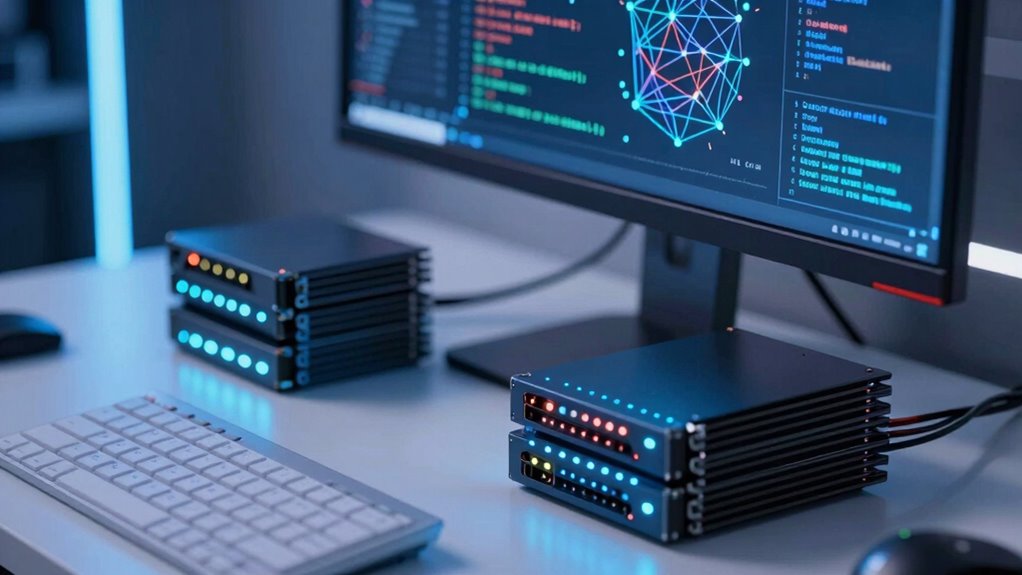

Bitcoin nodes keep the network honest by verifying transactions and ensuring all participants follow the same rules. They broadcast trustworthy data, preventing double-spending and fraud, and help maintain the blockchain’s integrity. By independently confirming transactions and blocks, nodes resist censorship and manipulation, making the system more secure and decentralized. Your understanding of this process shows how the network stays resilient—if you want to explore more, there’s plenty to uncover.

Get hardware and tech essentials delivered free — and shop member deals
- Fast, free delivery on millions of items
- Access to Prime Big Deal Days deals on October 6–7
- Prime Video, Amazon Music and more included
Key Takeaways
- Verify transactions to prevent double-spending and ensure they adhere to network rules.
- Propagate only validated data, maintaining the integrity and consistency of the blockchain.
- Independently confirm transactions, resisting censorship and malicious attempts to alter data.
- Maintain synchronized copies of the blockchain, preventing conflicting versions and ensuring accuracy.
- Support decentralization, reducing vulnerabilities and safeguarding the network from control or manipulation.
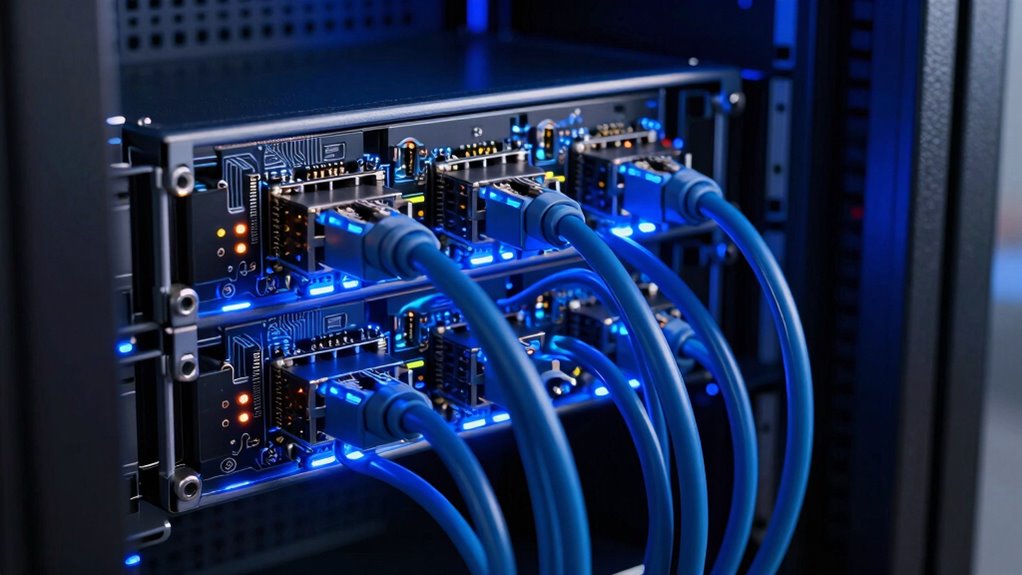
Bitcoin nodes are the backbone of the network, playing a vital role in maintaining its honesty and security. When you run a node, you’re helping to verify transactions and keep the entire system trustworthy. Nodes are responsible for validating each transaction that occurs, making sure that no one spends their bitcoins twice or tries to cheat the system. This process, called transaction verification, is essential because it prevents fraud and ensures everyone follows the same rules. Without nodes doing this, the network would be vulnerable to malicious activity, and its integrity could quickly break down. Proper care and understanding of the rules are necessary to ensure the network remains healthy.
Bitcoin nodes ensure trust and security by verifying transactions and preventing fraud within the network.
Mining incentives are closely tied to how nodes operate. Miners, who add new blocks to the blockchain, rely on the network’s rules and transaction verification to earn rewards. When a miner successfully mines a block, they’re rewarded with newly created bitcoins and transaction fees paid by users. These transaction fees are an incentive for miners to include your transactions in the blocks they mine. As a node operator, you help facilitate this process by validating transactions before they’re added to the blockchain. This validation ensures that miners only include legitimate transactions, maintaining the network’s integrity and ensuring that mining incentives are fairly distributed. Additionally, the decentralized nature of the network depends on many nodes functioning independently to prevent control by any single entity. This independence is crucial for preventing centralization, which could threaten the network’s security.
Your role as a node operator directly supports the decentralization of the network. When many nodes participate, the system becomes less vulnerable to attacks or manipulation because no single entity controls the entire network. Each node independently verifies transactions and blocks, creating a robust system that resists censorship and fraud. This decentralization is what makes Bitcoin resilient and trustworthy. It also ensures that the rules of the network are consistently enforced, preventing malicious actors from introducing invalid transactions or attempting double-spending. Furthermore, the distributed ledger maintained by nodes guarantees that all copies of the blockchain are synchronized, which is crucial for upholding the network’s consistency. Regular node operation is essential for maintaining this synchronization and overall network stability.
Additionally, nodes keep the network honest by broadcasting verified transactions and blocks across the entire system. This dissemination process guarantees that all participants are working from the same, verified data, reducing the risk of conflicting versions of the blockchain. When you run a node, you’re actively participating in this process, helping to propagate truthful data and uphold the network’s consensus. Understanding node operation is fundamental to grasping how Bitcoin maintains its security and integrity.
As an affiliate, we earn on qualifying purchases.
Frequently Asked Questions
How Do New Nodes Join the Bitcoin Network?
When new nodes join the Bitcoin network, they start by downloading the entire blockchain through network propagation. They connect to existing nodes and synchronize their data, ensuring they have the latest transaction history. During node synchronization, they verify blocks and transactions, maintaining the network’s integrity. This process helps new nodes become fully functional participants, contributing to decentralization and security by sharing updated information with other nodes in real-time.
Can a Node Operate Without Mining Bitcoin?
Imagine a lighthouse guiding ships safely through stormy seas—your node acts as that beacon, independent of mining. Yes, a node can operate without mining Bitcoin, focusing solely on validating transactions and maintaining a copy of the blockchain. This supports consensus mechanisms and bolsters network decentralization, ensuring that no single entity controls the system. Your node keeps the network honest by verifying data, even without the reward of mining new blocks.
What Is the Difference Between Full Nodes and Lightweight Nodes?
Full nodes store the entire blockchain, ensuring node security and validating every transaction, which strengthens network decentralization. Lightweight nodes, however, only hold parts of the blockchain, relying on full nodes for verification. While lightweight nodes are faster and use less storage, they depend more on full nodes for security. Your choice impacts the network’s decentralization and security, as full nodes help keep the network honest by maintaining complete, trustworthy data.
How Do Nodes Verify Transaction Validity?
You verify transaction validity through cryptographic validation, ensuring each transaction is properly signed and unspent. Nodes check that transactions follow consensus mechanisms, such as confirming the sender owns enough funds and hasn’t double-spent. They validate that transactions meet network rules, like correct format and signatures. This process prevents invalid transactions from entering the blockchain, helping maintain the integrity and honesty of the entire Bitcoin network.
Are There Risks Associated With Running a Bitcoin Node?
Running a Bitcoin node comes with some risks, especially if you don’t prioritize node security. Malicious attacks or hacking attempts could compromise your node, risking data loss or theft. However, maintaining strong security practices helps protect your setup. Also, running a node supports network decentralization, which reduces the risk of central points of failure. Overall, with proper security measures, the benefits of supporting the network outweigh potential risks.
As an affiliate, we earn on qualifying purchases.
Conclusion
Think of Bitcoin nodes as vigilant guardians in a bustling marketplace, each one holding a piece of the puzzle. When they work together, they create an unbreakable chain of trust, ensuring no one can cheat the system without everyone noticing. Just like a tightly knit community, these nodes keep the network honest, defending against deception. Together, they form an invisible fortress, safeguarding your digital wealth and preserving the integrity of the entire ecosystem.
As an affiliate, we earn on qualifying purchases.
As an affiliate, we earn on qualifying purchases.
Fall Picks
fall essentials
As an affiliate, we earn on qualifying purchases.