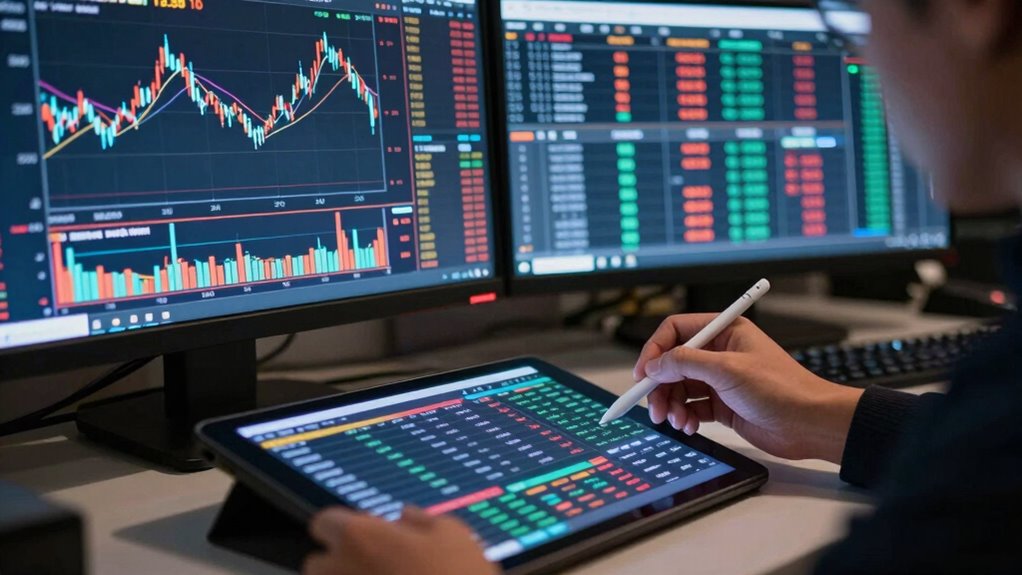

Before major events, you watch market indicators, sentiment signals, and geopolitical news to gauge potential price moves. Keep an eye on news headlines, social media chatter, and analyst reports to interpret collective mood. Monitor market volatility and trading volumes, as these reflect investor confidence and caution. Historical reactions can also provide clues. Staying alert to shifts in geopolitical risks and technical signals helps you prepare better. If you want to understand exactly what traders focus on, there’s more to explore.
Key Takeaways
- Monitor real-time news, headlines, and social media chatter for early signals of geopolitical or economic developments.
- Assess market sentiment, including investor confidence, volatility, and trading volumes, to gauge potential directional moves.
- Observe key technical levels, chart patterns, and psychological benchmarks to identify entry and exit opportunities.
- Track official statements, policy announcements, and diplomatic signals influencing risk appetite and safe-haven flows.
- Review historical reactions to similar events to anticipate possible market responses and adjust risk management accordingly.
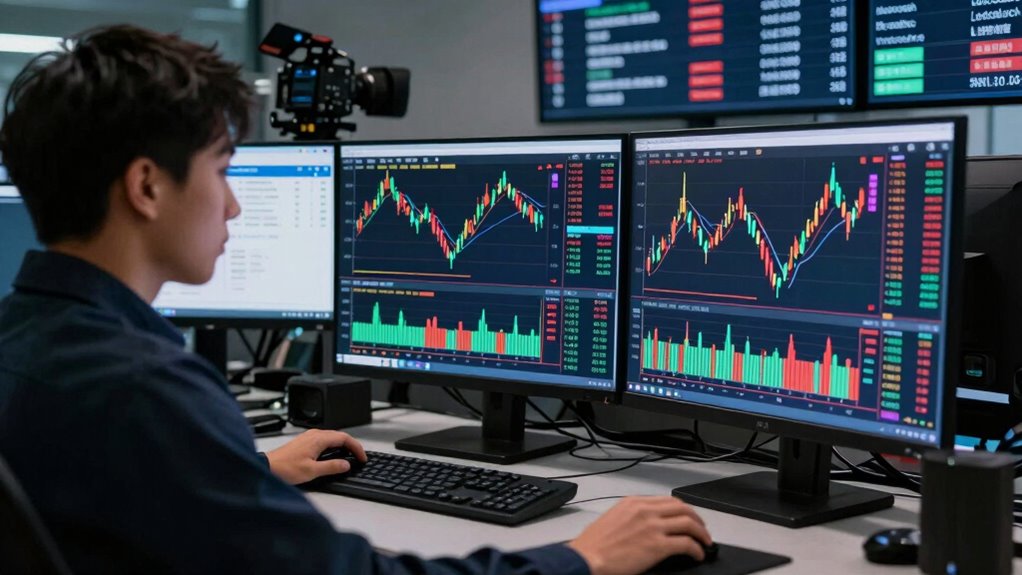
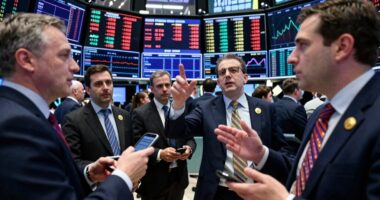
Before major events, spot and futures traders closely monitor key indicators and market signals that can trigger significant price movements. Your focus is on understanding what influences market sentiment and how geopolitical risks might sway the trading landscape. You know that during such times, emotions run high, and the market’s direction can change rapidly based on news or unexpected developments. Recognizing these signals early gives you an edge, allowing you to adjust your positions accordingly.
Market sentiment becomes a crucial factor in these moments. You observe investor confidence, market volatility, and trading volumes, all of which reflect how traders feel about upcoming events. When sentiment is optimistic, prices tend to rally; when it’s cautious or fearful, markets might decline or become more volatile. You keep an eye on news headlines, social media chatter, and analyst reports, as these sources influence collective mood. If traders start to pull back or hedge their positions in anticipation of uncertainty, it signals potential shifts in price direction. This collective mood, or market sentiment, often precedes actual price movements, so your ability to interpret these signals is essential. Additionally, understanding market liquidity and open interest in futures contracts can provide insight into overall market strength and trader positioning.
Market sentiment signals—investor confidence, volatility, and news chatter—often foreshadow major price moves before they happen.
Geopolitical risks add another layer of complexity. You recognize that political tensions, trade disputes, military conflicts, or diplomatic crises can quickly escalate, impacting asset prices across markets. You monitor geopolitical developments through official statements, international news outlets, and intelligence reports. When tensions rise, markets tend to seek safety, leading to increased demand for assets like gold, U.S. treasuries, or the Japanese yen. Conversely, positive geopolitical news can boost risk appetite, encouraging investments in equities and commodities. You also watch for signs of policy changes, sanctions, or unexpected military actions, as these can cause sharp price swings. Understanding geopolitical risk factors helps you anticipate possible market reactions and adjust your strategies accordingly. Moreover, tracking historical market reactions during similar events can improve your ability to predict future outcomes.
In preparation, you analyze historical reactions during similar events, looking for patterns and market responses. This helps you gauge potential outcomes and set your risk parameters. You also keep track of market liquidity and open interest in futures contracts, as these indicators reveal trader positioning and market strength. During major events, your goal is to stay alert to shifts in market sentiment and geopolitical developments, quickly interpreting signals to make timely decisions. You can further refine your approach by studying market psychology and understanding how collective trader behavior influences market movements. By doing so, you better navigate the unpredictable landscape, minimizing losses and capitalizing on opportunities that arise from the turbulence. Recognizing the importance of technical analysis can also enhance your ability to identify entry and exit points during volatile periods. Ultimately, your success hinges on your ability to synthesize these signals and respond swiftly to the evolving market environment.

Quotron Wolf Real Time Stock Ticker and Sports Ticker, Crypto, Forex, Commodities Prices, Sports Scores on All Major League’s Sports Teams. Dual line Streaming on a high Definition Display
- Real-Time Market and Sports Updates: Stocks, crypto, forex, commodities, weather, news, scores
- Customizable Dual-Line Streaming: Select by game, team, or all games
- High Definition P3 LED Display: Smooth, clear data streaming with light diffuser
As an affiliate, we earn on qualifying purchases.
As an affiliate, we earn on qualifying purchases.
Frequently Asked Questions
How Do Geopolitical Tensions Influence Traders’ Decisions?
Geopolitical tensions increase market uncertainty, prompting you to become more cautious. You watch for signs of geopolitical risks that could disrupt supply chains or cause sharp price swings. These risks lead you to adjust your positions, either by reducing exposure or hedging against potential volatility. Keeping an eye on global news and diplomatic developments helps you anticipate how geopolitical tensions might impact prices, guiding your trading decisions during uncertain times.
What Specific Economic Indicators Are Most Critical?
You focus on technical analysis and seasonal patterns because they reveal critical economic indicators. While charts show price trends, seasonal patterns highlight recurring market behaviors tied to specific times. Together, they help you anticipate market moves before major events. You monitor indicators like GDP growth, employment data, inflation rates, and interest rates, which signal economic health. Combining these insights allows you to make informed decisions amidst market volatility.
How Do Central Bank Policies Impact Spot and Futures Markets?
Central bank policies directly influence spot and futures markets. When a central bank tightens monetary policy, it often strengthens the currency, impacting currency correlations and making assets more expensive abroad. Conversely, easing policies can weaken the currency, boosting commodity impacts and exports. As a trader, you should watch these policy signals closely, because they shape currency movements, affect commodity prices, and create trading opportunities across both spot and futures markets.
What Role Does Market Sentiment Play Before Major Events?
Market sentiment influences your trading decisions before major events by shaping trader psychology and intuition. When sentiment is optimistic, you might expect prices to rise, prompting buy signals; if it’s pessimistic, you might prepare for declines. Your intuition about market psychology helps you gauge collective trader behavior, allowing you to adjust positions accordingly. Recognizing these emotional cues can give you an edge in steering through volatile markets around significant events.
How Do Traders Manage Risk During High Volatility Periods?
You navigate high volatility like a captain steering through stormy seas. To manage risk, you use risk mitigation strategies, such as setting stop-loss orders and diversifying your portfolio. Proper position sizing ensures you don’t overexpose yourself, maintaining control amid chaos. These tactics help you stay afloat, protecting your capital while still seizing opportunities during turbulent market swings, so you can withstand any storm that comes your way.

Technical Analysis of the Currency Market: Classic Techniques for Profiting from Market Swings and Trader Sentiment (Wiley Trading)
As an affiliate, we earn on qualifying purchases.
As an affiliate, we earn on qualifying purchases.
Conclusion
So, next time a major event rolls around, remember—while traders obsessively watch charts and headlines, they’re really just playing a high-stakes game of “What could possibly go wrong?” Whether you’re in the market or just a spectator, it’s amusing how we all pretend to know what’s coming next. Spoiler alert: nobody really does. So sit back, enjoy the chaos, and maybe, just maybe, avoid placing your life savings on a hunch.
geopolitical risk indicator software
As an affiliate, we earn on qualifying purchases.
As an affiliate, we earn on qualifying purchases.

trading planner and notebook for the trader in forex,stocks, crypto, futures and more… business planner to analysis your trading in buy, sell and … market and make your business professional
As an affiliate, we earn on qualifying purchases.
As an affiliate, we earn on qualifying purchases.