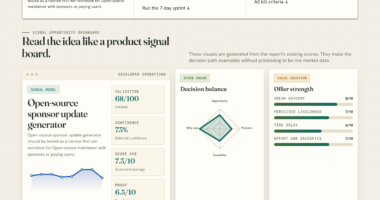
📊 Full opportunity report: FDA Approves Pioneering Therapy For Pancreatic Cancer—Impacts On Consumer Safety on IdeaNavigator AI — validation score, market gap, and execution plan.
TL;DR
The U.S. Food and Drug Administration has approved the first targeted therapy specifically for metastatic pancreatic cancer. This marks a major milestone in cancer treatment, with potential impacts on drug safety and consumer health monitoring. Details on safety and long-term effects are still emerging.
The FDA has approved the first in-class targeted therapy for metastatic pancreatic cancer, a move that could transform treatment options for this aggressive disease. This approval is significant for patient outcomes and raises questions about drug safety and consumer health implications.
The FDA announced on March 2024 the approval of a novel targeted therapy designed specifically for patients with metastatic pancreatic cancer. The therapy, developed by a leading pharmaceutical company, is the first of its kind to target specific molecular pathways associated with this form of cancer, which has historically had limited treatment options.
According to the FDA, the therapy demonstrated promising results in clinical trials, showing improved survival rates and manageable side effects. The approval followed a rigorous review process, including data from multiple phase 3 trials involving hundreds of patients. The agency emphasized that this therapy represents a significant advancement in precision medicine for pancreatic cancer.
While the approval is confirmed, the long-term safety profile and potential off-label uses are still under evaluation. Experts caution that, as a new class of treatment, ongoing surveillance will be necessary to monitor adverse effects and real-world outcomes. The pharmaceutical company has committed to post-marketing studies to further assess safety and effectiveness.
Implications for Patient Care and Consumer Safety
This approval marks a major breakthrough in pancreatic cancer treatment, offering hope for improved survival rates and quality of life. However, it also raises important questions about drug safety monitoring and regulatory oversight.
For consumer health and safety, the rapid adoption of new therapies necessitates vigilant post-market surveillance to detect rare adverse events early. Regulatory agencies and healthcare providers will need to ensure that the benefits outweigh potential risks, especially as the therapy becomes more widely used.
Additionally, the development underscores the importance of transparent communication with patients and the public about the benefits and risks of novel treatments, to prevent misinformation and ensure informed decision-making.
pancreatic cancer targeted therapy
As an affiliate, we earn on qualifying purchases.
As an affiliate, we earn on qualifying purchases.
Background on Pancreatic Cancer Treatments
Pancreatic cancer remains one of the most lethal cancers, with a five-year survival rate below 10%. Historically, treatment options have been limited to surgery, chemotherapy, and radiation, with marginal improvements in survival.
Recent advances in molecular biology have led to the development of targeted therapies, but few have received regulatory approval for pancreatic cancer. The approval of this new therapy represents a significant step forward, building on prior research into genetic and molecular markers associated with the disease.
Prior to this, the FDA approved several chemotherapeutic regimens, but none specifically targeted the molecular pathways involved in metastatic disease. The new therapy’s approval suggests a shift toward precision medicine approaches tailored to individual tumor profiles.
“This is a landmark approval that offers new hope for patients with metastatic pancreatic cancer. We will continue to monitor safety data closely.”
— FDA spokesperson
cancer treatment monitoring devices
As an affiliate, we earn on qualifying purchases.
As an affiliate, we earn on qualifying purchases.
Unknown Long-Term Safety and Off-Label Use Risks
It is not yet clear how the therapy will perform in the broader population over extended periods. Long-term safety data are still being collected through post-marketing studies. Additionally, the potential for off-label use and misuse remains to be evaluated, which could impact consumer safety if adverse effects emerge or if the drug is used outside approved indications.
medical alert systems for cancer patients
As an affiliate, we earn on qualifying purchases.
As an affiliate, we earn on qualifying purchases.
Post-Market Surveillance and Ongoing Research
Regulatory agencies will initiate and continue post-marketing surveillance to monitor adverse events and real-world effectiveness. The pharmaceutical company has committed to conducting further studies to assess long-term safety and efficacy. Healthcare providers will need to update treatment protocols based on emerging data, and public health agencies will watch for any safety signals that could impact consumer safety.
post-treatment health tracking devices
As an affiliate, we earn on qualifying purchases.
As an affiliate, we earn on qualifying purchases.
Key Questions
What does the FDA approval mean for pancreatic cancer patients?
The approval provides a new targeted treatment option that could improve survival and quality of life for patients with metastatic pancreatic cancer. However, long-term safety and effectiveness are still being evaluated.
Are there safety concerns with this new therapy?
While initial trials showed manageable side effects, long-term safety data are not yet available. Ongoing post-marketing studies will help identify any rare or delayed adverse effects.
How might this impact consumer safety monitoring?
The rapid approval underscores the need for vigilant post-market surveillance to detect safety issues early. Regulatory agencies will closely monitor reports of adverse effects as the therapy becomes more widely used.
Will this therapy be available outside the United States?
Currently, the approval is specific to the U.S. market. Regulatory decisions in other countries will depend on local agencies’ review of the data and may follow later.
What are the next steps for research and regulation?
Post-marketing studies are planned to assess long-term safety. Regulatory agencies will evaluate new safety data and may update guidelines or restrictions accordingly.
Source: IdeaNavigator AI