
Stronghold Digital Mining's recent agreement to pay $1.4 million over PJM market regulation violations raises important questions about the intersection of cryptocurrency operations and energy compliance. The situation at their Scrubgrass power plant highlights the complexities of balancing Bitcoin mining with regulatory standards. As they navigate these challenges, it's worth considering what this means for the future of digital currency and energy markets. What implications could this have for other miners?

Get hardware and tech essentials delivered free with Prime
- Fast, free delivery on millions of items
- Prime Video, Amazon Music and more included
- Member-only deals all year
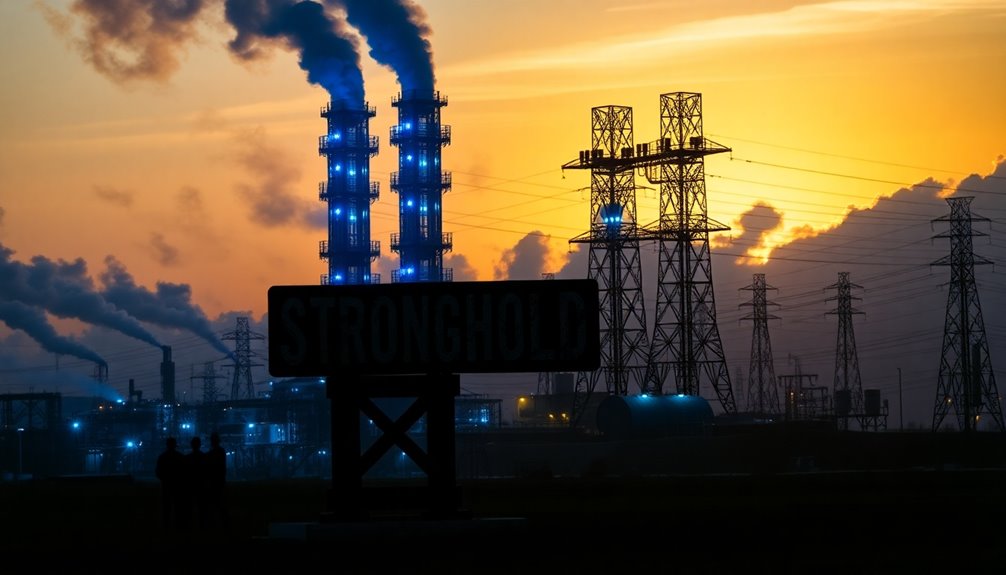
Stronghold Digital Mining has reached a settlement, agreeing to pay approximately $1.4 million to resolve charges for violating PJM Interconnection market rules. The Federal Energy Regulatory Commission (FERC) approved this settlement, which primarily revolves around the Scrubgrass power plant. This facility failed to offer its available capacity into the PJM market during a significant portion of both day-ahead and real-time hours. Instead of providing power to the market, the plant diverted electricity to Bitcoin mining operations, raising regulatory eyebrows.
Moreover, Scrubgrass misclassified some power as "station power," which further complicated its compliance with PJM's market regulations. You might find it interesting that Stronghold operates two power plants in Pennsylvania: Scrubgrass and Panther Creek. Both facilities utilize waste coal as a low-cost and environmentally friendly energy source. Scrubgrass has an 85-MW capacity, while Panther Creek operates at 80 MW. Given the vertically integrated business model of Stronghold, these plants are crucial for both energy production and Bitcoin mining. In total, the settlement involved a penalty of $741,365 to be paid to the U.S. Treasury.
The settlement requires Stronghold to return $678,635 in capacity revenues to PJM. This financial hit comes at a time when the company reported a GAAP net loss of $22.7 million in Q3 2024. During that quarter, Stronghold generated 188 Bitcoin, a decrease from earlier periods.
To counter these challenges, Stronghold is looking into options to maximize revenue through demand response programs with PJM. Additionally, potential regulatory changes could play in Stronghold's favor, especially with increased coal refuse reclamation tax credits on the horizon.
Looking ahead, Stronghold is also in the process of merging with Bitfarms. Under this agreement, shareholders will receive 2.52 Bitfarms shares for each Stronghold share, and the merger aims to expand Bitfarms' energy portfolio while increasing active power capacity.
As part of this strategic alliance, Stronghold has signed hosting agreements with Bitfarms for 20,000 Bitcoin miners. This collaboration is expected to provide Stronghold with access to Bitfarms' expertise and resources, further enhancing its Bitcoin mining operations.
As an affiliate, we earn on qualifying purchases.
As an affiliate, we earn on qualifying purchases.
As an affiliate, we earn on qualifying purchases.
As an affiliate, we earn on qualifying purchases.
Halloween Picks
halloween
As an affiliate, we earn on qualifying purchases.