
📊 Full opportunity report: Transform Food Safety Operations With AI And Vision-Model Software on IdeaNavigator AI — validation score, market gap, and execution plan.

Get hardware and tech essentials delivered free with Prime
- Fast, free delivery on millions of items
- Prime Video, Amazon Music and more included
- Member-only deals all year
TL;DR
A restaurant tech company is piloting AI-based vision-model software to automate kitchen safety inspections. The system uses photos taken during daily walk-throughs to identify violations reliably. This development could improve food safety compliance and operational efficiency.
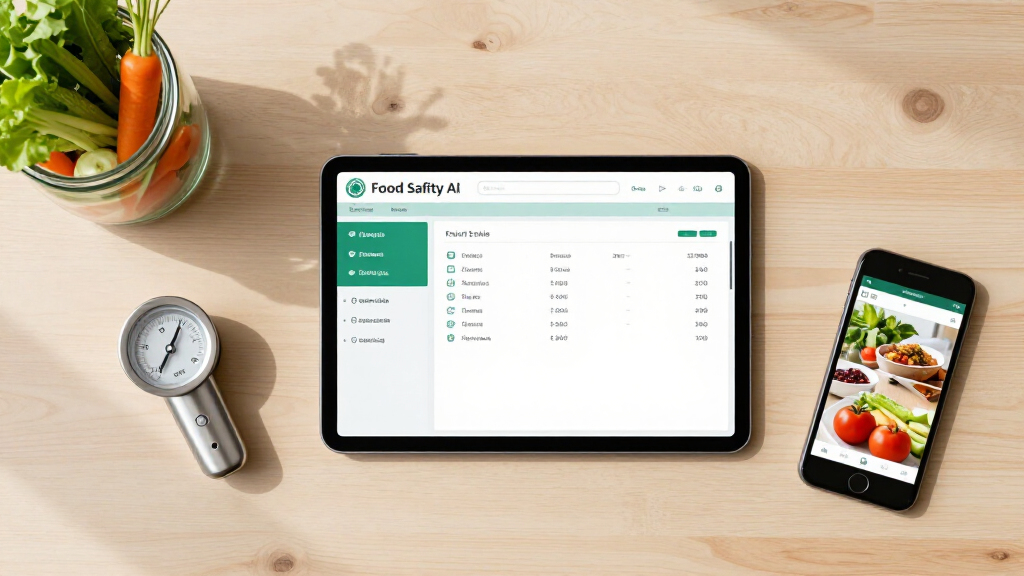
Restaurant operators are piloting an AI-powered vision-model software designed to verify food safety during daily kitchen walk-throughs. This technology aims to replace manual checklist recording with automated, verifiable inspection data, marking a significant step forward in food safety management.
The software allows managers to photograph key areas such as prep stations, walk-in coolers, sinks, and storage during morning inspections. Food safety standards and pesticide-residue compliance. A vision model then analyzes these images to detect violations such as uncovered containers, propped cooler doors, or missing date labels. It assigns severity ratings and generates timestamped reports per location, enabling trend analysis across multiple units.
This approach addresses a common issue: traditional checklists record that inspections occurred but not the actual conditions. For more on regulations, see Food Safety Standards And Pesticide-Residue Compliance. Often, inspectors later discover violations that were not properly documented, leading to delayed corrective actions. The new system aims to provide verifiable, real-time data, reducing reliance on subjective or incomplete manual records.
The initial validation involves running two weeks of inspection photos from five restaurant locations through the model and comparing flagged violations with findings from a hired health-inspection consultant. The goal is to assess the model’s accuracy and reliability before broader deployment.
Transform Food Safety Operations With AI And Vision-Model Software
Restaurant operators are testing photo-based AI that turns daily kitchen walk-throughs into objective, timestamped inspection records—helping teams identify visible violations, prioritize corrective action and standardize compliance across locations.
How an AI-assisted inspection works
The workflow adds machine verification to an existing morning routine. It is designed to augment restaurant teams—not eliminate expert judgment or formal health inspections.
Photograph key zones
Managers document prep stations, walk-in coolers, sinks and storage areas during the daily walk-through.
Analyze visible conditions
The vision model examines ordinary phone photos for recognizable food-safety risks and documentation gaps.
Assign severity
Potential violations are classified so urgent corrections can be separated from lower-priority follow-up.
Generate the record
Timestamped reports create an evidence trail and support trend analysis across individual or multiple units.
The model still has to prove itself
Real-world kitchens vary in lighting, layout, equipment and visual clutter. The pilot compares AI-generated flags with an independent health-inspection consultant’s findings.
What the pilot measures
The two-week exercise is intended to reveal whether the software can detect genuine issues consistently without overwhelming teams with unreliable alerts.
Using vision models to analyze routine photos can turn inspection habits into verifiable data, reducing errors and increasing compliance.
Checklist versus visual verification
Traditional checklists confirm that a task was recorded. Photo-based analysis can also preserve evidence of the observed condition and surface patterns across time.
| Capability | Manual checklist | AI vision workflow | Operational value |
|---|---|---|---|
| Confirms inspection activity | ✓ Yes | ✓ Yes | Establishes a repeatable daily routine |
| Preserves visual evidence | ✗ Usually no | ✓ Photo record | Supports review and accountability |
| Applies consistent screening | ~ Varies by person | ✓ Model-based | Helps align standards across units |
| Assigns issue severity | ~ Subjective | ✓ Automated rating | Focuses attention on urgent risks |
| Enables portfolio trends | ✗ Labor intensive | ✓ Structured reports | Reveals recurring location-level issues |
| Replaces human expertise | ✗ No | ✗ Not established | Human oversight remains essential |
What the software may flag
The model focuses on conditions visible in an image. It cannot automatically verify every safety requirement, invisible contaminant or process detail outside the camera frame.
Uncovered containers
Identifies food containers that appear open or insufficiently protected in prep and storage areas.
Propped cooler doors
Flags doors that appear open during the documented inspection and may require immediate review.
Missing date labels
Surfaces containers where expected date markings are absent, obscured or potentially incomplete.
Sink conditions
Provides a visual record of handwashing and warewashing zones for manager follow-up.
Repeat violations
Aggregated records may reveal recurring problems by station, shift, restaurant or operating region.
Corrective action
Severity ratings can help teams prioritize intervention and document that conditions were addressed.
Validation first. Scale second.
Complete the two-week pilot
Process daily inspection photos from five restaurant locations.
Compare with expert findings
Measure flagged violations against an inspection consultant’s assessment.
Refine accuracy and workflow
Address missed issues, false alerts and integration friction.
Expand testing and productize
Potentially add dashboards, subscription tiers and multi-location reporting.
Why operators are paying attention
Automated visual review could make inspections more frequent and comparable without adding the same amount of manual documentation work—especially for multi-unit restaurant groups.
More objective records
Timestamped images can show actual conditions instead of merely confirming that a checklist was completed.
Faster prioritization
Automated severity flags may direct managers toward the problems most likely to require immediate action.
Consistent oversight
Structured data can help regional teams compare locations and identify patterns across the portfolio.
Potential Impact on Food Safety and Operational Efficiency
This technology could significantly improve the accuracy of food safety inspections by providing objective, timestamped evidence of conditions. It may reduce human error and ensure compliance, ultimately protecting consumer health. Additionally, automating inspections can streamline operations, save time, and enable more frequent checks without additional staffing, benefiting multi-unit restaurant groups seeking consistent standards.
AI food safety inspection software
As an affiliate, we earn on qualifying purchases.
As an affiliate, we earn on qualifying purchases.
Advances in AI and Food Safety Monitoring
Recent developments in AI and computer vision have made it possible to analyze ordinary phone photos for violations, a capability previously limited to specialized hardware. The restaurant industry has been exploring digital solutions for compliance, but automated verification remains a challenge. This pilot marks one of the first efforts to integrate vision-model software directly into daily operational routines, aiming to replace subjective manual checklists with reliable, automated data collection.
Historically, food safety inspections have relied on periodic manual assessments, which can be inconsistent and prone to oversight. The shift toward automated, photo-based verification aligns with broader trends in digital transformation across hospitality and food service sectors.
“Using vision models to analyze routine photos can turn inspection habits into verifiable data, reducing errors and increasing compliance.”
— an anonymous researcher
restaurant kitchen inspection camera
As an affiliate, we earn on qualifying purchases.
As an affiliate, we earn on qualifying purchases.
Validation Results and Broader Deployment Plans
It is not yet clear how accurately the vision model will perform across diverse kitchen environments or how well it will identify violations in real-world conditions. The results of the two-week validation are pending, and broader adoption depends on the outcomes of this testing phase. Additionally, questions remain about integration with existing operations and potential scalability challenges.
food safety compliance camera system
As an affiliate, we earn on qualifying purchases.
As an affiliate, we earn on qualifying purchases.
Next Steps in Pilot Testing and Commercial Rollout
The pilot will run for two weeks, during which the AI system’s flagged violations will be compared with expert assessments. If results are favorable, the company plans to refine the software and expand testing to more locations. A commercial product offering, including subscription tiers and dashboard features, is expected to follow, aiming to bring AI-driven food safety verification to a wider market.
automated kitchen safety monitoring
As an affiliate, we earn on qualifying purchases.
As an affiliate, we earn on qualifying purchases.
Key Questions
How does the AI vision software work during inspections?
Managers photograph key kitchen areas during daily walk-throughs. The AI analyzes these images to detect violations, assigns severity ratings, and generates timestamped reports for review and compliance tracking.
What types of violations can the software identify?
The system is designed to flag issues such as uncovered containers, propped cooler doors, missing date labels, and other common food safety violations visible in photos.
Will this replace human inspectors entirely?
Currently, the system is intended to augment human inspections by providing verifiable data. Full automation of inspections is not yet confirmed and will depend on validation results.
When will this technology be available commercially?
If pilot testing proves successful, the company plans to launch a subscription-based product within the next few months, with broader rollout expected after further validation.
Are there privacy or data security concerns?
The software uses photos taken during routine inspections, and details about data security measures are still being finalized. Ensuring compliance with privacy standards will be part of the deployment process.
Source: IdeaNavigator AI
Halloween Picks
halloween
As an affiliate, we earn on qualifying purchases.