

TL;DR

Get hardware and tech essentials delivered free — and shop member deals
- Fast, free delivery on millions of items
- Access to Prime Big Deal Days deals on October 6–7
- Prime Video, Amazon Music and more included
Nine significant AI trends are currently emerging, influencing various sectors from gaming to enterprise. These developments are shaping future technological landscapes and investment priorities.
Several emerging AI trends are currently redefining the future landscape of technology, with impacts across sectors including gaming, enterprise, and consumer applications. For more details, see the 2026’S AI Landscape: 9 Trends To Watch. These trends, confirmed by industry experts and recent research, highlight the rapid pace of AI innovation and its increasing integration into daily life and business operations.
Experts and industry reports have identified nine key AI trends that are shaping the future: advancements in generative AI, increased adoption of AI-powered automation, growth in AI ethics and regulation, expansion of AI in healthcare, development of more sophisticated natural language processing, proliferation of AI chips and hardware, rise of AI-driven cybersecurity, integration of AI with Internet of Things (IoT), and the evolution of AI in creative industries. For an in-depth analysis, see the original analysis.
For example, generative AI models like GPT-4 have demonstrated significant improvements in content creation, prompting widespread adoption across sectors. Simultaneously, companies are investing heavily in AI hardware, such as specialized chips, to support these advanced models. Regulatory bodies are also increasingly focusing on AI ethics, aiming to establish guidelines for responsible development and deployment. These confirmed developments indicate a clear trajectory toward more intelligent, autonomous, and regulated AI systems. To explore the latest trends, check out the latest AI trends report.
The 9 picks
- 1
 MSI B850 GAMING PLUS WIFI Motherboard with 32GB DDR5 RAM BundleView on Amazon →
 - 2
 ASUS ROG Strix X870E-A Gaming WiFi 7 Motherboard for AMD AM5View on Amazon →
 - 3
 ASUS ROG Strix X870E-E Gaming WiFi AMD AM5 X870 ATX MotherboardView on Amazon →
 - 4
 MSI MPG X870E Carbon WiFi Gaming Motherboard (AMD Ryzen 9000/8000/7000 Series…View on Amazon →
 - 5
 ASUS ROG Strix X870-A Gaming WiFi AMD AM5 MotherboardView on Amazon →
 - 6
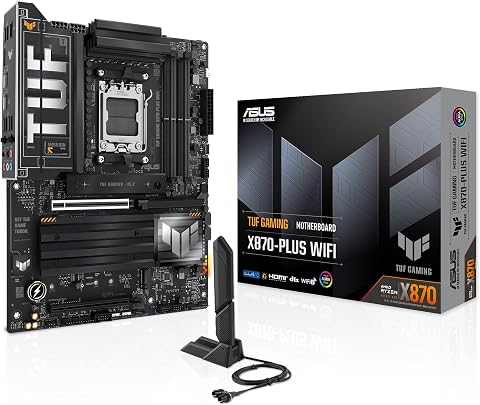 ASUS TUF Gaming X870-PLUS WiFi AMD AM5 MotherboardView on Amazon →
 - 7
 ASUS TUF Gaming Z790-Plus WiFi LGA 1700 MotherboardView on Amazon →
 - 8
 GIGABYTE B850 AORUS Elite WIFI7 AMD AM5 MotherboardView on Amazon →
 - 9
 ASUS ROG Strix B550-F Gaming WiFi II AMD AM4 MotherboardView on Amazon →
Implications of AI Trends for Industries and Consumers
The emergence of these nine AI trends signifies a profound shift in how technology will operate in the coming years. Businesses can leverage AI to improve efficiency, personalize customer experiences, and develop new products. For consumers, AI promises enhanced services, smarter devices, and more intuitive interfaces. However, these developments also raise questions about regulation, privacy, and ethical use, making it crucial for stakeholders to stay informed and prepared for ongoing changes.
Recent Developments and Industry Insights on AI Progress
Over the past year, industry leaders and research institutions have highlighted rapid advancements in generative AI, with models like GPT-4 and DALL·E setting new standards. The adoption of AI-driven automation in manufacturing and customer service has accelerated, driven by cost efficiencies and scalability. Governments and regulatory agencies worldwide are beginning to craft policies addressing AI’s ethical and safety concerns, reflecting the technology’s growing influence and potential risks. These developments are supported by increasing investments in AI hardware, research, and startups, indicating a sustained momentum towards more sophisticated AI systems.
Unconfirmed Aspects and Emerging Challenges in AI Development
While the identified trends are well-supported by current research and industry activity, several aspects remain uncertain. The exact timeline for widespread adoption of AI regulation is unclear, and the pace of technological breakthroughs in areas like general AI or AI safety remains unpredictable. Additionally, the impact of AI on employment, privacy, and security continues to evolve, with ongoing debates about how quickly and extensively these issues will develop.
Next Steps in Monitoring AI Innovation and Regulation
Stakeholders should watch for upcoming regulatory frameworks from major jurisdictions, further technological breakthroughs in AI hardware, and new applications emerging in creative and industrial sectors. Continued investment in AI research and collaboration between industry and regulators will be vital to shape a responsible and innovative AI future. Experts recommend ongoing assessments of AI’s societal impacts and proactive policy development to address potential risks.
Key Questions
What are the most impactful AI trends right now?
The most impactful trends include advances in generative AI, increased automation, AI ethics and regulation efforts, growth in AI hardware, and AI’s expanding role in healthcare and creative industries.
How soon will AI regulation be in place worldwide?
While some regions are drafting regulations, a comprehensive global framework is still in development, and timelines remain uncertain due to varying policy priorities and technological challenges.
Will AI replace human jobs in the near future?
AI is expected to automate certain tasks, which may impact some jobs, but experts emphasize that new roles and industries will also emerge. The overall effect depends on policy, education, and industry adaptation.
Is AI development safe and ethical?
Efforts are underway to establish ethical guidelines and safety standards, but challenges remain, particularly around bias, privacy, and misuse. Responsible development is crucial for future trust in AI systems.
Source: ThorstenMeyerAI.com
Fall Picks
fall essentials
As an affiliate, we earn on qualifying purchases.