
📊 Full opportunity report: Behind The AI Curtain: Creating Station 36’S Shortwave Numbers Listening Site on ThorstenMeyerAI.com — validation score, market gap, and execution plan.
Open a free Amazon Business account
Business pricing, bulk buying and tax-exempt orders.
Create a free accountAs an affiliate, we earn on qualifying purchases.
TL;DR
Station 36’s web-based shortwave listening post is an AI-crafted, interactive experience mimicking vintage radio hardware. Its design, audio, and visuals recreate the thrill of signal hunting.
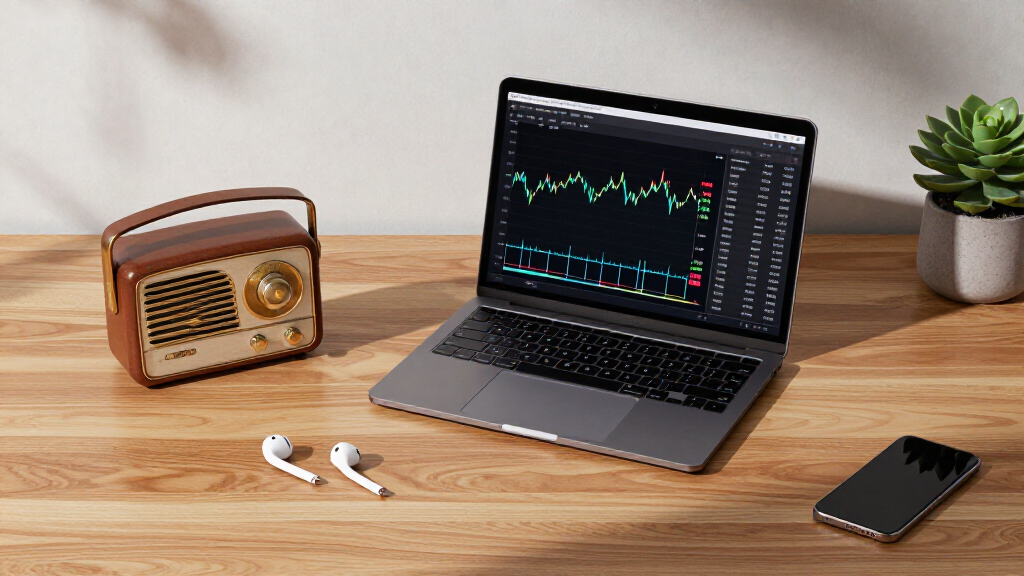
Station 36’s web experience, a meticulously crafted digital replica of a vintage shortwave numbers station listening post, has been launched. Developed entirely with AI-driven design and coding, it offers users an interactive interface mimicking classic radio hardware, complete with spectral waterfall visuals and synthesized audio signals. For an in-depth look at the design process, see the original analysis. This development highlights advancements in AI-assisted web design and digital preservation of radio history.
The site employs a restrained vintage color palette rooted in materials like bakelite brown-black (#191210), amber (#ffb54a), phosphor cyan (#67fff0), and soft cream (#efe1c2). This approach aligns with efforts in digital preservation of radio history, as detailed in the original analysis. Its core visual elements are built with inline SVG embedded directly into HTML, creating detailed controls such as a tuning dial, knobs, and meters that simulate vintage radio hardware. The dial’s ticks are dynamically generated via JavaScript, allowing users to precisely tune frequencies. Moving the dial updates the spectral waterfall visualization, which scrolls downward to simulate real-time signal activity, including station peaks and Morse code signals.
The audio layer, generated via Web Audio API, synthesizes static hiss, carrier hum, heterodyne whistles, and Morse signals, which only activate when users power on the receiver. The experience remains static until interaction, enhancing realism and suspense. The entire site is built with pure HTML, CSS, and JavaScript, with no external assets or frameworks, emphasizing self-contained craftsmanship. The project was executed following a detailed art-direction brief, ensuring fidelity to vintage aesthetics and tactile interactivity. Learn more about the design trick that makes this possible at this detailed overview.
Innovative AI-Driven Vintage Radio Simulation
This project demonstrates how AI can be harnessed to create highly detailed, interactive digital recreations of historical technology. It offers a unique educational and immersive experience, allowing users to explore the world of shortwave signals and Morse code through a vintage-inspired interface. The site’s authenticity and technical sophistication highlight the potential for AI to preserve and animate historical radio culture in the digital age, appealing to enthusiasts, historians, and web developers alike.
As an affiliate, we earn on qualifying purchases.
Historical and Technical Foundations of Signal Recreation
Shortwave numbers stations have long been part of clandestine communication, especially during the Cold War era. The concept of recreating such a station digitally has gained interest among hobbyists and historians. Previous efforts have focused on static images or audio recordings, but this project advances the field by integrating tactile controls, spectral visuals, and synthesized sounds into a seamless web experience. It builds on modern web technologies like SVG, Web Audio API, and JavaScript to deliver a realistic simulation. The development follows a broader trend of AI-assisted design, where machine learning and automation help craft detailed, interactive digital artifacts.
“The site’s fidelity to vintage hardware combined with real-time signal simulation creates an immersive experience that feels both nostalgic and cutting-edge.”
— an anonymous researcher
digital shortwave radio with waterfall display
As an affiliate, we earn on qualifying purchases.
As an affiliate, we earn on qualifying purchases.
Unclear Aspects of AI Design and User Interaction
It is not yet clear how much of the design was directly generated or guided by AI versus human input. Details about the specific AI tools or models involved remain undisclosed. Additionally, user engagement metrics, long-term accessibility, and potential educational applications are still developing topics. The extent to which this simulation accurately reproduces authentic signal patterns or Morse code nuances also remains to be validated by experts.
RF spectrum analyzer for hobbyists
As an affiliate, we earn on qualifying purchases.
As an affiliate, we earn on qualifying purchases.
Upcoming Developments and Broader AI Applications
Future steps may include expanding the site’s interactivity, adding more authentic signal patterns, or integrating educational modules about radio history. Developers and historians may collaborate to refine the simulation’s accuracy. Broader adoption of AI-assisted design in digital heritage projects is anticipated, potentially leading to more immersive recreations of historical technology. Ongoing feedback from users and experts will shape subsequent iterations and educational uses.
As an affiliate, we earn on qualifying purchases.
Key Questions
Who developed the Station 36 web experience?
The project was executed by an AI-driven design pipeline following a detailed art-direction brief, with no specific human developer credited publicly.
How authentic is the signal simulation?
The site synthesizes static, carrier hum, heterodyne whistles, and Morse code signals using Web Audio API, aiming for realism, but the accuracy of specific signals remains unverified by experts.
Can I interact with the signals or just watch?
Users can tune the virtual receiver by dragging the dial, which updates the spectral waterfall and activates audio signals, providing an interactive experience mimicking real radio operation.
Is this project meant for educational use?
While primarily an artistic and technical recreation, the site’s realistic design and interactivity could serve educational purposes for those interested in radio history and signal decoding.
Will there be more similar projects?
Yes, the broader series includes 175 AI-crafted websites exploring different facets of history and technology, with future projects likely to expand on this approach.
Source: ThorstenMeyerAI.com
Fall Picks
fall essentials
As an affiliate, we earn on qualifying purchases.