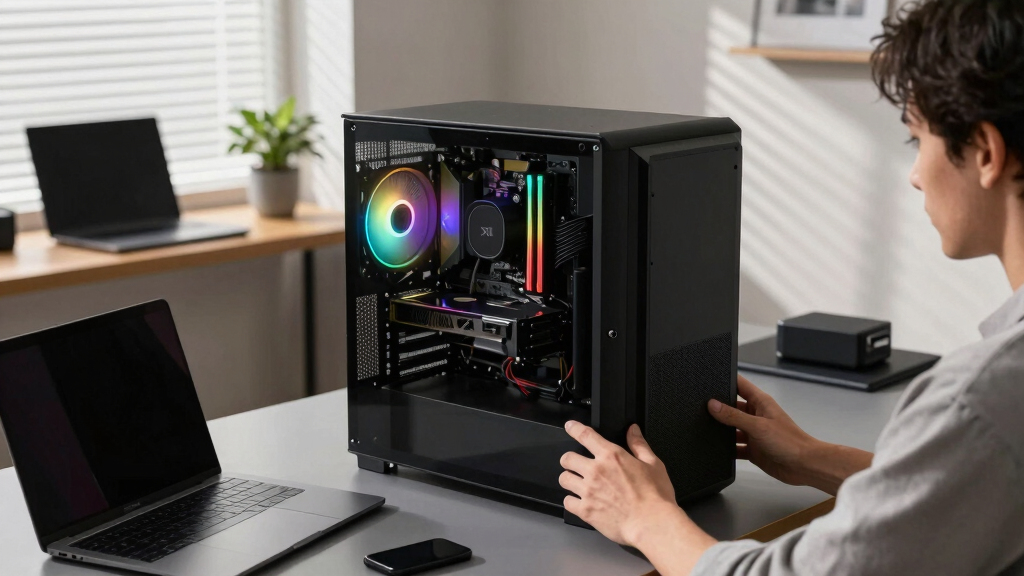

📊 Full opportunity report: Build vs Buy a Prebuilt AI Workstation on ThorstenMeyerAI.com — validation score, market gap, and execution plan.

Get hardware and tech essentials delivered free — and shop member deals
- Fast, free delivery on millions of items
- Access to Prime Big Deal Days deals on October 6–7
- Prime Video, Amazon Music and more included
TL;DR
In 2026, prebuilt AI workstations often match or beat DIY prices due to component shortages and bulk buying. The decision hinges on speed, control, and long-term support, with hybrid options gaining popularity.
In 2026, prebuilt AI workstations are often more cost-effective and faster to deploy than DIY builds, driven by component shortages and bulk purchasing power. This shift impacts how organizations and individuals choose their hardware, emphasizing speed and reliability over customization.
Recent market conditions, including global chip shortages and price spikes, have increased the cost of building custom AI workstations, as detailed in the original analysis. Prebuilt systems from vendors like Lambda and Puget now frequently match or surpass the cost-effectiveness of DIY setups, thanks to economies of scale and validated manufacturing processes.
Prebuilt AI workstations arrive ready to run, with validated thermals, pre-installed software, warranties, and support, significantly reducing setup time and operational risks. For more insights, see our Build vs Buy a Prebuilt AI Workstation guide. They undergo rigorous testing, including burn-in procedures, to ensure performance and longevity under real-world workloads.
Choosing between build and buy depends on priorities: prebuilt options favor speed, reliability, and reduced operational overhead, while building offers maximum control over hardware, software, and security. The decision also involves evaluating total cost of ownership, including hidden expenses like maintenance, troubleshooting, and compliance.
Deployment timelines have shortened, with prebuilt systems delivering within 1–2 weeks, whereas DIY builds can take a month or more due to sourcing and assembly. This speed can be critical for projects requiring rapid deployment to stay competitive.
Build vs buy
an AI workstation.
The real question behind this whole series: do you pull the five heat-and-noise levers yourself, or buy a prebuilt where the vendor pulled them for you? And in 2026, the old “building is cheaper” rule has broken. Match your situation in Part 3.
Impact of Market Shifts on AI Hardware Choices
The changing landscape in 2026 makes prebuilt AI workstations more attractive for many users, especially those prioritizing quick deployment and operational stability. Organizations can reduce risk, avoid hidden costs, and focus on core tasks, while individual users benefit from plug-and-play convenience. However, control and customization still favor DIY for specialized or security-sensitive environments.
As an affiliate, we earn on qualifying purchases.
Market Trends and Hardware Cost Dynamics in 2026
Global chip shortages and rising component prices have increased the cost of building custom AI workstations, often erasing previous cost advantages. Vendors now leverage bulk purchasing and validated manufacturing to offer competitively priced prebuilt systems. The shift reflects a broader trend toward ready-to-run solutions in high-performance computing.
Historically, DIY builds were cheaper but required significant time and technical expertise. The current market conditions have shifted this balance, making prebuilt options more appealing for many users and organizations aiming for rapid deployment and reduced operational risk.
"Our prebuilt systems undergo rigorous validation, including thermal testing and burn-in, to ensure reliability and performance out of the box."
— A vendor representative from Lambda
As an affiliate, we earn on qualifying purchases.
Remaining Questions About Long-Term Costs and Customization
It is still unclear how long the current market conditions will persist and whether component prices will stabilize or continue to rise. Additionally, the extent to which customizability and upgradeability will remain advantageous in the face of evolving hardware standards remains uncertain.
As an affiliate, we earn on qualifying purchases.
Future Trends in AI Hardware Procurement Strategies
Expect continued evolution in the hardware market, with potential shifts toward more modular and upgradeable prebuilt systems. Organizations should stay informed through industry analyses to adapt their procurement strategies. Organizations and individuals should monitor supply chain developments and vendor offerings to adapt their procurement strategies accordingly. Further analysis will clarify how the balance between build and buy will shift in the coming years.
As an affiliate, we earn on qualifying purchases.
Key Questions
Is it still cheaper to build my own AI workstation in 2026?
Not necessarily. Due to component shortages and higher prices, prebuilt systems often match or beat the cost of DIY builds, especially when factoring in time and operational risks.
How long does it take to deploy a prebuilt AI workstation?
Most prebuilt systems can be delivered and set up within 1–2 weeks, whereas DIY builds may take a month or more due to sourcing and assembly.
What are the main advantages of buying a prebuilt AI workstation?
Prebuilt systems offer validated performance, reduced setup time, warranties, and support, lowering operational risks and ensuring reliability for mission-critical workloads.
Can I upgrade or customize a prebuilt AI workstation later?
Many prebuilt systems allow some upgrades, but they often have limited flexibility compared to custom builds. Check vendor specifications for upgrade options.
Will the market conditions favor prebuilt or DIY solutions in the future?
Market trends suggest prebuilt options will remain competitive for the foreseeable future, especially for rapid deployment and reliability, but DIY may still appeal for highly customized or security-sensitive environments.
Source: ThorstenMeyerAI.com
Fall Picks
fall essentials
As an affiliate, we earn on qualifying purchases.





![Consumer Trends And Innovations In Tying Gym Shorts [Video]](https://dailycoinfeed.com/wp-content/uploads/2026/09/consumer-trends-and-innovations-in-tying-gym-shorts-video-featured-260x140.jpg)