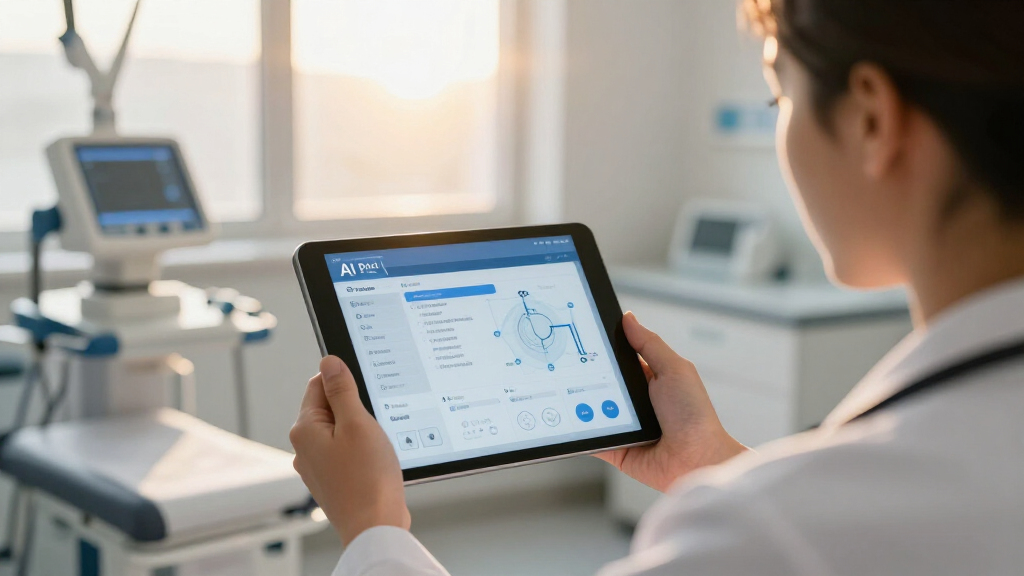

📊 Full opportunity report: Top 10 AI-Powered Solutions For Healthcare In 2026 on ThorstenMeyerAI.com — validation score, market gap, and execution plan.
TL;DR
In 2026, AI-powered solutions are transforming healthcare, with top innovations in diagnostics, personalized medicine, and remote monitoring. This article highlights the most influential systems currently deployed and their significance.
Artificial intelligence is now integral to healthcare in 2026, with the top 10 solutions significantly improving diagnostics, treatment, and patient management, according to industry experts. These innovations are shaping the future of medicine and patient care, with widespread adoption across hospitals and clinics worldwide. For a comprehensive overview, see the original analysis.
The list of leading AI-powered healthcare solutions in 2026 includes systems for medical imaging analysis, personalized treatment planning, remote patient monitoring, drug discovery, and clinical decision support. These solutions are confirmed by recent industry reports and adoption data from major healthcare providers. Learn more about the top systems in this detailed review.
For example, AI algorithms for radiology are now detecting anomalies with accuracy comparable to expert radiologists, reducing diagnosis times and errors. Similarly, AI-driven telemedicine platforms enable remote consultations with AI triage, improving access in underserved areas. These systems are supported by recent deployments at large hospital networks and validated through clinical trials. For related insights, check out AI-powered projectors.
Experts from industry groups confirm that these solutions are becoming standard components in hospital workflows, with some AI tools receiving regulatory approval in multiple jurisdictions, including the U.S. FDA and European CE marking. While some solutions are still in early deployment phases, most are operational in major healthcare settings today.
Why AI Healthcare Solutions Are Game-Changers in 2026
These AI solutions are transforming healthcare delivery by increasing accuracy, efficiency, and accessibility. They reduce diagnostic errors, streamline workflows, and enable personalized treatments tailored to individual patient profiles. For patients, this means faster diagnoses, better outcomes, and more convenient care options.
For healthcare providers, AI reduces workload and operational costs while enhancing decision-making. The widespread adoption of these technologies signals a shift toward data-driven, precision medicine, which could improve population health outcomes globally.
AI-powered medical imaging analysis device
As an affiliate, we earn on qualifying purchases.
As an affiliate, we earn on qualifying purchases.
Emerging Trends and Industry Adoption in 2026
Over the past few years, AI in healthcare has evolved from experimental tools to essential components of clinical practice. Major tech companies and biotech firms have invested heavily in AI research, leading to rapid deployment of solutions across hospitals, clinics, and research institutions.
Recent reports from industry analysts indicate that AI-based diagnostics, especially in radiology and pathology, now account for a significant share of clinical workflows. Additionally, AI-powered drug discovery platforms have accelerated the development of new treatments, especially in oncology and infectious diseases, during the ongoing global health challenges.
Regulatory bodies have also adapted, approving several AI tools for clinical use, which has facilitated broader adoption. Despite this progress, challenges remain around data privacy, integration, and ensuring equitable access to these advanced solutions.
“AI is now a core part of clinical decision-making, vastly improving accuracy and speed in diagnosis and treatment planning.”
— Dr. Lisa Chen, Chief Medical Officer at MedTech Innovations
remote patient monitoring system
As an affiliate, we earn on qualifying purchases.
As an affiliate, we earn on qualifying purchases.
Remaining Challenges and Uncertainties in AI Healthcare
While many AI solutions are operational, questions remain about long-term reliability, regulatory approvals, and ethical considerations. The full impact on healthcare outcomes and cost savings is still being studied, and some solutions are in early deployment phases.
Data privacy concerns, integration with existing systems, and equitable access across different regions and populations are ongoing issues that could influence future adoption and effectiveness.
personalized medicine treatment planning software
As an affiliate, we earn on qualifying purchases.
As an affiliate, we earn on qualifying purchases.
Future Developments and Next Steps in AI Healthcare in 2026
In the coming months, expect further regulatory approvals for new AI tools, expanded clinical trials, and increased integration of AI into routine care. Developers are also working on enhancing AI explainability and addressing ethical concerns to build trust among clinicians and patients.
Additionally, ongoing investments and collaborations between tech firms, healthcare providers, and regulators aim to accelerate innovation and address current limitations, paving the way for more widespread, reliable AI use in healthcare beyond 2026.
AI clinical decision support tool
As an affiliate, we earn on qualifying purchases.
As an affiliate, we earn on qualifying purchases.
Key Questions
Which AI healthcare solutions are most widely used in 2026?
Systems for medical imaging analysis, personalized treatment planning, remote monitoring, drug discovery, and clinical decision support are among the most widely adopted AI solutions this year.
Are these AI tools approved by regulators?
Yes, several AI solutions have received regulatory approval from agencies such as the U.S. FDA and European CE, facilitating their deployment in clinical settings.
What are the main benefits of AI in healthcare today?
AI improves diagnostic accuracy, speeds up treatment decisions, enhances patient monitoring, and reduces operational costs, leading to better health outcomes.
What challenges remain for AI in healthcare?
Key challenges include ensuring data privacy, integrating AI with existing systems, maintaining long-term reliability, and ensuring equitable access across diverse populations.
What is expected to happen next in AI healthcare?
Further regulatory approvals, technological advancements, and broader clinical adoption are expected, along with ongoing efforts to address current ethical and practical challenges.
Source: ThorstenMeyerAI.com