
📊 Full opportunity report: What Pharmacy Data Reveals About GLP-1 Doses And Prices on IdeaNavigator AI — validation score, market gap, and execution plan.

Get hardware and tech essentials delivered free — and shop member deals
- Fast, free delivery on millions of items
- Access to Prime Big Deal Days deals on October 6–7
- Prime Video, Amazon Music and more included
TL;DR
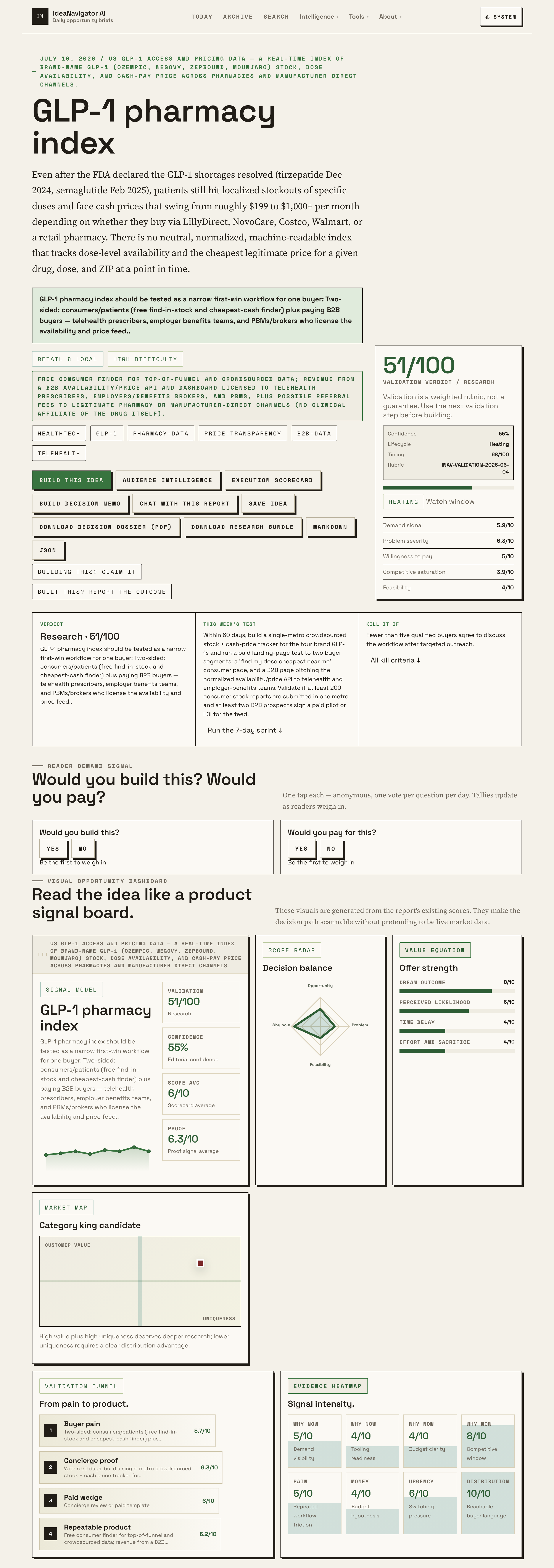
A proposed GLP-1 pharmacy index would collect dose-level availability and cash prices by ZIP code for four brand-name drugs. The concept responds to localized stock gaps and cash prices that reportedly range from about $199 to more than $1,000 a month, but no index or pilot results are reported yet.
IdeaNavigator AI has proposed a pharmacy index that would track dose-level availability and cash prices for four brand-name GLP-1 drugs by ZIP code, aiming to help patients locate a dose in stock and give healthcare and benefits buyers normalized market data. The proposal reflects a shift from nationwide shortage concerns to local supply gaps and fragmented pricing, but the index has not been reported as built or launched.
The proposed consumer tool would let users search for Ozempic, Wegovy, Zepbound and Mounjaro by drug, dose and ZIP code. It would combine crowdsourced reports of pharmacy stock with public cash prices from manufacturer programs and retail channels, including LillyDirect, NovoCare, Costco and Walmart, alongside a price-comparison layer. Dose-level alerts are also proposed. The material does not specify how often listings would be checked or independently verified.
The plan pairs a free patient-facing finder with a paid business product. Telehealth prescribers, employer benefits teams, pharmacy benefit managers and brokers could license an availability-and-price feed or dashboard. The proposal also identifies referral fees to legitimate pharmacy or manufacturer-direct channels as a possible revenue stream; it does not describe specific agreements or say any buyers have committed.
To test demand, the proposal sets out a 60-day, single-metro trial with a consumer page and a business pitch for the data feed. Its proposed benchmarks are at least 200 consumer stock reports in one metro and paid pilots or letters of intent from at least two business prospects. These are targets for validation, not reported results.
Patients Face Local Dose Gaps
For patients, a national shortage status does not tell them whether a particular dose is available nearby or what they would pay without insurance. The proposal says cash prices can range from roughly $199 to more than $1,000 per month, depending on the drug, channel and program. Without a shared, current comparison, patients may have to check multiple pharmacies and manufacturer channels themselves.
The business case rests on the same fragmentation. The proposal says employers report GLP-1 drugs account for roughly 20% of pharmacy spending and argues that benefits teams and other buyers need better cost-steering information. If an index could provide reliable, comparable data, it might help buyers understand price variation and locate available doses. Whether the information would change spending or access has not been demonstrated.
Shortages Give Way to Fragmented Access
The proposal dates a change in the market to the FDA’s shortage determinations: tirzepatide shortages were declared resolved in December 2024 and semaglutide shortages in February 2025. It argues that those decisions did not eliminate localized gaps in particular doses. The distinction matters: a drug can be off the national shortage list while an individual pharmacy has limited stock.
At the same time, manufacturer direct-purchase programs and retail cash-price channels have added more places for consumers to compare. The proposal also points to compounding deadlines as part of the changing access landscape and mentions the TrumpRx portal’s launch in February 2026. It presents these developments as drivers of price and availability fragmentation, rather than evidence that any one channel consistently offers the lowest price.
Data Quality Remains Unproven
No operating index, consumer submissions, paid pilots or letters of intent are reported. The proposed benchmarks remain goals. It is also unclear how the service would confirm crowdsourced stock reports, keep prices current, distinguish eligibility conditions attached to cash programs or compare prices on an equivalent basis.
The proposal gives a broad monthly price range but does not provide a dated, dose-by-dose dataset showing which prices apply to which products and locations. Cash prices can also depend on program terms and availability. There is no evidence presented that the tracker could guarantee stock or identify the lowest legitimate price for every user at the time they search.
A Metro Pilot Would Test Demand
The next proposed step is a 60-day test in one metro, collecting stock reports and public cash-price information for the four named drugs. The plan would then measure submissions against the 200-report target and seek paid pilots or letters of intent from at least two telehealth or employer-benefits prospects. No launch date or metro is specified.
If pursued, the test would need to show that reports are current and useful to patients and that business buyers will pay for the normalized feed. The proposal does not report a decision to proceed, a selected partner or a timetable beyond the validation window.
Source: IdeaNavigator AI
Key Questions
What is the proposed GLP-1 pharmacy index?
It is a proposed tool to track dose-level stock and cash prices by ZIP code for Ozempic, Wegovy, Zepbound and Mounjaro. The plan includes a free patient finder and a paid data feed for business buyers.
Has the index launched?
No launch is reported. IdeaNavigator AI outlines a proposed 60-day, single-metro validation test, but does not name a location or report results.
Why track doses if the shortages were resolved?
The proposal says national shortage determinations do not rule out localized stockouts of specific doses. A local search could address a different question from whether a drug is on the national shortage list.
How much do the drugs cost in cash?
The proposal gives a broad range of about $199 to more than $1,000 per month, depending on the product and channel. It does not provide a dated, dose-specific comparison or establish the lowest price for a particular patient.
What would count as a successful pilot?
The proposed targets are at least 200 consumer stock reports in one metro and at least two business prospects signing a paid pilot or letter of intent for the data feed. These are proposed benchmarks, not achieved results.
Source: IdeaNavigator AI
Fall Picks
fall essentials
As an affiliate, we earn on qualifying purchases.