
🔍 Read the full analysis: 2026'S Essential Studio Condenser Microphones For AI Audio Work on ThorstenMeyerAI.com

Get hardware and tech essentials delivered free with Prime
- Fast, free delivery on millions of items
- Prime Video, Amazon Music and more included
- Member-only deals all year
TL;DR
In 2026, leading studio condenser microphones are shaping AI audio production, with models like RØDE NT1 Signature and Audio-Technica AT2020 setting industry standards. This article reviews key features, significance, and future steps.
In 2026, several new studio condenser microphones are being introduced, specifically designed to meet the demands of AI audio work. These models aim to deliver high fidelity, durability, and versatility, which are critical for integrating AI into professional audio workflows. The developments are significant for content creators, studios, and AI developers seeking optimal sound quality for machine learning, speech recognition, and voice synthesis applications.
Leading manufacturers such as RØDE and Audio-Technica have launched new condenser microphone models this year, emphasizing features tailored for AI audio production. The RØDE NT1 Signature remains a top choice for its exceptional sound clarity and build quality, while the RØDE NT1 5th Gen introduces USB-C connectivity to streamline modern workflows, albeit at a higher price point. Meanwhile, Audio-Technica’s AT2020 continues to be valued for its affordability and reliable performance, making it accessible for a broad range of users.
These microphones are distinguished by their wide frequency response, low self-noise, and robust construction, all essential for capturing nuanced vocal and instrumental sounds needed in AI training datasets. Connectivity options are also evolving; models now feature USB-C for plug-and-play ease, alongside traditional XLR connections for professional-grade setups. Accessories such as shock mounts and pop filters are increasingly integrated or recommended, extending the usability and longevity of these microphones.
The 10 picks
- 1
 RØDE NT1 5th Gen Studio Condenser Microphone, XLR + USB-C, SilverView on Amazon →
 - 2
 RØDE NT1 Signature Series Studio Condenser Microphone, BlackView on Amazon →
 - 3
 Audio-Technica AT2020 Cardioid Condenser Studio XLR Microphone, BlackView on Amazon →
 - 4
 AKG Pro Audio P120 – Affordable 2/3-Inch Diaphragm Condenser Microphone for C…View on Amazon →
 - 5
 Melon Audio MA-87 Studio Condenser Microphone with AccessoriesView on Amazon →
 - 6
 MAONO A04 Gen2 XLR/USB Condenser Microphone Kit for PC Podcast RecordingView on Amazon →
 - 7
 Maono PM320S Condenser PC Microphone with XLR Cable, Boom Arm, Pop FilterView on Amazon →
 - 8
 Mackie EM-Series Large-Diaphragm Condenser Microphone (EM-91C)View on Amazon →
 - 9
 FIFINE T669 Studio Condenser USB Microphone for Recording and PodcastingView on Amazon →
 - 10
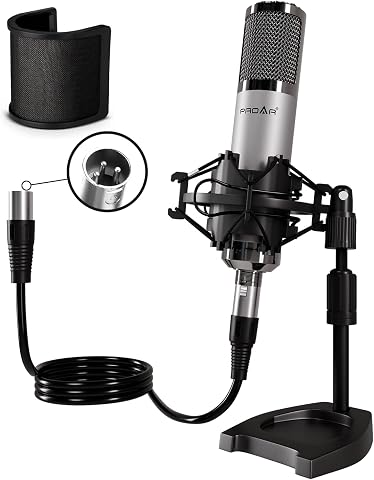 XLR Condenser Microphone with Desktop Stand for Vocals and PodcastingView on Amazon →
Impact of New Microphones on AI Audio Development
The introduction of these specialized condenser microphones in 2026 is poised to significantly influence AI audio development. High-quality, consistent recordings are vital for training machine learning models, and these microphones address common challenges such as background noise and signal fidelity. Their advanced features support more accurate speech recognition, voice synthesis, and sound analysis, which are central to AI applications across industries.
Furthermore, the focus on connectivity and durability aligns with the needs of professional studios and on-the-go content creators working with AI-driven tools. These developments may accelerate innovation in voice AI, virtual assistants, and automated transcription services, making high-fidelity audio more accessible and reliable for AI systems.
2026 Microphone Innovations and Industry Trends
The microphone market in 2026 reflects a broader trend toward integrating AI and digital workflows. Previous years saw incremental updates, but this year’s launches emphasize tailored features for AI applications, such as enhanced noise rejection and digital connectivity. Notably, the RØDE NT1 5th Gen’s USB-C interface exemplifies this shift, facilitating seamless integration with modern computers and AI hardware.
Historically, condenser microphones have been the standard for studio recording due to their sensitivity and accuracy. The current wave of models aims to preserve these qualities while addressing the specific needs of AI data collection, such as low self-noise and high consistency. Industry experts suggest that these innovations will set new benchmarks for AI audio quality, influencing both professional studios and emerging AI startups.
“The new condenser microphones of 2026 are a game-changer for AI audio, offering the clarity and reliability needed to train sophisticated models effectively.”
— Thorsten Meyer, AI Audio Expert
Remaining Questions About 2026 Microphone Capabilities
While the new models are promising, it is not yet clear how they will perform in diverse AI training environments or in real-world conditions outside controlled studio settings. Specific details about their long-term durability under intensive use and compatibility with various AI software platforms are still emerging. Additionally, the extent to which these microphones will influence AI model accuracy remains to be scientifically validated.
Upcoming Developments and Industry Adoption in 2026
Manufacturers are expected to release firmware updates and new accessories to enhance these microphones’ AI-specific features. Industry adoption will likely accelerate as AI developers and studios integrate these models into their workflows, with benchmarks being set for audio fidelity and ease of use. Future research may include comparative studies on how these microphones impact AI model training and performance, guiding further innovations.
Key Questions
Do these microphones require special software for AI applications?
Most of the new models are compatible with standard recording software and AI training platforms. However, specific integration may depend on the AI system used, and some manufacturers may release dedicated plugins or firmware updates to optimize performance.
Are these microphones suitable for live AI voice interactions?
While primarily designed for studio use, some models with robust build quality and noise rejection could be adapted for controlled live AI voice applications, but they are not optimized for live stage performances due to their sensitivity.
How do the new USB-C microphones compare to traditional XLR models?
USB-C models offer plug-and-play convenience with modern computers, reducing setup complexity. XLR models generally provide higher audio fidelity and expandability, making them more suitable for professional AI data collection and high-end studio work.
Will the new microphones improve AI training data quality?
Yes, high-quality microphones with low self-noise and wide frequency response are expected to produce cleaner, more accurate audio samples, which can enhance the training of AI models for speech and sound recognition.
When can we expect wider adoption of these microphones in AI industries?
Industry adoption is likely to increase throughout 2026 as more studios and AI developers recognize the benefits of these advanced microphones, with widespread use anticipated by the end of the year.
Source: ThorstenMeyerAI.com
Evergreen bestsellers Picks
bestsellers
As an affiliate, we earn on qualifying purchases.