📊 Full opportunity report: The Gulf: Own the Capital on ThorstenMeyerAI.com — validation score, market gap, and execution plan.
TL;DR
Gulf nations are leveraging sovereign wealth funds to invest over $2 trillion in AI and data infrastructure, aiming to own the technology that could displace labor. This marks a significant shift from traditional resource-based wealth to technology ownership.
The Gulf states are rapidly transforming their resource-driven wealth into ownership stakes in the AI economy, with sovereign funds investing over two trillion dollars into AI infrastructure and frontier technology. This strategic move aims to secure a dominant position in the next economic paradigm, marking a significant shift from traditional resource wealth to technological ownership.
Since 2017, Gulf countries such as the UAE, Saudi Arabia, and Qatar have established dedicated AI ministries and launched major investment vehicles like Mubadala’s MGX and Saudi Arabia’s HUMAIN. These entities are acquiring stakes in AI chips, data centers, and frontier labs, with the UAE leading the way through its G42 conglomerate and Stargate data-center project. The investments are part of a broader industrial and geopolitical strategy to own the AI supply chain and data infrastructure.
According to sources familiar with regional policies, the Gulf’s sovereign wealth funds are deploying capital at a scale private investors cannot match, aiming to convert their oil wealth into ownership of the AI economy before resource depletion impacts their revenues. The region’s abundant solar energy and cheap power make it an ideal hub for power-intensive AI infrastructure, further supporting this shift.
This approach differs markedly from Norway’s model, which emphasizes wealth preservation through a savings fund. In contrast, Gulf funds are designed for immediate distribution, supporting current living standards through public-sector employment and subsidies, with a focus on building an ownership stake in future technology industries.
Own the Capital
For five rows, one lever stayed dark. The Gulf pulls it hard: own the capital, distribute its returns to citizens — and now spend that capital to buy into AI, so the dividend outlives the oil.
Independent commentary, produced with AI assistance under human editorial oversight. The views are the author’s own and may change. This is analysis, not policy, economic, investment, or legal advice. Descriptions of Gulf sovereign wealth funds, the rentier social contract, national AI champions (G42, MGX, HUMAIN, Qai), and AI-infrastructure investment reflect publicly reported information as of mid-2026 and may change; population, asset, and investment figures are indicative. This phase maps differing approaches and endorses none; characterizations of contested political and labor arrangements present competing views, not a verdict. Country, program, and company names are referenced for analysis and imply no affiliation.
Implications of Gulf States Owning AI Infrastructure
This shift signifies a fundamental change in how resource-rich nations are positioning themselves in the emerging digital economy. By owning AI infrastructure, Gulf states aim to capture the value created by automation and displace labor, potentially reshaping global economic power dynamics. It also raises questions about the concentration of technological ownership within authoritarian regimes and the geopolitical influence associated with controlling critical AI assets, as discussed in The clause.

AI Data Center Infrastructure Engineering: Power Distribution, Liquid Cooling, High-Density Networking, and Energy Efficiency for GPU Training … Hardware & Compiler Engineering Series)
As an affiliate, we earn on qualifying purchases.
As an affiliate, we earn on qualifying purchases.
Regional Strategies for AI and Capital Ownership
Since 2017, Gulf countries have prioritized AI as a national strategic sector, establishing ministries and dedicated investment vehicles. The UAE’s G42 and Stargate project, Saudi Arabia’s HUMAIN, and Qatar’s Qai exemplify regional efforts to concentrate capital and ownership within state-controlled entities. These initiatives are part of broader plans to diversify economies away from oil dependence and to position themselves as global leaders in AI and digital infrastructure.
Compared to Western models, where private markets and individual ownership dominate, the Gulf’s approach is state-led, with a focus on ownership and distribution of AI-generated value. This reflects a broader post-labor economic philosophy that emphasizes the labor share as a means to secure social stability amid technological displacement.
“The Gulf states are converting their oil wealth into ownership of the next economy, investing over two trillion dollars into AI infrastructure to secure their future economic dominance.”
— Thorsten Meyer

Meshnology LoRa ESP32-S3 Board – 915MHz W10 AIOT Dev Kit with GPS Blue Tooth WiFi AI Meshtastic LoRaWAN Ar duino Compatible Perfect for Starter Maker Smart City Industrial Control Application
- Powerful Dual-Core Processor: Up to 240MHz for complex IoT tasks
- Multiple Connectivity Options: WiFi, Bluetooth, LoRa, GPS included
- Supports LoRaWAN Protocol: Operates in 850-930MHz range
As an affiliate, we earn on qualifying purchases.
As an affiliate, we earn on qualifying purchases.
Unclear Aspects of Gulf AI Ownership Strategy
It remains uncertain how sustainable and effective this ownership model will be in the long term, especially given geopolitical tensions and potential technological competition. The extent to which Gulf states will succeed in owning critical AI infrastructure and whether this will translate into economic dominance is still developing. Additionally, the social and political implications of such concentrated ownership, especially in authoritarian contexts, are not yet fully understood.
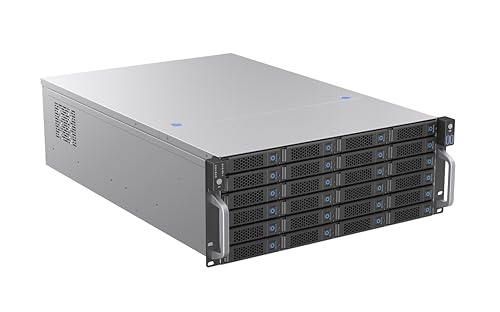
Rosewill 4U Rackmount Server Chassis | Supports up to 24 3.5" 12Gbps Hot Swap SATA/SAS | E-ATX & SSI-EEB Compatible | 3X 120x38mm PWM Fan | RSV-H424
- Storage Capacity: 24 hot-swap 3.5" bays for high capacity
- High-Speed Connectivity: Supports 12Gbps SATA/SAS drives
- Rack Compatibility: 4U rackmount form factor
As an affiliate, we earn on qualifying purchases.
As an affiliate, we earn on qualifying purchases.
Next Steps for Gulf AI Investment and Global Impact
Gulf countries are expected to continue expanding their AI investments, aiming to establish regional hubs for AI research and infrastructure. Monitoring how these investments influence global AI supply chains and geopolitical balances will be crucial. Further, the region may seek to deepen integration of AI into their economies, potentially setting standards and rules for AI ownership and governance.
solar-powered data center equipment
As an affiliate, we earn on qualifying purchases.
As an affiliate, we earn on qualifying purchases.
Key Questions
Why are Gulf countries investing so heavily in AI now?
They aim to diversify their economies, secure ownership of future technologies, and reduce dependence on oil revenues as resources deplete and global energy markets evolve.
How does Gulf ownership of AI differ from Western models?
Gulf countries focus on state-led ownership and direct investment in AI infrastructure, whereas Western models tend to favor private markets and minimal state intervention.
What are the risks of this strategy?
Potential risks include geopolitical tensions, technological competition, and the social implications of concentrated ownership within authoritarian regimes.
Will this strategy impact global AI development?
It could, by shifting control of critical AI infrastructure and data assets to Gulf states, influencing global standards and power dynamics in AI technology.
Source: ThorstenMeyerAI.com